




Resource Recycling
  • The Latest
  • Analysis
    • All
    • Certification Scorecard
    • Industry Announcements
    • Opinion
    The electronics recycling industry is undergoing a transformation from labor-intensive manual operations to highly automated, AI-driven facilities that use advanced robotics, cleaner chemistry and digital tracking systems to extract critical materials.

    The cyber-physical MRF: AI and robotics reshape e-waste recovery

    Certification scorecard for the week of Feb. 9, 2026

    Meta-Corning deal signals IT hardware retirement wave

    Meta-Corning deal signals IT hardware retirement wave

    Malaysia clamps down on illegal e-waste imports amid probes

    Malaysia clamps down on illegal e-waste imports amid probes

    URT builds alliance to remake electronics plastics at scale

    ICYMI: Top 5 e-scrap stories from January 2026

    The electronics recycling industry is undergoing a transformation from labor-intensive manual operations to highly automated, AI-driven facilities that use advanced robotics, cleaner chemistry and digital tracking systems to extract critical materials.

    Certification scorecard for the week of Feb. 2, 2026

    Auditors warn EU may fall short on critical metals

    Auditors warn EU may fall short on critical metals

    Industry announcements for January 2026

    Industry announcements for February 2026

    ICYMI: Top 5 recycling stories from January 2026

  • Conferences
  • Publications

    Other Topics

    Textiles
    Organics
    Packaging
    Glass
    Brand Owners

    Metals
    Technology
    Research
    Markets
    Grant Watch

    All Topics

Subscribe
No Result
View All Result
Resource Recycling
  • The Latest
  • Analysis
    • All
    • Certification Scorecard
    • Industry Announcements
    • Opinion
    The electronics recycling industry is undergoing a transformation from labor-intensive manual operations to highly automated, AI-driven facilities that use advanced robotics, cleaner chemistry and digital tracking systems to extract critical materials.

    The cyber-physical MRF: AI and robotics reshape e-waste recovery

    Certification scorecard for the week of Feb. 9, 2026

    Meta-Corning deal signals IT hardware retirement wave

    Meta-Corning deal signals IT hardware retirement wave

    Malaysia clamps down on illegal e-waste imports amid probes

    Malaysia clamps down on illegal e-waste imports amid probes

    URT builds alliance to remake electronics plastics at scale

    ICYMI: Top 5 e-scrap stories from January 2026

    The electronics recycling industry is undergoing a transformation from labor-intensive manual operations to highly automated, AI-driven facilities that use advanced robotics, cleaner chemistry and digital tracking systems to extract critical materials.

    Certification scorecard for the week of Feb. 2, 2026

    Auditors warn EU may fall short on critical metals

    Auditors warn EU may fall short on critical metals

    Industry announcements for January 2026

    Industry announcements for February 2026

    ICYMI: Top 5 recycling stories from January 2026

  • Conferences
  • Publications

    Other Topics

    Textiles
    Organics
    Packaging
    Glass
    Brand Owners

    Metals
    Technology
    Research
    Markets
    Grant Watch

    All Topics

Subscribe
No Result
View All Result
Resource Recycling
No Result
View All Result
Home E-Scrap

Why Cascade and Sage are joining forces

Colin StaubbyColin Staub
February 20, 2025
in E-Scrap
Why Cascade and Sage are joining forces

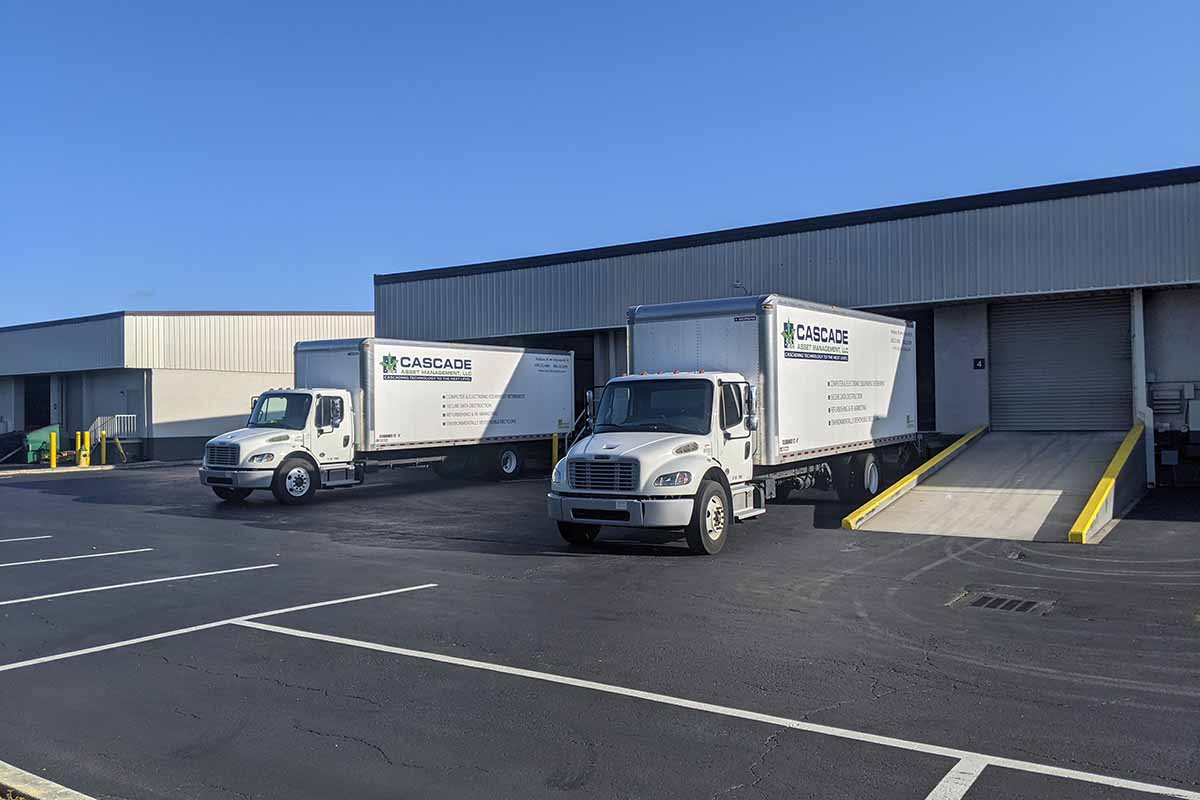
Longtime ITAD processor Cascade Asset Management has been acquired by Sage Sustainable Electronics, bringing it into the Closed Loop Partners portfolio of companies. Company leaders said a shared vision and long experience in the industry make the move complementary to each firm.

The combined company includes eight facilities and over 500 employees. It will operate under the Sage umbrella, but the Cascade name is not going away, Sage CEO Bob Houghton and Cascade CEO Neil Peters-Michaud told E-Scrap News in an interview this week.

“We’ve got very similar values in terms of the way we run our businesses, and so it’s a really easy cultural and commercial merger,” Houghton said. The deal, which closed Jan. 31, is an acquisition in financial terms, “but it is a merger in terms of the practical aspect of integrating two businesses together,” he added.

In a Feb. 20 press release, Closed Loop Partners said the acquisition “takes place amidst increasing demand to bring valuable electronics – and their critical mineral components – back into circulation for reuse in domestic supply chains in the U.S.

“The acquisition accelerates Sage’s path to becoming the leading platform within the ITAD industry, servicing major corporations through IT asset recovery and lifecycle extension,” the investment firm added.

Financial details of the deal were not disclosed.

Combination complements each company’s strengths

Peters-Michaud said Cascade has been approached by acquisition proposals a number of times over the years, and the company has always evaluated those by considering how the acquisition could address Cascade’s strengths and weaknesses.

“Sage and Closed Loop are just a great way to plug our weaknesses and allow us to leverage our strengths to help their business,” he said. As one example, he noted a key strength is Cascade’s secure chain-of-custody process, which is a difficult process to build up. That process can now expand to the Sage facilities. 

On the other hand, Sage has built up a strong set of tools to provide third-party-certified impact reporting to provide clients, an area Cascade has been less active in, so those tools will extend to Cascade’s operations.

Acquisitions present the possibility for businesses to change and perhaps lose value from a customer perspective. In other words, Houghton said, in some acquisitions there’s the potential that “1 plus 1 equals less than 2.” But he sees key differences in the Closed Loop-Sage-Cascade deal that set it apart.

“The businesses between Cascade and Sage are so similar and so aligned on a value proposition level that 1 plus 1 is going to be more than 2,” Houghton said.

For one, Cascade personnel will be adding to the executive team at Sage, he said.

“There are very few teams as experienced as the Sage team – some of us have been together over 25 years – but the exception to that is the Cascade team, some of whom have worked together for decades too,” Houghton said. “So this is creating this bench of really experienced people that are interested in running a pure-play, lifecycle services business.”

Combination brings logistical advantages

The ITAD acquisition comes on the heels of Closed Loop and Sage pushing further into the electronics repair space. Last fall, they acquired electronics repair firm Relectro, a Pennsylvania-based firm that serves warranty repair firms, insurance companies, mobile device providers and others.

Together, the combined companies operate eight facilities spanning the country: ITAD facilities in Reno, Nevada; Madison, Wisconsin; Indianapolis; Columbus, Ohio; Montgomeryville, Pennsylvania; and Orlando, Florida; plus the Relectro repair facility in Teflon, Pennsylvania, and an integration center also in Columbus, Ohio.

Sage has a lot of national customers, Houghton noted, so Cascade’s facilities will provide logistical advantages. And Cascade has customers all the way out to the West Coast, so being able to send that equipment to the Reno location will be helpful, Peters-Michaud said.

Those logistical advantages are key in winning clients, he added.

“Clients like us for the quality of the services we offer, but location is such an important consideration of who they choose,” Peters-Michaud said. “So I think now both Sage and Cascade are going to be able to attract more opportunities because of this extended footprint.”

The combined company will have a capacity to process 1.5 million assets per year, Houghton said. He added that the backing of Closed Loop provides the opportunity to grow that capacity much more readily than a small- or medium-sized ITAD firm could otherwise do.

“It’s sort of an uncommon pleasure to be able to have the capital resources to do whatever you need to do to serve the customer,” Houghton said.

Closed Loop is also an investor in processor ERI but not a majority owner.

Equity and acquisitions increasingly common

Private equity is playing a growing role in the electronics recovery sector; beyond the Closed Loop movement, recent years have brought private equity acquisitions of HiTech Assets, which later rebranded to CircleIT and then closed, selling its assets to Sprout, and of Ingram Micro, EWASTE+, Global Electronics Recycling and, earlier this year, Sprout itself.

Acquisitions in general are reshaping the ITAD market. Arrow Electronics acquired numerous ITAD firms throughout the 2010s before exiting the industry altogether in 2019, driving a scramble for ITAD firms to pick up the suddenly-available client base. 

Since then, several major companies are following a similar path of growth in ITAD through acquisition. Iron Mountain has made three high-profile acquisitions in the U.S. in recent years, and Canadian ITAD giant Quantum Lifecycle Solutions has grown steadily through acquisitions since its formation in 2019, which also resulted from a merger.

Against a backdrop of major firms growing through frequent acquisitions, industry analysis firm Compliance Standards recently wrote that the Sage-Cascade “consolidation strengthens their market position against larger players like Iron Mountain and Ingram Micro Lifecycle.”


Tags: Processors
TweetShare
Colin Staub

Colin Staub

Colin Staub was a reporter and associate editor at Resource Recycling until August 2025.

Related Posts

Focus on recycling film, flexibles takes shape in two reports

byAntoinette Smith
February 13, 2026

The US Plastics Pact and the Alliance to End Plastic Waste released reports outlining necessary steps to improving recycling outcomes...

Certification scorecard for the week of Feb. 9, 2026

byEditorial Staff
February 11, 2026

The following facilities achieved, renewed or otherwise regained certifications recently.

Kentucky’s Global Polymers expanding, moving to Indiana

byAntoinette Smith
February 6, 2026

The polypropylene recycler will invest $8.5 million to fit an existing facility in Charlestown, across the Ohio River from its...

Greenchip launches fund for community impact and trust

byScott Snowden
February 5, 2026

The Greenchip Legacy Foundation formalizing the company's community work while reinforcing its 2026 focus on domestic processing, compliance and transparency...

Cirba Solutions: Battery fires stoking EPR bill movement

byStefanie Valentic
February 2, 2026

As batteries appear in everything from light-up shoes to electric vehicles, new EPR laws are reshaping recycling requirements.

From CES to the shredder: What 2026 PCs mean for ITAD

byDavid Daoud
January 15, 2026

Some of the most operationally relevant CES 2026 announcements for the e-scrap sector focused less on peak performance and more...

Load More
Next Post
US circuit board processor files for bankruptcy

US circuit board processor files for bankruptcy

More Posts

Oregon’s Recycling Modernization Act faces injunction

Court partially blocks Oregon EPR law, dismisses bulk of lawsuit

February 10, 2026
Chinese processing group details goals for US visit

AMP lays out vision of next-generation, AI-driven MRFs

July 24, 2024
Malaysia clamps down on illegal e-waste imports amid probes

Malaysia clamps down on illegal e-waste imports amid probes

February 6, 2026

REUSE Act heads to US House for consideration

February 9, 2026

APR, industry create proactive guidance for PET caps

February 12, 2026

ecoATM recycled 7.5M phones in 2025 as payouts hit $1.5B

February 10, 2026
Meta-Corning deal signals IT hardware retirement wave

Meta-Corning deal signals IT hardware retirement wave

February 9, 2026
Texas sues over dumped wind turbine blades

Texas sues over dumped wind turbine blades

February 10, 2026

Alpek talks PET overcapacity, soft demand

February 11, 2026
The electronics recycling industry is undergoing a transformation from labor-intensive manual operations to highly automated, AI-driven facilities that use advanced robotics, cleaner chemistry and digital tracking systems to extract critical materials.

The cyber-physical MRF: AI and robotics reshape e-waste recovery

February 12, 2026
Load More

About & Publications

About Us

Staff

Archive

Magazine

Work With Us

Advertise
Jobs
Contact
Terms and Privacy

Newsletter

Get the latest recycling news and analysis delivered to your inbox every week. Stay ahead on industry trends, policy updates, and insights from programs, processors, and innovators.

Subscribe

Welcome Back!

Login to your account below

Forgotten Password?

Retrieve your password

Please enter your username or email address to reset your password.

Log In

Add New Playlist

No Result
View All Result
  • The Latest
  • Analysis
  • Recycling
  • E-Scrap
  • Plastics
  • Policy Now
  • Conferences
    • E-Scrap Conference
    • Plastics Recycling Conference
    • Resource Recycling Conference
    • Textiles Recovery Summit
  • Magazine
  • About Us
  • Advertise
  • Archive
  • Jobs
  • Staff
Subscribe
This website uses cookies. By continuing to use this website you are giving consent to cookies being used. Visit our Privacy and Cookie Policy.