





Resource Recycling
  • The Latest
  • Analysis
    • All
    • Certification Scorecard
    • Industry Announcements
    • Opinion
    Partnership ups quality control on device-sales platform

    Certification scorecard — week of Oct. 19

    Industry veterans buy Entropex with plans to rebrand

    Lifecycle growth tested as metals diverge

    Sorted: Making Halloween costumes more sustainable

    Sorted: Making Halloween costumes more sustainable

    Researchers work on fluorine-free battery binder

    Researchers work on fluorine-free battery binder

    CommanderAI launches searchable hauler database

    Blancco brings agentic AI to data erasure, ITAD operations

    APR adds PCR content verification to cert program

    Certification scorecard — week of Oct. 12

  • Conferences
    • Resource Recycling Conference
    • Plastics Recycling Conference
    • E-Scrap: The Longevity Conference
    • Textiles Recovery Summit
  • Publications
    • E-Scrap News
    • Plastics Recycling Update
    • Policy Now
    • Resource Recycling
    • Other Topics
      • All Topics
      • Brand Owners
      • Critical Minerals
      • Glass
      • Grant Watch / RFPs
      • Markets
      • Organics
      • Packaging
      • Research
      • Technology
      • Textiles
Subscribe
No Result
View All Result
Resource Recycling
No Result
View All Result
Home E-Scrap

Data center boom sets up ITAD growth

byDavid Daoud
June 18, 2026
in Analysis, E-Scrap

Hxdbzxy / Shutterstock

Editor’s note: Electronics recycling will be featured in sessions at the 2026 E-Scrap: The Longevity Conference in New Orleans October 26-28.

Industry analysts are seeing a direct correlation between data center construction projects and the future growth of ITAD. In a discussion with Resource Recycling, two analysts from FMI — a consulting and investment banking firm that has advised the built environment for decades — made the case that the sector may be closer to that inflection point than most operators realize.

FMI’s data suggests that US data center construction has grown from roughly $10 billion a year to $40 billion in 2025, a fourfold expansion in five years, with $100 billion projected by 2030 across more than 600 tracked projects, figures that cover construction only, not the technology and equipment inside. Consequently, the hardware flowing into decommissioning pipelines today is the hardware installed three to five years ago, meaning the construction boom ITAD executives are preparing for has, in its first installment, already been built. “If I was going to speculate on what the opportunity for ITAD was,” said Brian Strawberry, FMI’s chief economist, “I’d be more so looking at the past five years of data center build-out than the next five.”

The timing question is further complicated by AI’s impact on refresh cycles. Enterprise IT has operated on three-to-five-year replacement rhythms for decades, but that assumption no longer holds, as AI’s self-improving nature is compressing that cycle to as little as 18 months, rendering historical retirement models obsolete. Brett Robinson, who advises on ITAD and e-waste M&A transactions at FMI Capital Advisors, agreed. 

“The volumes that ITAD players are seeing today are really still the data centers and end-user compute that was installed three to five years ago,” he said. “What’s happening now with the construction side is really just a leading indicator.”

On the question of hyperscaler control, Robinson sees a physical limit approaching. Hyperscalers self-perform as much of the decommissioning process as they can, driving service margins toward the floor. But when a hyperscaler clears floor space in a 400,000-square-foot facility, it doesn’t trickle the hardware out, it moves it in a compressed, multi-month sprint. You cannot push that through a 50,000-square-foot ITAD warehouse. “There’s going to be a lot of opportunity for ITAD players that can really be that release valve,” Robinson said. “There are just so many moving pieces in the build-out that they won’t be able to control it all themselves.”

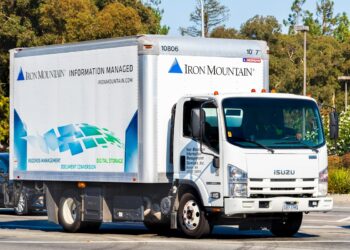
Robinson estimates roughly 10 to 12 operators currently qualify as national-scale players capable of competing for hyperscale work, among them Iron Mountain’s ALM business, Sims Lifecycle, Sprout, Paladin, Quantum Lifecycle Partners, DMD and a few others. Against the “500-plus independents in the US market,” the gap is stark. Private equity has begun filling it, but Robinson cautioned that scale alone isn’t the answer. “M&A just for M&A’s sake can be dilutive to the story,” he said. “You’re not just slapping together five random ITAD players and hoping it works out.”

Geography is where FMI’s construction data becomes most directly actionable. For a decade, proximity to Northern Virginia was the dominant ITAD location logic. That is changing. Georgia, Texas, Arizona, Ohio and Indiana are becoming major nodes, driven by power availability rather than population. Phoenix alone is absorbing a planned $20 billion campus complex. According to a recent FMI report, authored by Robinson, titled “From Concrete to Silicon: What Data Center Construction Tells Us About the Future of ITAD“—shipping heavy liquid-cooled AI racks across the country is both inefficient and, in hyperscalers’ view, a security liability. An ITAD operator clustered around Northern Virginia is optimally positioned for the last decade, not the next one.

On the downstream side, foreign smelters and refiners are investing heavily in US capacity — Aurubis’s $800 million Georgia facility being the most visible example — as export pathways close. China’s restrictions, Southeast Asian bans, and Europe’s digital passport regime have collectively eliminated the arbitrage that once made offshore processing attractive. Urban mining is widely recognized as yielding higher concentrations of gold and other materials than conventional extraction. Robinson sees margins on the e-waste side as potentially stronger than on the IT services side, though he acknowledged the current commodity pricing environment is elevated and cyclical.

Strawberry closed with a reframe that cuts to the heart of it. “These are like mining companies in the US,” he said of ITAD operators. “Mining isn’t something you can do very easily. And that’s exactly what these companies are set up to do.” A long-term contract to process hardware from a hyperscale campus is, in that sense, a mining concession, a guaranteed feedstock stream with known composition.  

Tags: ElectronicsTechnology
TweetShare
David Daoud

David Daoud

David Daoud is a contributor to Resource Recycling and E-Scrap News, covering IT asset disposition, electronics recycling, and circular IT governance. He is the founder of and current Principal Analyst at Compliance Standards LLC, where he conducts independent research and advisory work on ITAD markets, sustainability and ESG compliance, data security, and lifecycle risk management. Daoud has analyzed enterprise IT trends since the late 1990s and was among the first analysts to examine ITAD as a distinct market segment during his time at IDC. He advises operators, OEMs, and investment teams on regulatory, technology, and market developments affecting the electronics lifecycle.

Related Posts

CommanderAI launches searchable hauler database

Blancco brings agentic AI to data erasure, ITAD operations

byDavid Daoud
October 15, 2026

Blancco Blue introduces AI-assisted workflow management and integration, extending the company's software capabilities beyond data sanitization and diagnostics.

Ingram Micro looks to digital platform and AI

byDavid Daoud
October 14, 2026

The distributor is targeting 10%–12% annual Lifecycle sales growth as its Xvantage platform connects technology purchasing with opportunities for equipment...

Sundry Photography / Shutterstock

Iron Mountain adds ViaTeK Solutions to ITAD business

byDavid Daoud
October 9, 2026

The Florida-based company brings three US processing locations to Iron Mountain’s expanding asset lifecycle management operations.

smart glasses

ITAD’s big wearables challenge

byDavid Daoud
October 8, 2026

Wearable technology is a fast-growing sector, but is the asset disposition industry ready to handle it?

Trade-in firm reports higher values for used phones

Device trade-ins increase amid newest iPhone release

byPaul Lane
October 7, 2026

Some in the second-hand marketplace won’t see the full impact until well after the Duo foldable phone releases later this...

Top stories from March 2025

Study finds e-scrap reuse dismissed in UK

byPaul Lane
October 6, 2026

Researchers say many more devices can be put back into users’ hands than is happening now.

Load More
Next Post

Compliance push drives new Republic organics facility

2026 Buyers’ Guide

Equipment, services and technology suppliers serving the recycling industry.

Browse the Guide

More Posts

Court gavel and justice scales on a table.

NAW asks to pause Oregon EPR fees

October 20, 2026

Republic breaks ground on St. Louis MRF

October 15, 2026
Dow, Orbis talk EPR, demand at Pack Expo

Dow, Orbis talk EPR, demand at Pack Expo

October 21, 2026
Lawsuits hover days after SB 54 approval

CAA trims first-year SB 54 budget in final plan

October 13, 2026
Sorted: Making Halloween costumes more sustainable

Sorted: Making Halloween costumes more sustainable

October 19, 2026
Triton to make rail ties from artificial turf

Triton to make rail ties from artificial turf

October 20, 2026
Northeast recycled commodity values hit 5-year lows

HDPE, PP prices climb for October

October 14, 2026
Brokers of shame: 10,000+ containers of U.S. e-waste to Asia

Brokers of shame: 10,000+ containers of U.S. e-waste to Asia

October 16, 2026
Industry veterans buy Entropex with plans to rebrand

Lifecycle growth tested as metals diverge

October 19, 2026
Removing an eBike battery pack.

EPR’s next fight is over embedded batteries

October 13, 2026
Load More

About & Publications

About Us

Staff

Archive

Magazines

Work With Us

Advertise
Jobs
Contact
Terms and Privacy

Newsletters

Get the latest recycling news and analysis delivered to your inbox every week. Stay ahead on industry trends, policy updates, and insights from programs, processors, and innovators.

Subscribe

Welcome Back!

Login to your account below

Forgotten Password?

Retrieve your password

Please enter your username or email address to reset your password.

Log In

Add New Playlist

No Result
View All Result
  • The Latest
  • Analysis
  • Recycling
  • E-Scrap
  • Plastics
  • Policy Now
  • Conferences
    • E-Scrap Conference
    • Plastics Recycling Conference
    • Resource Recycling Conference
    • Textiles Recovery Summit
  • Magazines
  • About Us
  • Advertise
  • Archive
  • Jobs
  • Staff
Subscribe
This website uses cookies. By continuing to use this website you are giving consent to cookies being used. Visit our Privacy and Cookie Policy.