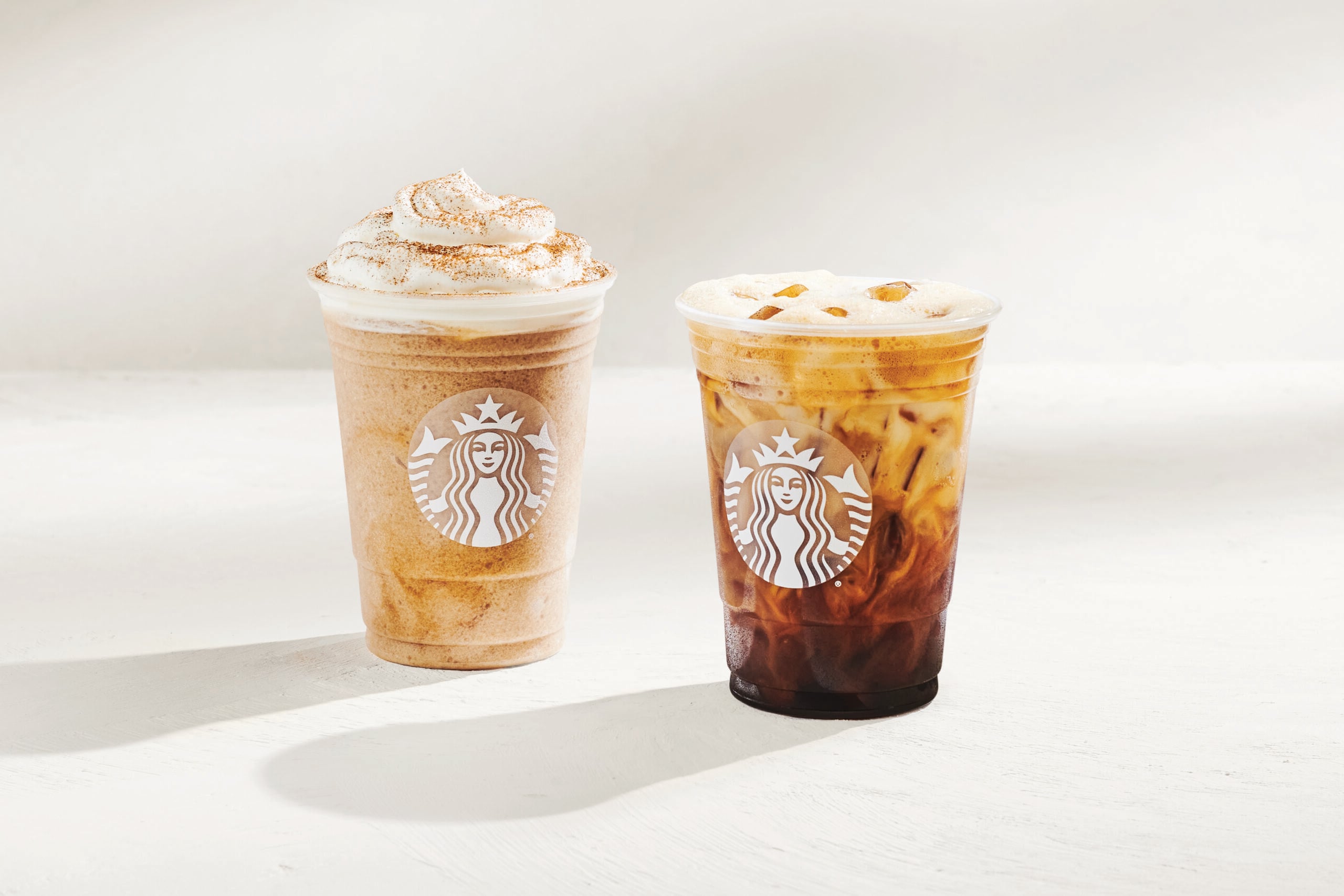
Editor’s note: This multi-part series explores a report from Beyond Plastics about the recyclability claims for polypropylene cold drink cups from Starbucks. Part 1 explores what the report reveals about recycling. Part 3 unpacks the data gathered in the study. For this story, Beyond Plastics did not respond to several attempts to gain clarity about its methods and results.
In a recent report, the Beyond Plastics nonprofit attempted to disprove Starbucks’ recycling claims about its polypropylene cold-drink cups using electronic tracking devices. So Plastics Recycling Update asked stakeholders who were called out in the report to respond to several allegations from the group.
Recyclers are accustomed to addressing questions and concerns about whether “recycling is real,” but the stakeholders interviewed took particular issue with several aspects of the anti-plastics group’s methods and conclusions, such as the well-documented fire risk posed to workers and facilities from battery-embedded devices such as trackers, an apparent lack of understanding of contamination and bale specifications, and of course the group’s overall conclusion that the cups aren’t being recycled.
The problem(s) with trackers
It’s well established within industry, if not in consumer circles, that electronic trackers are an ineffective and unsafe way to verify claims about recycling processes or material recyclability.
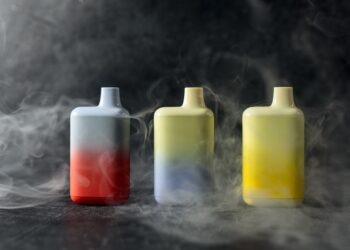
For starters, and by far most important, the safety issue is significant – and growing. Lithium-ion batteries, particularly those embedded in everyday consumer products – AirTags and Tile devices, phones, disposable vapes and even greeting cards, to name but a few – are the leading cause of fires at waste and recycling facilities in the US and Canada. Publicly reported facility fires – assumed to be two-alarm or worse – reached a record 448 in 2025, causing more than $2.5 billion in damage.
MRF operators spend eye-watering sums of money on 24/7 monitoring and fire suppression services (along with soaring insurance premiums) that work as intended by catching small fires before they become catastrophic.
“We think about batteries every day. It’s what keeps us up at night,” said Ryan Nordt, executive director of recycling operations at WM, in a May 22 interview with Plastics Recycling Update.
WM, the nation’s largest recycler and waste hauler, pointed out that studies like the one Beyond Plastics conducted put employees as well as facilities at serious risk. In addition, such studies expect trackers to survive the sorting process at MRFs, where materials can be run over by heavy equipment on the tipping floor, among other abuses subjected to erstwhile trash.
Even if it was crushed before reaching a sorting line, a tracker could easily hinder material sorting in a variety of ways, WM noted: The added weight affects flow through the system, and stacked cups containing a tracker likely would sort as residue. Plus, the stacked cups easily could come apart during the various processes, leaving the tracker to be sorted with residue and head for the landfill.
The Beyond Plastics team said they used high-strength glue to keep the trackers in place, but even after the rigorous sorting process where materials are subjected to high-speed, high-intensity processes, they are collected and baled using machines exerting thousands of pounds of force to compact the materials into a bale for shipping.
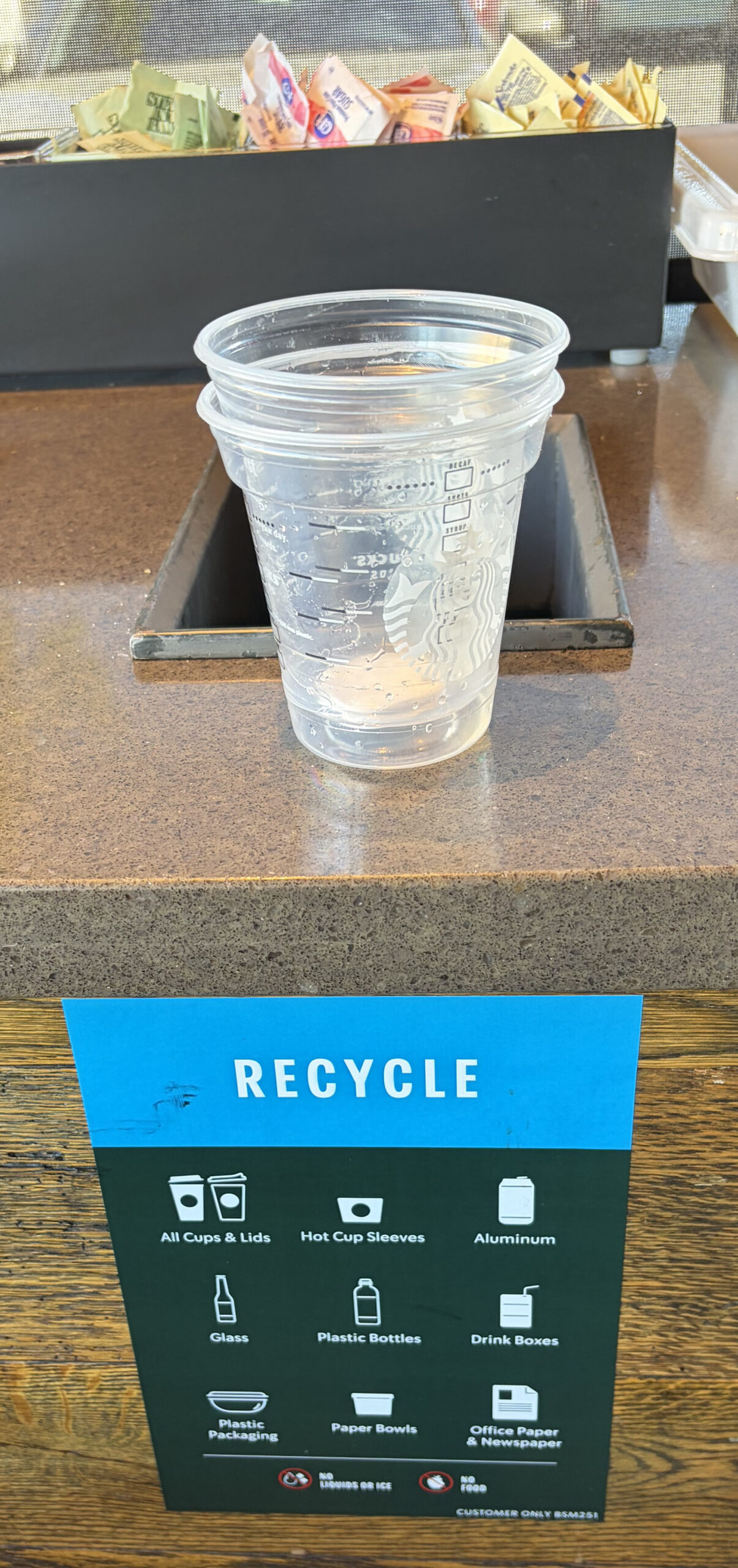


Starbucks also objected to the methodology: “Studies that place electronic trackers inside cups do not reflect how recycling systems operate in practice.”
Ajit Perera, vice president of consumer operations at California-based Talco Plastics, added: “People don’t realize that these are extremely sophisticated pieces of equipment. This is not your kids standing and picking things off a conveyor belt.”
AI-powered sorting robotics and the intel they provide are key in any hauler’s investment in modernizing MRFs and fleet equipment, to speed up and customize sorting and collection, add more types of plastics including PP, and reduce reliance on manual labor.
As an example, during WM’s most recent earnings call in late April, CEO Jim Fish said that using AI-enabled cameras on collection trucks over the past six to seven years has helped the company improve material quality. The technology analyzes items as they enter the truck, and WM can then provide feedback for the customer on reducing non-recyclables in their curbside bins.
During its own press conference, Beyond Plastics appeared dismissive to a reporter’s question about whether the trackers could interfere in the recycling process. Susan Keefe, head of Southern California for the group, acknowledged they are made mostly of aluminum, and are not recyclable. “The tracker in and of itself is not recyclable, but we’re also putting it into a cup that’s proven not to be recyclable either.”
Did the cups get recycled?
It’s true that the organization doesn’t know if they got recycled, because the trackers didn’t make it to a plastic processing facility – which is precisely how the system is intended to work.
KW Plastics, among the largest US buyers of post-consumer PP, said in a statement: “Our specs consider electronics and/or metals of any kind a contaminant and we expect those to be removed prior to being baled for recycling.”
Talco Plastics’ Perera said: “I’m not surprised that this recycling never showed up at a recycler, because there was something attached to it.”
Of course, any explanation short of somehow tracking a cup from disposal through to sorting, processing and reuse without interference from a tracker does not prove that these particular cups or that any cups actually were recycled, but neither is it proof that Starbucks or WM or any of the parties called out in the report are being disingenuous, or “greenwashing.”
Indeed, some of the trackers appeared to go directly from stores to landfills or waste-to-energy incineration facilities, but we’ll take a closer look at that claim in an upcoming story.
Starbucks’ claims also refer to recyclability, which refers to curbside program access and to designing packaging so that it complements current infrastructure. Acceptance is among the first steps – and certainly the most visible one – on the long road to incorporating recycled content into new products.
As for acceptance, Beyond Plastics acknowledged during the press conference that they didn’t know if recyclers bought or accepted Starbucks cups. The group claimed it sent letters to Starbucks in January asking for more information, but none of the other parties named in the report have any record of the group reaching out to ask questions or learn more.
WM told Plastics Recycling Update, “We hear about these kinds of studies probably at the same time you hear about them.”
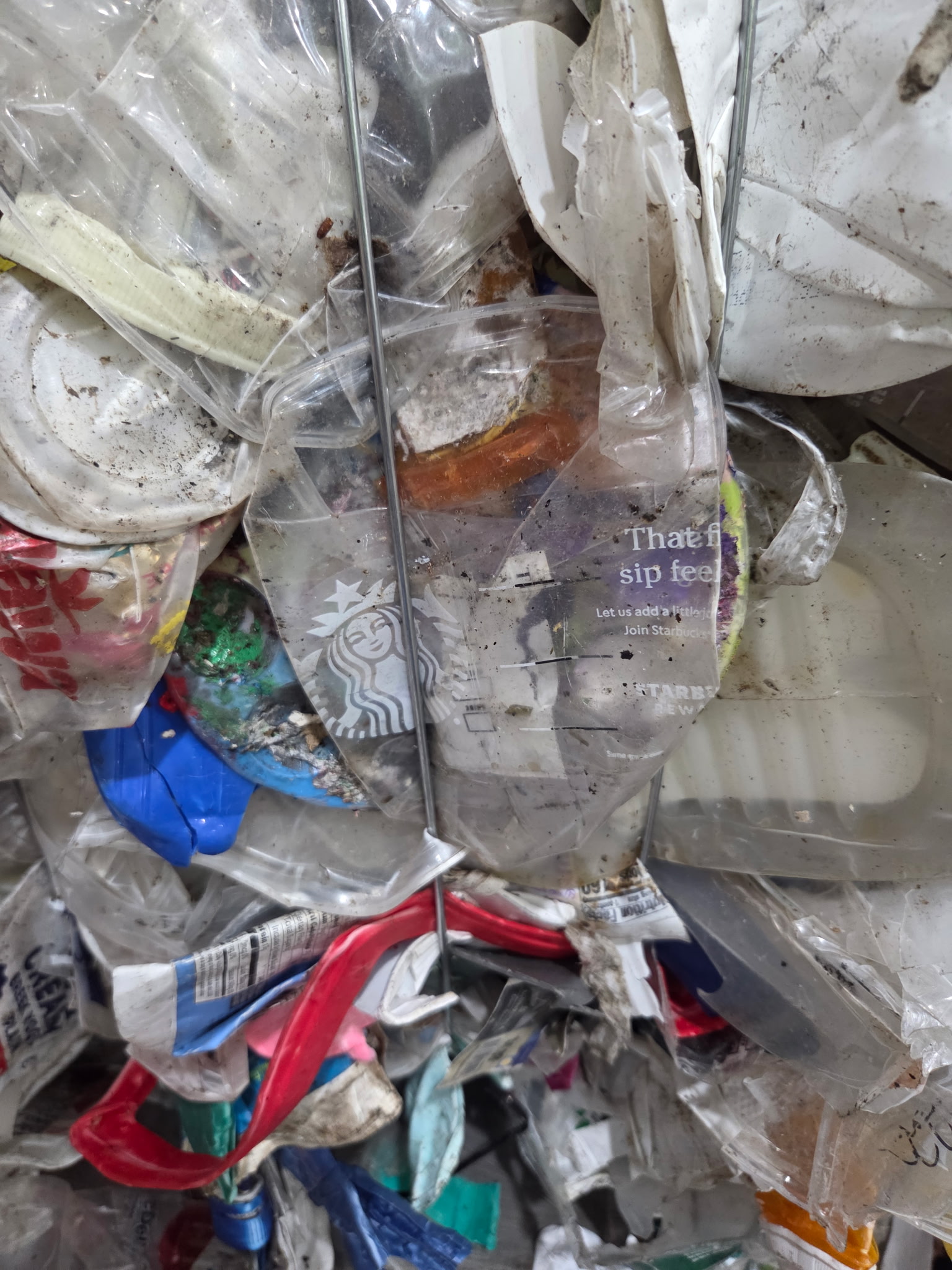

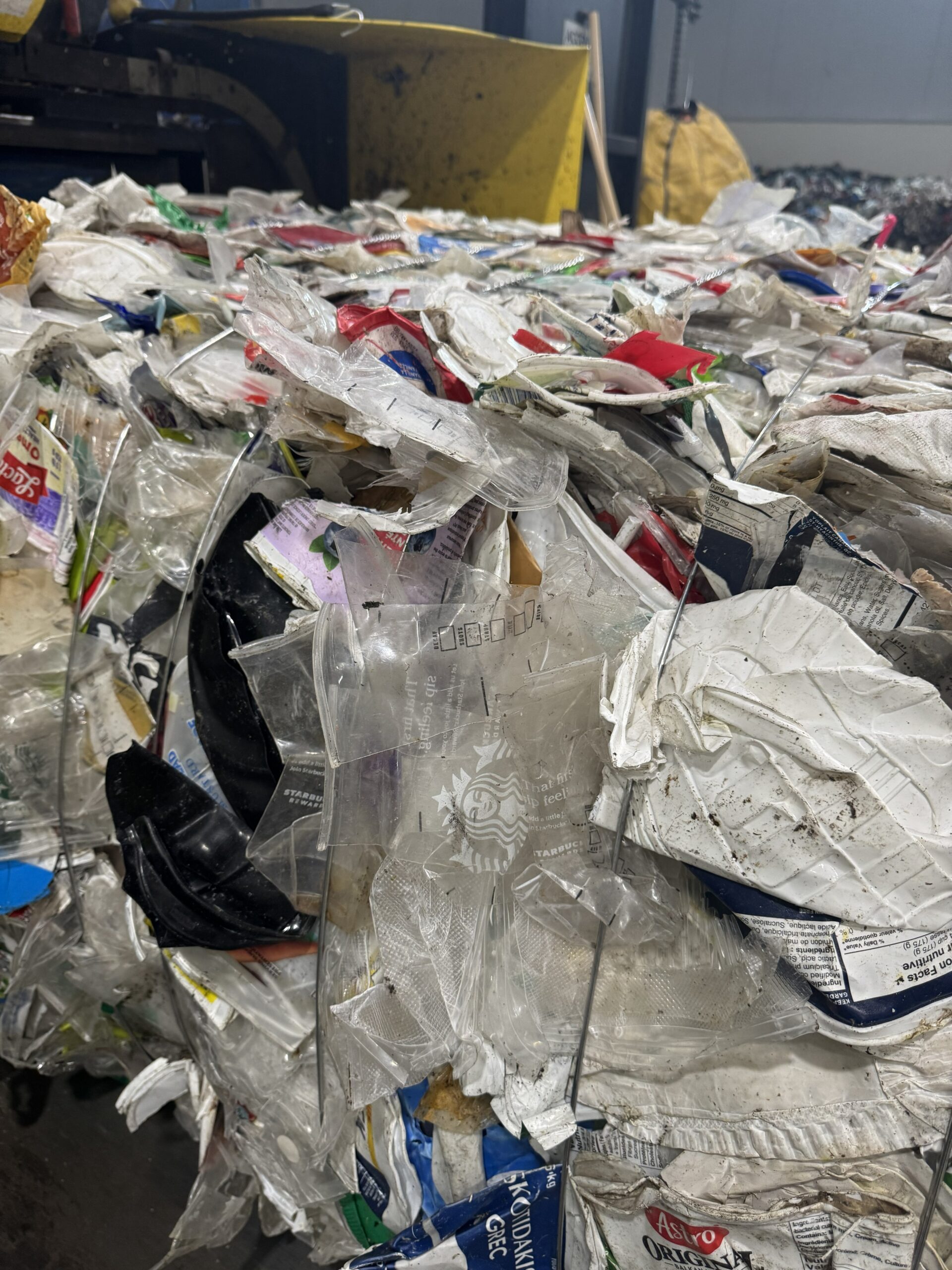
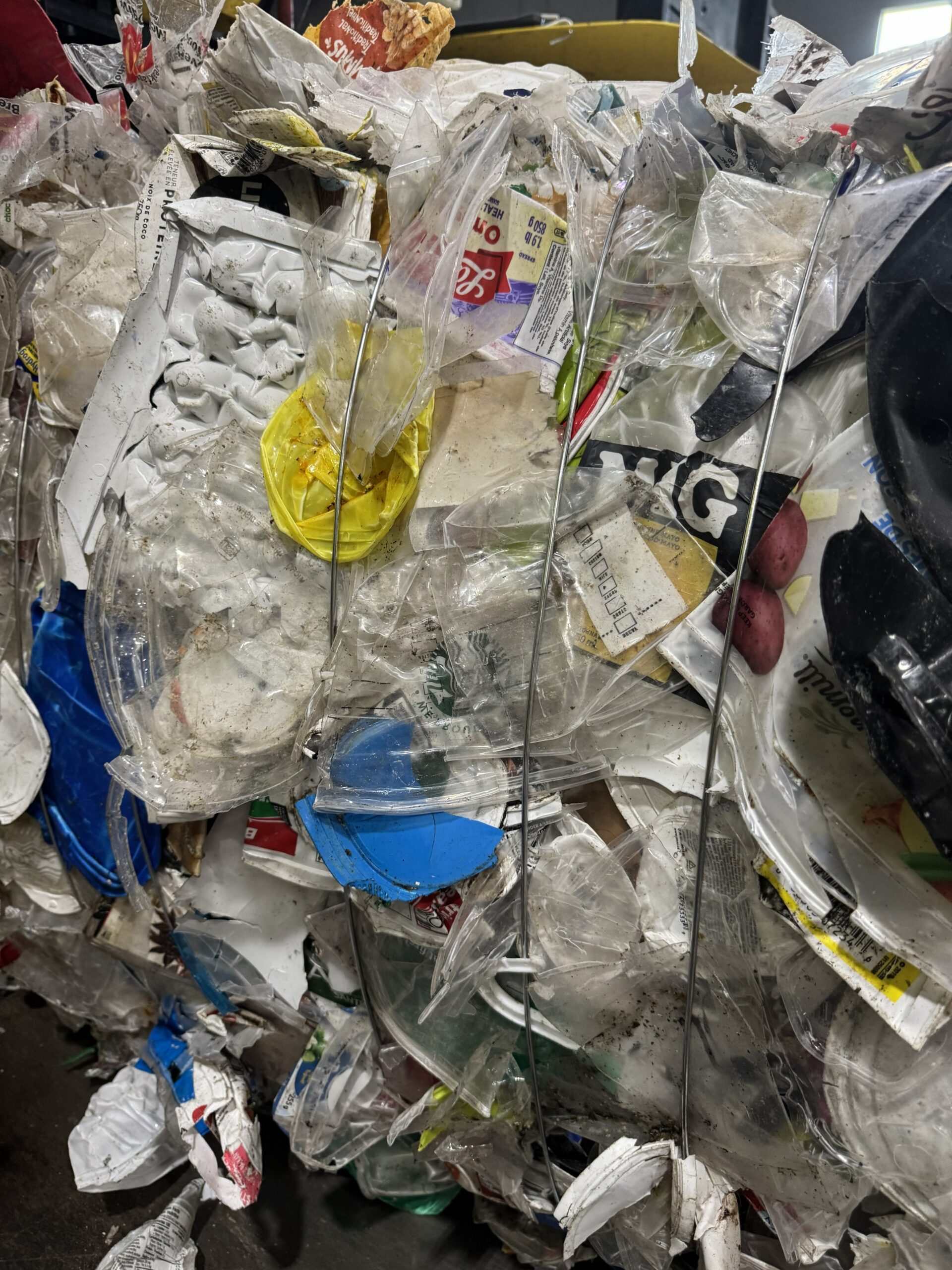
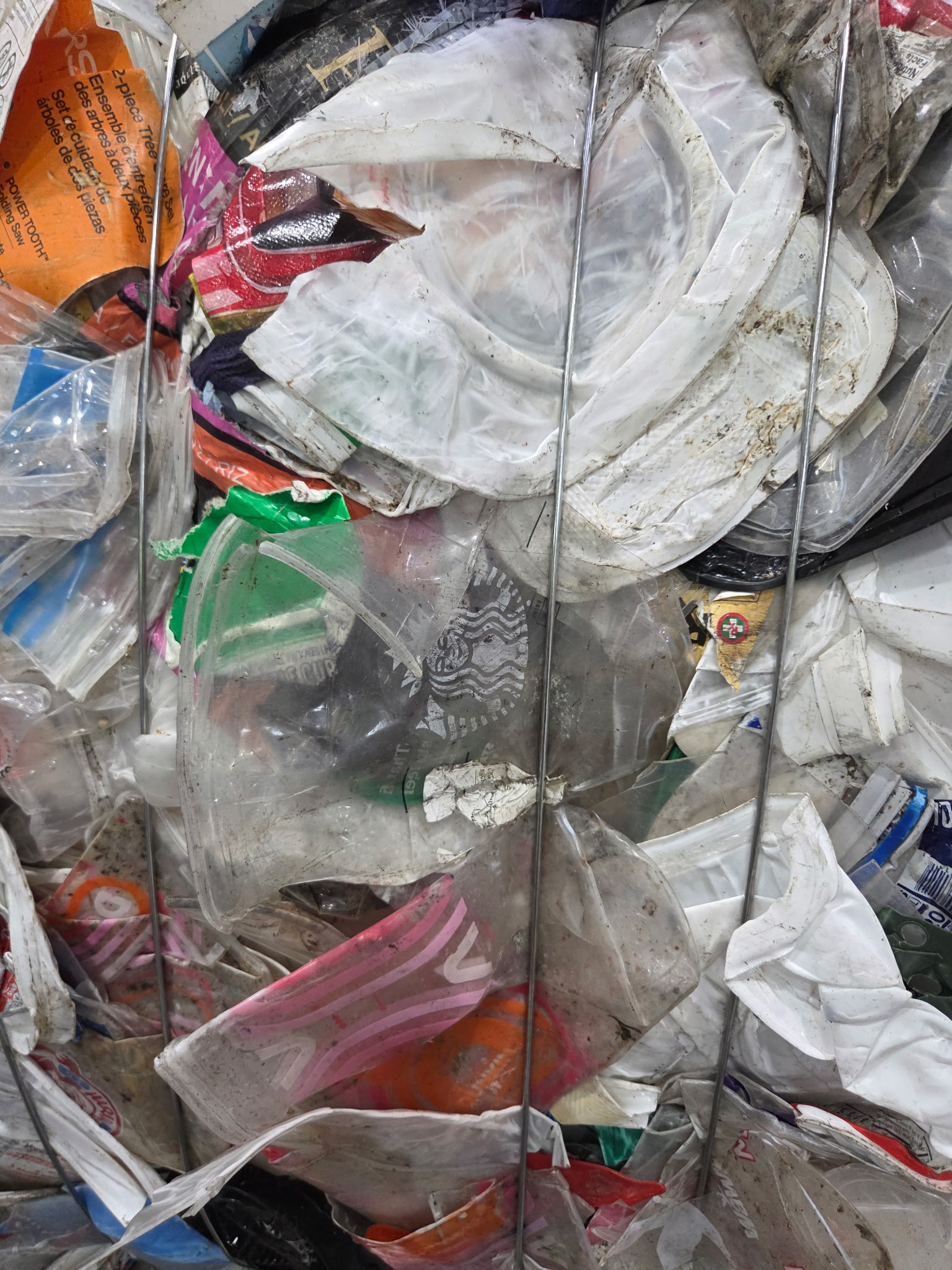
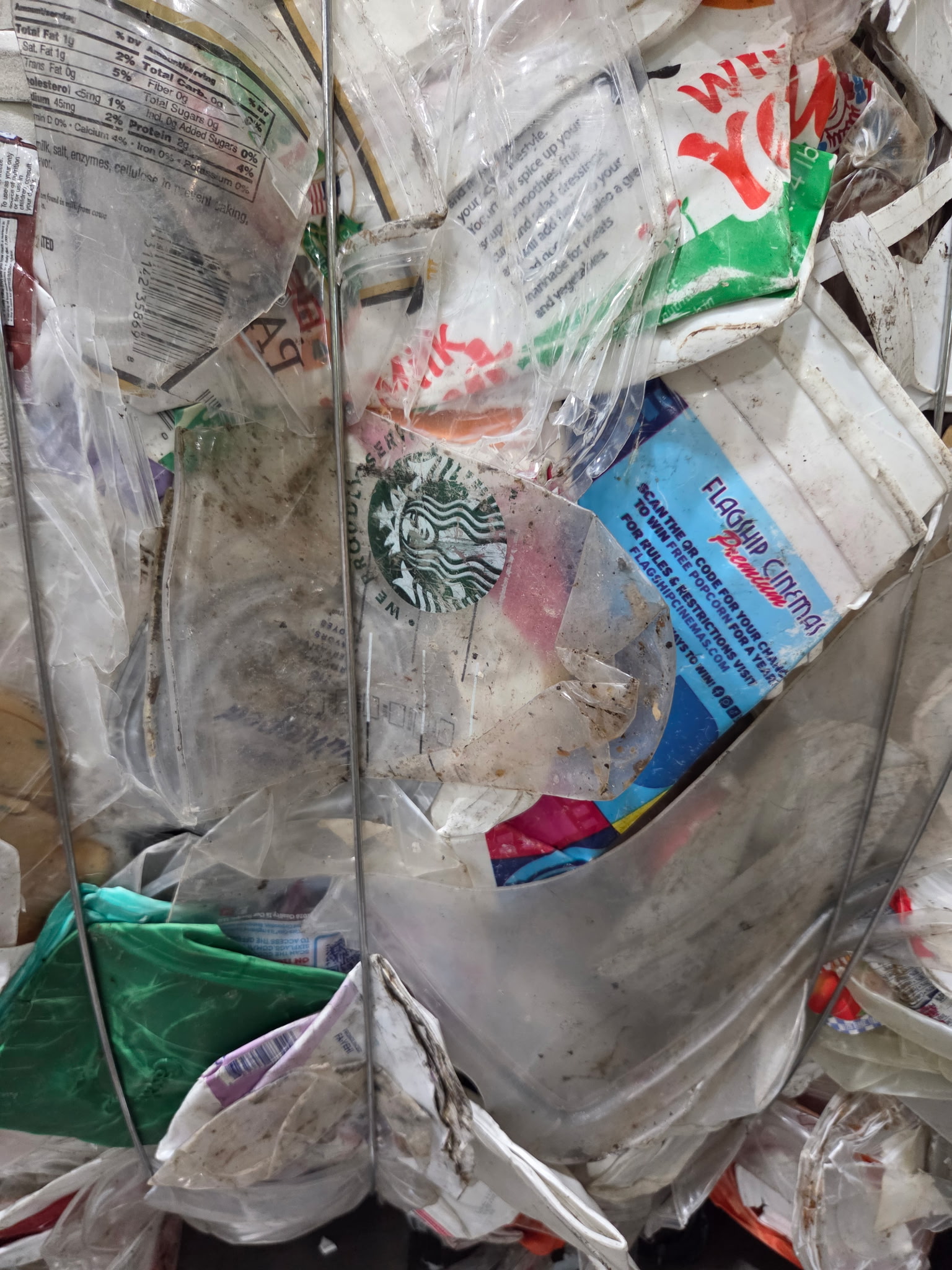
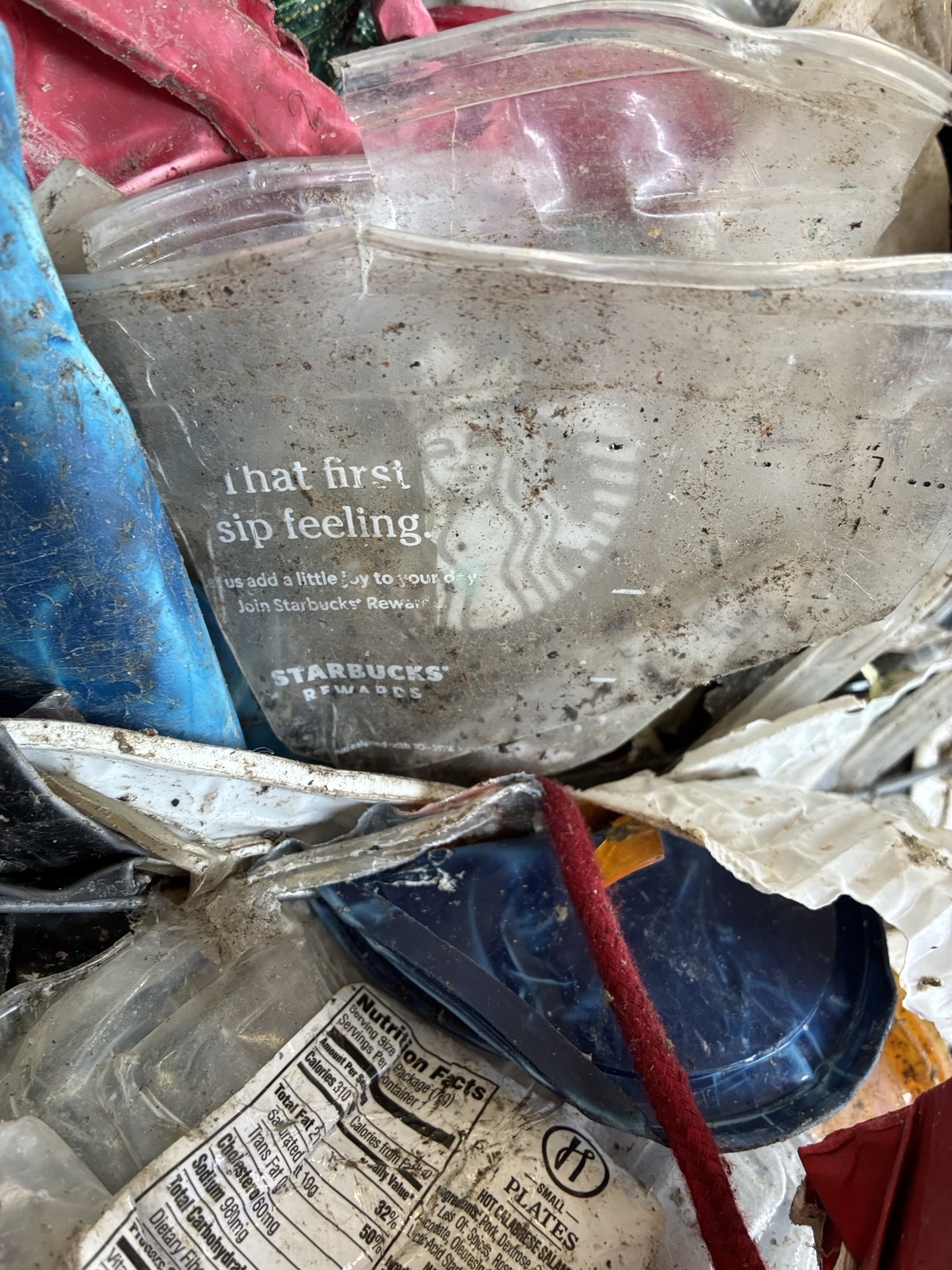
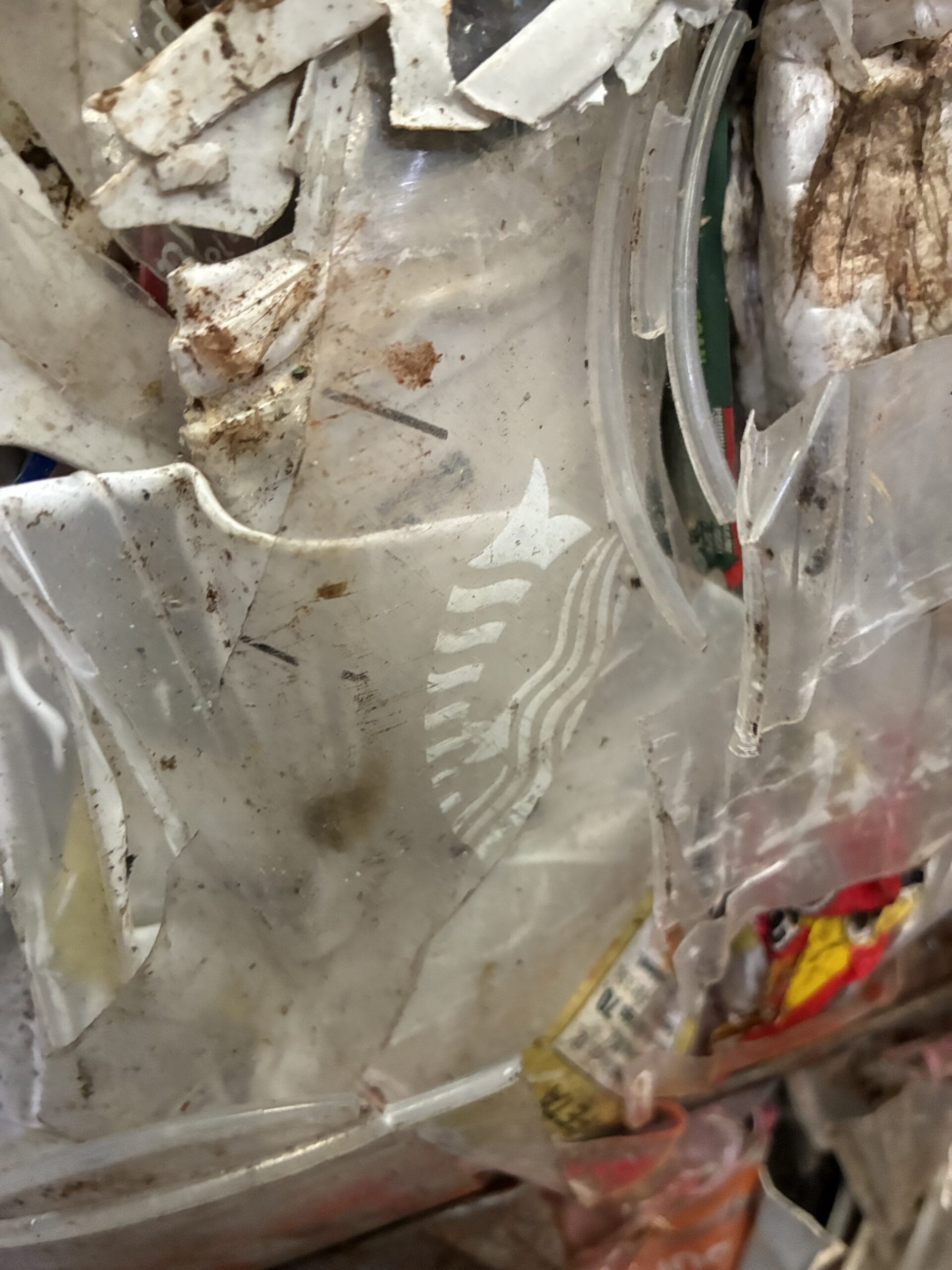
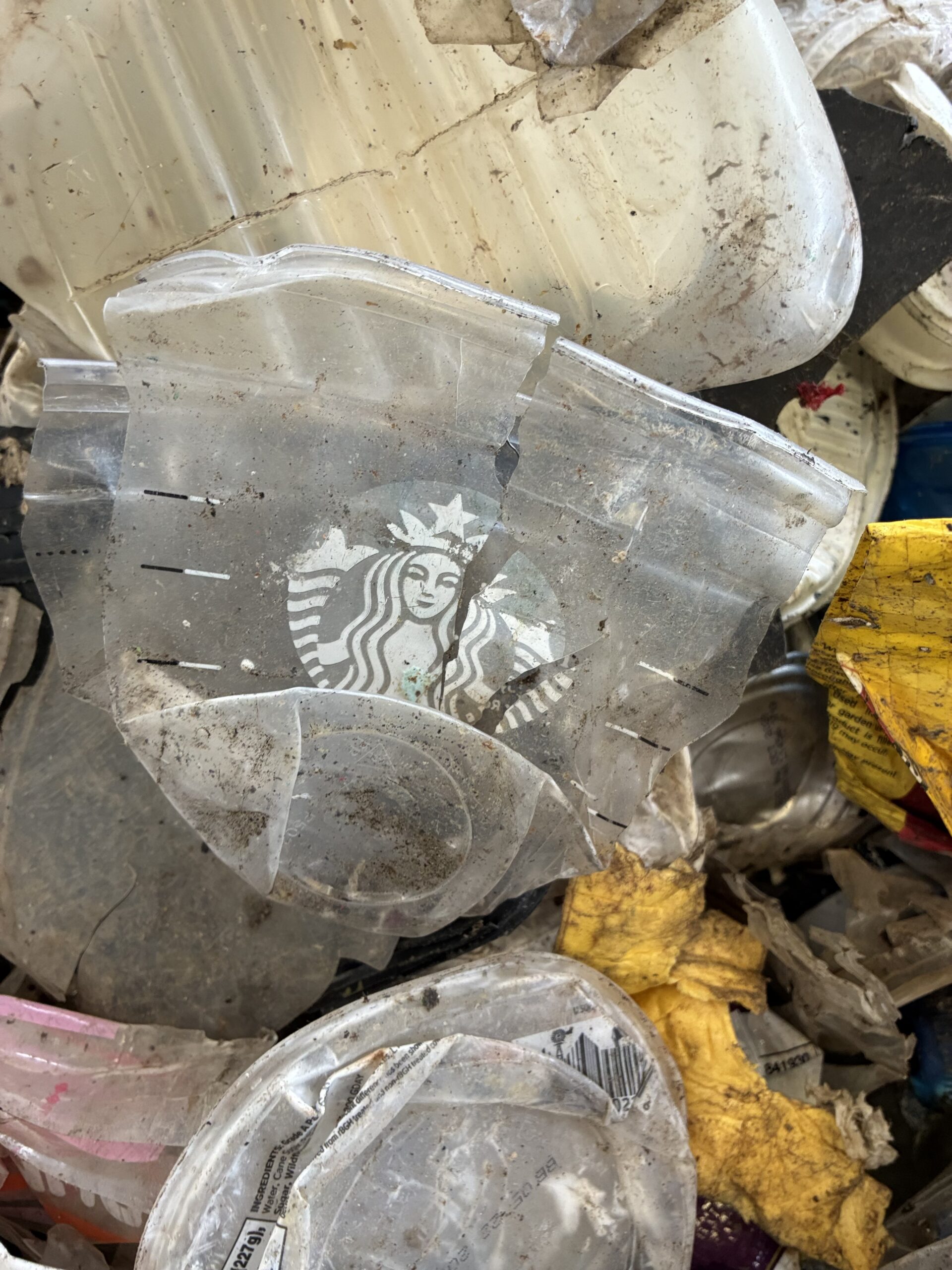
During the week of the report (May 18-22), WM collected data from three of its automated facilities and found that on average they capture 18 PP cold cups per minute – more than 1,000 per hour – including Starbucks cups.
WM’s automated sites have optical sorters programmed to collect PP, as well as backstop processes throughout the MRF to help ensure that all materials including PP make it to the correct lines for recovery. Most WM locations also have recovery optical sorters, and PP is among the commodities targeted to return for proper sorting to help maximize recovery should it be missed on the first pass.
Nordt said that before WM developed its PP bale specifications, it talked to customers where end-market demand was growing, to ask for feedback about including such cups in the bales. More recently, customers told WM they were glad the cups were added into the stream, helping to increase feedstock supply.
“We set a record last year on the amount of polypropylene we’ve recycled,” he added. “We think that adding the cups across the country will just kind of continue to build on that, because when you go to our facilities and look at a bale of polypropylene, you see all these different cold cups, Starbucks and others.”
“Every day we recycle the cups in question,” Nordt said. “We’re passionate about recycling, as you can imagine. We’ve been passionate about sustainability in the investments that we’ve made since 2022 across 39 facilities, and then spending quite a bit of capital.”
This year WM is on track to complete all but the very last of its $1.4 billion sustainability capital expenditure program. The hauler has completed or is nearing completion on 39 recycling growth projects, including MRF upgrades and new facilities, since 2022.
“Anybody that we sell to goes through a process, and even now with EPR, that process is kind of more of a responsible end market process, but we definitely know our customers, and for the most part, the plastics that we generate curbside stay in the domestic US market,” he said. “We talk to them every month when they place their orders, they give us an update, and we’re hearing about polypropylene capacity expansion.”
KW Plastics said in a statement that its procurement team had identified PP drinking cups and specifically Starbucks cold cups in bales received for recycling at its facility in Alabama. The company provided photos of Starbucks cups in its loads the week of the report (see photo gallery), and said it is willing to provide photos on request.
Beyond Plastics said during the press conference, “It is highly unlikely that any MRF in California or Oregon or Washington is sending bales of used plastic cups from the West Coast to up to 2,000 miles away to a facility in Missouri or in Alabama; the economics just don’t work.”
Alabama’s KW Plastics said that in 2025, it bought more than 32 million pounds of these specific feedstock bale types from 25 US states and three Canadian provinces. In fact, KW added that it is looking for more feedstock sources and increased supply, to meet its newly expanded processing capacity.
In the same press conference, Beyond Plastics said, “We don’t know if Starbucks is sending anything to PureCycle. That would be really interesting to find out, but we can say none of these cups ended up there.” (None of the trackers ended up at PureCycle. The status of the cups themselves is yet unknown.)
PureCycle told Plastics Recycling Update it does not have a direct supply agreement for feedstock from Starbucks. “We do, however, see Starbucks cups in the #5 polypropylene feedstock bales that we procure from many of the largest waste haulers and MRFs across the country.” The company also provided several pictures of Starbucks cups in its bales (see gallery).
Additionally, PureCycle recently announced that Wisconsin-based Plastic Ingenuity would use its recycled PP resin in takeout coffee lids. Plastic Ingenuity clients include Starbucks, but it was not disclosed whether the coffee giant planned to buy the lids. Case studies on the company’s site detail the design of a cold cup lid made using compostable bioplastic to replace PP, and a PP lid to reduce reliance on plastic straws.
Reclaimers such as Talco Plastics take umbrage at the implication that recycling isn’t occurring.
“We are proud recyclers,” Perera said, adding that over 50 years in recycling, Talco has recycled more than a billion pounds of plastic. Compared to bigger-volume recyclers, “Talco is nothing, but then there are many Talcos. There are many small companies that do this.” In its report, Beyond Plastics claimed that only two recyclers “claimed” to process PP.
“Recycling is not a slogan or a tagline. Recycling is absolute hard work,” Perera said. “Most companies are not making double-digit profit out of this whole recycling business.”
Bale contamination
In its press conference, Beyond Plastics said KW Plastics accepts material with no more than 2% contamination. KW said this characterization was incorrect.
KW and Talco both said they assume any given PP bale will contain 25-30% non-PP material – other plastics, paper, even textiles and toys.
In its published bale specifications for food-grade PP small rigid containers, KW Plastics expects that PP drinking cups would be included if they are placed in a recycling bin, sorted at a MRF and shipped to KW Plastics for reprocessing, the company said in a statement.
In Denver, Pennsylvania, PureCycle built a secondary sorting facility in 2024, to improve MRF feedstock bale qualities for its recycling plant in Ohio. Equipment supplied by Machinex is used to remove not only non-recyclable contamination but also other plastic grades like HDPE and PET, which is then sold to reclaimers.
In addition to buyer specifications, the Association of Plastic Recyclers (APR) and the Recycled Materials Association (ReMA) each provide model bale specifications, containing detailed information on accepted materials and contaminants for both buyers and sellers of commodity recycled plastics. The specifications serve as benchmarks for MRFs and other recyclers for producing high-quality bales of commodity recycled plastics.
APR owns Resource Recycling, Inc., publisher of Plastics Recycling Update.
Unanswered questions
Plastics Recycling Update attempted to get more information from Beyond Plastics, but the group did not respond to three emails – one on May 21 and two on May 22 – containing follow-up questions, including:
-
- What kind of follow-up Beyond Plastics conducted with haulers, or with Starbucks stores, where the last ping was detected, to determine what exactly happened to the trackers.
-
- How the group could confirm the trackers continued to function if they stopped pinging.
-
- What the group considers to be a “recycled” state – the tracker arriving at a reclaiming facility, or somewhere else down the value chain.
-
- What kind of process or regulation the group suggests to improve credibility for the How2Recycle designations including “widely recyclable.”
-
- How the group weighs safety concerns associated with embedded batteries in devices such as trackers, with the desire for industry accountability.
We’ll take a closer look at these questions — and questions the data itself raised — in an upcoming story.