





Forty years ago, in the final hours of negotiating California’s CRV law, a major bottling executive forced one last concession he was sure served his interests. I knew it did the opposite. Angry, I let him have it anyway, and used the opening to tighten the processing fee language. That cost his industry 10 times as much. It served him right. It may not have been best for the state.
I see the same thing now as California implements packaging EPR under SB 54 and textile EPR under SB 707.
Some advocates have worked to block any meaningful chemical recycling under the packaging law. Their fear is understandable: that opening the door to plastic recycling at big refineries will perpetuate massive overconsumption, by making it easy to melt the mess down in a giant vat and burn it as fuel.
I share that concern. But their strategy is going to backfire, and it will cost plenty, environmentally and economically. There’s a better way.
Open on paper, closed in practice
Credit first. Circular Action Alliance’s (CAA’s) final SB 54 program plan, filed Oct. 13, still allows pyrolysis, depolymerization and physical recycling. It quotes CalRecycle saying the statute did not categorically exclude pyrolysis. And it adopts mass balance accounting for the first time.
But read closer. “Technology-agnostic” has become “technology consideration.” Mechanical recycling is “preferred,” and the language supporting responsible use of other methods is gone. CAA’s Oct. 16 advisory board slides read “Mechanical Recycling Prioritized First” and showed no current plans to pursue complementary options.
That matters because producers face hard recycling and source reduction deadlines, or risk major fines and bans. By CalRecycle’s own calculation, even PET and HDPE bottles, jugs and jars, our best performers, are more than 10 points short of the 30% recycling rate due in 2028. CAA is already seeking exemptions for 56 material categories, including 14 with no viable pathway that must phase out.
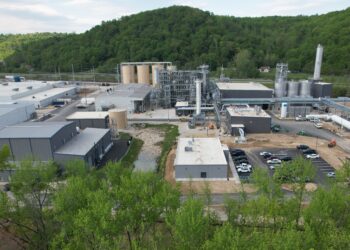
For those who run MRFs and mechanical lines, here’s why the details matter. In the near term, most plastic packaging (which, by the way, is made of chemicals) has no legitimate market for years, if ever, unless it can be co-processed at big chemical facilities, some owned by oil companies that mostly make fuel.
Pyrolysis oil is not a finished product. To become new plastic, it has to be blended with fossil feedstock in the crackers and refineries that already exist. Nobody will build a parallel petrochemical industry for recycled oil. Once the molecules mix, no one can say which pellet came from which pouch. Mass balance is the bookkeeping that assigns the recycled input to specific outputs, and the bookkeeping rules decide whether the output earns any recycled-content credit.
CAA’s plan accepts mass balance only with fuel-excluded allocation. It does not allow free attribution, which lets a certified operator assign recycled content to the products it chooses rather than spreading it evenly across all outputs. It never mentions co-processing. And it requires recycled-content claims to be certified by APR, which in practice offers no path for chemically recycled content. Commenters asked CAA to recognize ISCC PLUS. It didn’t. The door is open; the hallway behind it is bricked up.
None of this should threaten mechanical recyclers. Pyrolysis suits the films, pouches and multilayer laminates that mechanical lines reject and that contaminate PET and HDPE bales. Giving that material somewhere to go makes mechanical PCR cleaner and more valuable, not less.
When the door closes
If reality bent to my will as an idealist, I might call this good: companies would eliminate plastic packaging or consolidate today’s resins into a few mechanically recyclable ones.
But here is the likelier result. Without co-processors to sell to, most brands will give up on hitting the law’s rates. They will pay the fines instead, and seek political favors to reduce them. Fine revenue risks becoming a political prize, fought over by vested interests, with little going to effective reduction or recycling. The costs land on companies and their workers, or more likely on California consumers, who may take it out on their lawmakers at the next election.
The shirt that explains it all
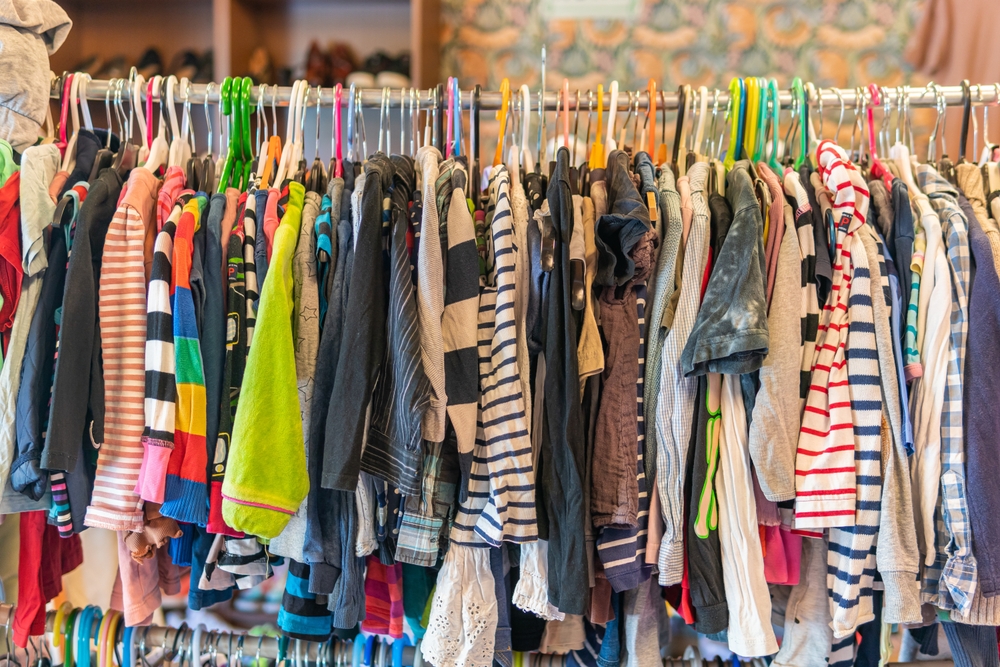
Meanwhile, the state is launching a vast new EPR program for textiles. Pick up a cotton-polyester shirt. It’s a cellulose fiber spun together with a synthetic polymer. Mechanical recycling can shred it, but every pass shortens the fibers and lowers the quality. Like plastics, textiles are made of chemicals. Forcing them through mechanical recycling alone is legally mandated downcycling.
The textile program may be more realistic. Landbell USA’s application to run it proposes mechanical recycling at domestic hubs and chemical recycling for blends and harder fractions, under safety and yield obligations. That’s an application, not an approved plan. But why would the textile rules stay realistic, if we hold to ideological rigidity on packaging?
The stakes are large on both sides. Californians landfill roughly 1.2 million tons of textiles a year, and in 2024 they landfilled about 1.5 million tons of film, flexible and multilayer plastic packaging, by CalRecycle’s count. If the textile program can’t find diversion pathways for blends, most of that clothing stays buried.
Regulate outcomes, not designs
It’s time to think systemically. Banning practices we don’t like isn’t enough; the unintended consequences are predictable and costly, especially to the planet.
CalRecycle must approve, conditionally approve or reject CAA’s plan by about December 27. It can keep the door open in practice, not just on paper: condition approval on a certification path for chemically recycled content alongside APR, and recognize verified co-processing under free-attribution mass balance. Set the outcomes and let mechanical, chemical and biological recycling compete to deliver them.
As a pragmatic idealist, I put source reduction first. But packaging and textile EPR will succeed in California only with an open door to innovation in both reduction and recycling, without making life harder for California’s working and middle classes, and without losing our shirts.
Sometimes you win so much you lose. A few advocates are about to lose big. The textile program is about to test what packaging just ruled out. It’s time we rethought our strategy.