




Resource Recycling
  • The Latest
  • Analysis
    • All
    • Certification Scorecard
    • Industry Announcements
    • Opinion
    Rainforest

    Inside the Circle: What the rainforest can teach us about EPR

    Closeup of a printed circuitboard

    Hardware demand puts new focus on parts harvesting

    Rare look inside the world’s largest plastics recycler

    Mass balance matters: Why different rules can lead to different outcomes 

    Certification Scorecard — Week of June 1, 2026

    IT asset disposition and electronics recycling: Now and then

    $60 billion in AI servers will create an ITAD challenge

    The independent ITAD at a crossroads

    DMD acquires ITAD firm Lifespan, outlines acquisition strategy

  • Conferences
    • Resource Recycling Conference
    • Plastics Recycling Conference
    • E-Scrap: The Longevity Conference
    • Textiles Recovery Summit
  • Publications
    • E-Scrap News
    • Plastics Recycling Update
    • Policy Now
    • Resource Recycling
    • Other Topics
      • All Topics
      • Brand Owners
      • Critical Minerals
      • Glass
      • Grant Watch / RFPs
      • Markets
      • Organics
      • Packaging
      • Research
      • Technology
      • Textiles
Subscribe
No Result
View All Result
Resource Recycling
  • The Latest
  • Analysis
    • All
    • Certification Scorecard
    • Industry Announcements
    • Opinion
    Rainforest

    Inside the Circle: What the rainforest can teach us about EPR

    Closeup of a printed circuitboard

    Hardware demand puts new focus on parts harvesting

    Rare look inside the world’s largest plastics recycler

    Mass balance matters: Why different rules can lead to different outcomes 

    Certification Scorecard — Week of June 1, 2026

    IT asset disposition and electronics recycling: Now and then

    $60 billion in AI servers will create an ITAD challenge

    The independent ITAD at a crossroads

    DMD acquires ITAD firm Lifespan, outlines acquisition strategy

  • Conferences
    • Resource Recycling Conference
    • Plastics Recycling Conference
    • E-Scrap: The Longevity Conference
    • Textiles Recovery Summit
  • Publications
    • E-Scrap News
    • Plastics Recycling Update
    • Policy Now
    • Resource Recycling
    • Other Topics
      • All Topics
      • Brand Owners
      • Critical Minerals
      • Glass
      • Grant Watch / RFPs
      • Markets
      • Organics
      • Packaging
      • Research
      • Technology
      • Textiles
Subscribe
No Result
View All Result
Resource Recycling
No Result
View All Result
Home E-Scrap

January fire data drives shift in recycling safety

byScott Snowden
January 6, 2026
in E-Scrap, Recycling

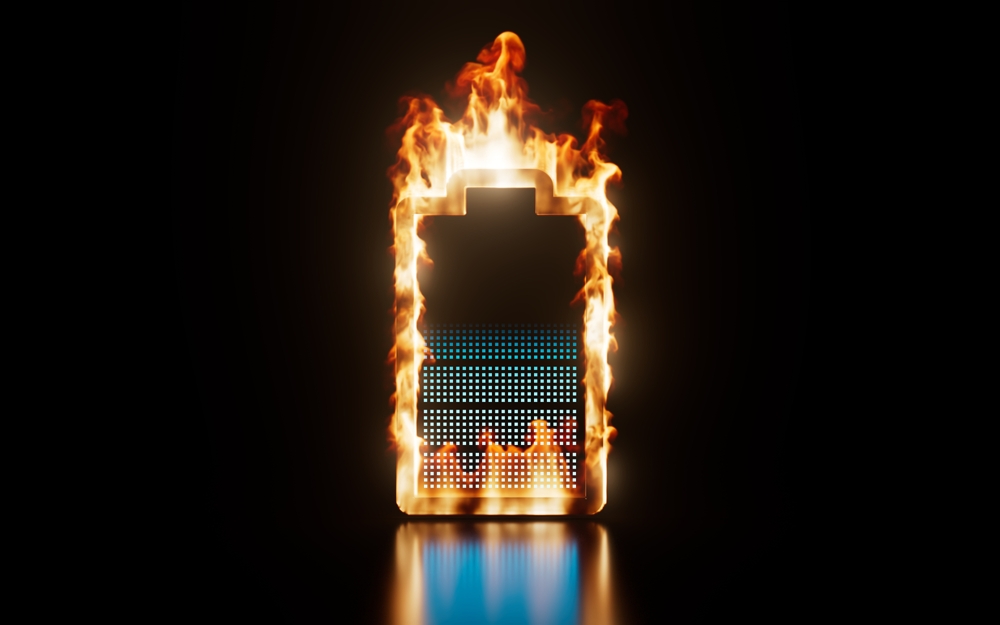
As batteries appear in everything from light-up shoes to electric vehicles, new EPR laws are reshaping recycling requirements. | JLStock / Shutterstock

The safety threat to the waste and recycling industry continues to grow as lithium-ion battery fires rise across North America, according to a new industry guide and recently released fire incident data.

The “Guide for Developing Lithium-Ion Battery Management Practices at Materials Recovery Facilities,” jointly published by the National Waste & Recycling Association, the Recycled Materials Association and the Solid Waste Association of North America, outlines practices aimed at reducing fire risk at MRFs.

Ryan Fogelman, vice president of fire protection at Fire Rover, said the guide reflects widening agreement that battery fires are not isolated operational issues. In his January fire report, Fogelman described the problem as outpacing the sector’s ability to address it.

“The waste and recycling industry has reached a critical inflection point when it comes to lithium-ion battery fires,” Fogelman said. “For years, operators, firefighters, insurers and municipalities have grappled with a problem that continues to grow faster than our collective ability to manage it.”

Fogelman has tracked publicly reported waste and recycling facility fires in the US and Canada since 2016. He said the latest figures make 2025 the worst year on record for publicly reported incidents since he began tracking.

“If you read my reports, you already know that this year was the worst on record for publicly reported fires since I began consolidating and sharing the data in 2016,” he said. “We finished the year with 448 publicly reported waste and recycling facility fires in the US and Canada, which is more than last year’s record of 430 fire incidents and nearly 25% above the annual average of 360 fire incidents.”

Fogelman said that lithium-ion batteries, particularly those embedded in everyday consumer products, have become the leading cause of fires at waste and recycling facilities across North America. He cited devices ranging from phones and power tools to e-bikes and disposable vapes as batteries enter the waste stream in greater volume and with greater risk.

“From phones and power tools to e-bikes and disposable vapes, these batteries are entering waste and recycling streams in unprecedented volumes, often damaged, hidden and highly unstable,” he said.

The guide emphasizes risk reduction rather than elimination and calls on facilities to build multiple layers of protection. It identifies several operational priorities, including early identification and isolation practices for suspect batteries, employee training focused on recognition and response, safe storage and handling protocols, emergency response planning that accounts for lithium-ion fire behavior, and public education and customer messaging on proper disposal.

“While data alone doesn’t solve the problem, it plays a critical role in validating what operators and first responders experience on the frontlines every day,” Fogelman said, adding that the guide’s inclusion of fire incident data signals that industry groups are aligning around the idea that battery fires are a systemic risk rather than isolated facility failures.

Fogelman highlighted disposable vaping devices as a particular concern, describing what he calls the “vape effect.” He said that publicly reported fire data shows incidents increasing about 26% from 2022 to 2025 compared with the average from 2016 to 2021.

“These products combine lithium-ion batteries, thin casings and widespread improper disposal, making them uniquely dangerous once they enter processing equipment,” he said.

Fogelman argued that facilities are being asked to manage a fire risk created largely outside their control and that waste and recycling employees should not be treated as a default front-line response team unless they are fully trained and equipped.

The guide calls for collaboration, but Fogelman said that the next phase should include direct accountability and participation from battery makers, consumer electronics companies and tobacco manufacturers to help fund solutions.

“Product design changes, battery removability, takeback programs and funding for public collection infrastructure aren’t optional if we expect meaningful reductions in fire incidents,” he said.

Fogelman said Fire Rover protected more than 850 facilities by the end of 2025 and that its systems identified and responded to more than 3,500 confirmed fire or hot spot incidents during the year, helping suppress about 450 fire events.

Looking ahead, he said his annual fire report is being updated with 2025 data and analysis under the title “Fortifying the Front Lines,” while describing the new guide as a foundation rather than a finish line. “This guide is an important step toward that alignment, and one the industry has needed for a long time,” he said.

Tags: BatteriesData
TweetShare
Scott Snowden

Scott Snowden

Scott has been a reporter for over 25 years, covering a diverse range of subjects from sub-atomic cold fusion physics to scuba diving off the Great Barrier Reef. He's now deeply invested in the world of recycling, green tech and environmental preservation.

Related Posts

Our top stories from June 2021

Colorado advances EV battery EPR law

byStefanie Valentic
June 3, 2026

Colorado, which passed its Battery Stewardship Act in 2025, is now looking to close the gap on large-format, EV batteries.

Fire at an EMR recycling facility in Camden, New Jersey May 29, 2026.

EMR faces shutdown calls after numerous fires

byBrian Clark Howard
June 2, 2026

A fire at a facility in Camden, New Jersey, has raised fresh questions on recycler safety and lithium ion batteries.

CommanderAI launches searchable hauler database

Underwater data centers drive shift in ITAD models

byDavid Daoud
May 26, 2026

The new technology is grabbing headlines for saving energy, but are people looking at the complete lifecycle?

A map of Europe with various pinned locations.

EU growth slows for circular plastics

byAntoinette Smith
May 19, 2026

Just when Europe should be accelerating its transition to a circular economy, the sector is slowing dramatically, said the president...

Study quantifies lithium battery threat to infrastructure

Battery fires remain elevated in early 2026: report

byPaul Lane
May 1, 2026

Ryan Fogelman has released his latest data on fires in January and February across the United States and Canada.

Five trends shaping PCR packaging to 2031

bySmithers editorial
April 29, 2026

Growing steadily but falling short of legislative demands, the global market for PCR plastic packaging is at a crossroads.

Load More
Next Post
Analysis: Dire EU landscape hints at US future

EU Commission fast-tracks support for plastics recyclers

More Posts

Recycling industry addresses Beyond Plastics report

Recycling industry addresses Beyond Plastics report

May 26, 2026
Machinex

Longview mill tragedy raises broader questions for fiber, recycling sectors

May 29, 2026
Fire at an EMR recycling facility in Camden, New Jersey May 29, 2026.

EMR faces shutdown calls after numerous fires

June 2, 2026
The independent ITAD at a crossroads

DMD acquires ITAD firm Lifespan, outlines acquisition strategy

June 2, 2026
IT asset disposition and electronics recycling: Now and then

$60 billion in AI servers will create an ITAD challenge

June 3, 2026
War, not demand driving polymer pricing

War, not demand driving polymer pricing

June 2, 2026
BASF, Encina expand circular feedstock partnership

BASF, Encina expand circular feedstock partnership

June 3, 2026
Our top stories from June 2021

Colorado advances EV battery EPR law

June 3, 2026
In My Opinion: Comparing the nation’s first packaging EPR laws

What Maine’s vape EPR law means for recyclers

June 4, 2026
California extends compostable labeling law

California bills crack down on false recycling, compostable claims

May 29, 2026
Load More

About & Publications

About Us

Staff

Archive

Magazine

Work With Us

Advertise
Jobs
Contact
Terms and Privacy

Newsletter

Get the latest recycling news and analysis delivered to your inbox every week. Stay ahead on industry trends, policy updates, and insights from programs, processors, and innovators.

Subscribe

Welcome Back!

Login to your account below

Forgotten Password?

Retrieve your password

Please enter your username or email address to reset your password.

Log In

Add New Playlist

No Result
View All Result
  • The Latest
  • Analysis
  • Recycling
  • E-Scrap
  • Plastics
  • Policy Now
  • Conferences
    • E-Scrap Conference
    • Plastics Recycling Conference
    • Resource Recycling Conference
    • Textiles Recovery Summit
  • Magazine
  • About Us
  • Advertise
  • Archive
  • Jobs
  • Staff
Subscribe
This website uses cookies. By continuing to use this website you are giving consent to cookies being used. Visit our Privacy and Cookie Policy.