





After a bumpy quarter in both the legislative and production arenas, polypropylene recycler PureCycle is shifting its sales efforts to non-food applications, and advancing toward feedstock supply security.
“Look, I know a lot has happened in this quarter and the company,” said CEO Dustin Olson during the Q3 earnings call Nov. 4. “Quite frankly, we responded. We fixed the problems. We redirected our selling effort. We won orders and we brought costs down. It’s taken longer than any of us wanted, but look at where we are.”
Olson also announced that Fernando Musa had been named executive chairman of the board, to help with the commercial ramp. Musa has been a board member since 2021 and is former CEO of Brazil-based polymers giant Braskem.
New Jersey fallout, California tailwinds
The three-year delay of New Jersey’s PCR mandate for food-contact applications pushed about 50 million pounds a year in sales volumes among 15 programs out of 2026, Olson said.
However, some brand owners opted to continue with adoption, representing about 10 million pounds in the near-term pipeline. And another 5 million to 10 million pounds is in the 2027 forecast.
Two quick-service restaurants (QSRs) that have qualified clear cups, and those volumes are now expected in the first half of 2027.
About 30 million pounds are now on hold, as a direct result of the decision, Olson said.
Looking ahead, PureCycle is shifting its sales efforts to the non-food rigid container mandate, which was unaffected by the NJDEP decision, and rises to 20% recycled content in January 2027. Olson cited such items as storage totes and laundry detergent bottles in this category.
And in California, the latest SB 54 program plan from producer responsibility organization Circular Action Alliance (CAA) pays $500 per ton for APR-certified PCR polypropylene starting in 2027. Mass-balance credits don’t count, which management says helps PureCycle.
Both California and New Jersey count purified resin, because it comes from a physical plastic-to-plastic recycling process and a certified recycled content. Further helping PureCycle is the fact that mass-balance credits – “based on bookkeeping rather than physical content” – do not count toward PCR mandates, Olson said.
Path to Ironton breakeven
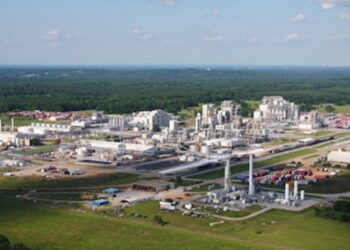
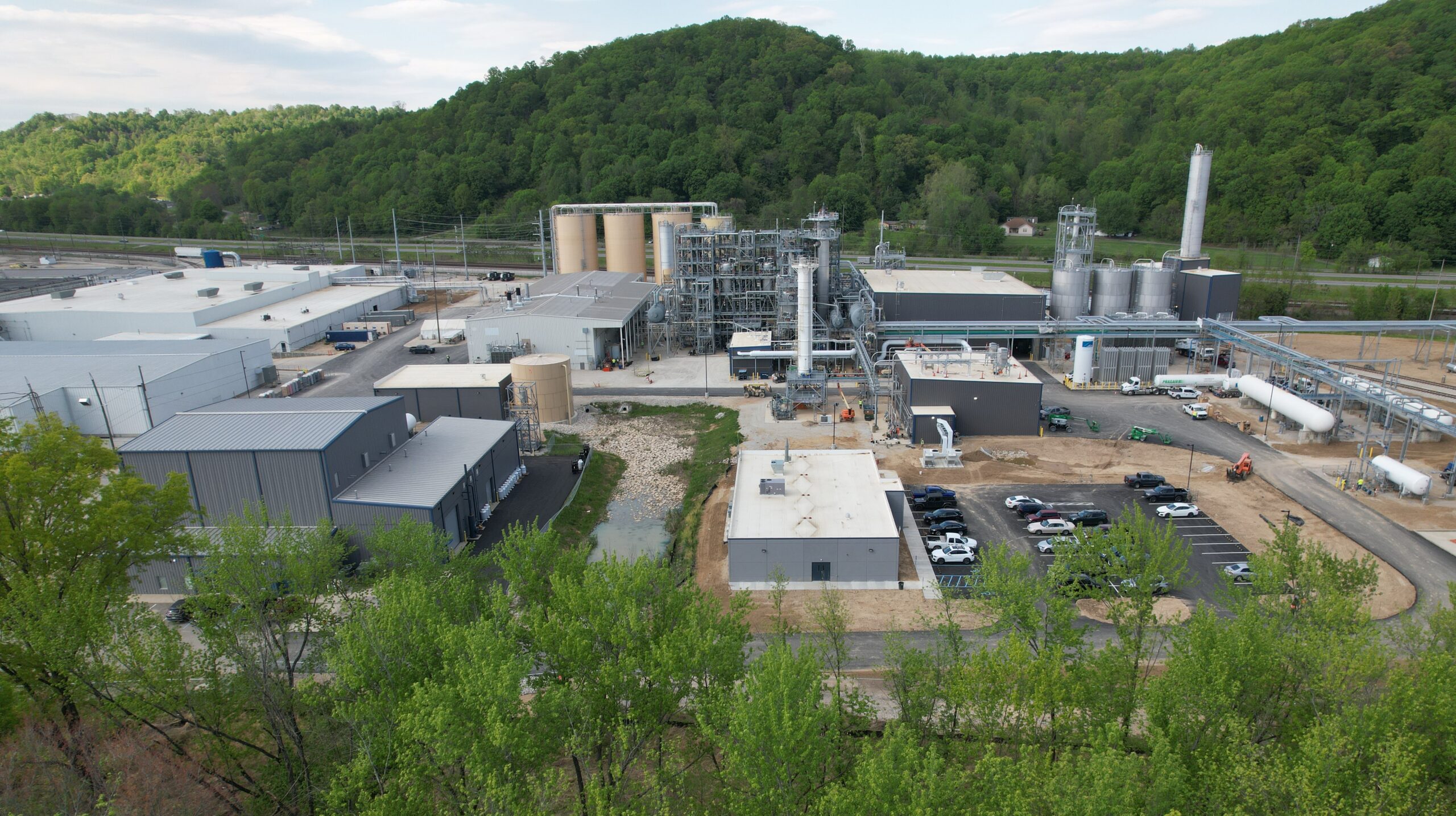
After the April planned maintenance at the flagship Ironton plant in Ohio, two reliability issues cut production and harmed quality, so PureCycle couldn’t ship to branded customers. “That was disappointing, but the important thing is that we solved both of them,” Olson said, adding that production is now aligned with current commercial demand and the plant is running at targeted onstream times.
He also outlined progress on adoption of PureFive resin, with qualified applications doubling from 10 to 20 since June. In addition, 67 programs have advanced a stage since July, and 19 new programs opened in Asia-Pacific.
Programs that are shipping, contracting or in final qualification total 45 million to 55 million pounds a year at full ramp, spread across six to eight customers, Olson said. The volumes represent about 40-50% utilization for the plant, whose nameplate capacity is 107 million pounds a year. Olson said this level gets close to breakeven for the Ironton plant.
Despite the New Jersey decision, PureCycle continues its food-contact work alongside the non-food push. Highlights include:
- Hot lids for QSR chains: first railcar purchase orders came in October, and the expected volumes are 7 million to 8 million pounds a year at full ramp.
- L’Oréal: PureFive is qualified for 100% recycled-content shampoo closures, with shipments expected in Q4. A second application for colorable closures is underway.
- Procter & Gamble: caps for Tide and Downy are on shelves, and Gain is next; a larger phase two is underway.
- Deodorant sticks: a large personal care company has approved white PureFive, with a final trial set for November.
- Film: a snack-film trial with a brand finished successfully in early November, and 12 new film programs opened.
Olson also pointed to the on-site compounding capabilities for providing additional benefits, beyond efficiency. “Color used to be one of our biggest challenges, and now it’s a selling point. A brand does not want 15 different shades of blue at the top of a laundry bottle, and now we know the color they want lot after lot,” he said. “That control is the biggest single reason qualifications move faster this year.”
Long-term feedstock contract
During the quarter PureCycle also finalized a three-year contract for feedstock PP bales with WM, the nation’s largest hauler and recycler. The deal is for up to 25 million pounds (11,340 metric tons) a year of post-consumer PP bales, starting this month, and Olson said it simplifies operations and improves the polypropylene yield from #5 bales.
“The relationship is broader than feedstock. WM has deep relationships with the brands whose packaging ends up in bins, and we’re working with WM on circularity programs with those brands,” Olson said. “What WM collects, we purify and it goes back into the same product.”
Long-term contracts are the norm in traditional chemical and polymer markets, with supply and offtake agreements often extending 10 years or more. But as the recycling industry has matured, recyclers have struggled to secure procurement beyond the spot buying and informal “handshake” agreements that have characterized the industry since its inception.
Several factors have stymied these efforts – a lack of legislative mandates to ensure demand, a perception of inconsistent quality for recycled feedstock and stiff competition with oversupplied virgin resin at very low prices.
However, massive infrastructure investments from WM and other MRF operators have modernized sorting capabilities, making bale quality and yields more consistent, while a primary goal of emerging EPR policy is to increase residential collection volumes.
In 2023, PureCycle reached an agreement with iSustain for up to 10 million pounds a year in feedstock PP.
Thailand, Belgium spending paused
Discretionary spending for the company’s two planned overseas plants is paused to focus on Ironton’s commercial progress, Olson said.
The company’s work this year on growth projects in Antwerp, Belgium, and Rayong in Thailand “took them to the point where the next step is a larger commitment, and that is the natural point to hold discretionary spending while Ironton ramps,” said CFO Donald Carpenter. “This is a deliberate capital decision, not a change in our plan. It keeps our capital focused on Ironton today. And because the groundwork is done, we can move quickly into the next phase as commercial progress at Ironton supports it.”
The $250 million Rayong project is the next investment priority, behind Ironton, due to the potential for both feedstock and sales volumes in the region.
“Converters in Thailand make packaging for brands in the United States, Europe and Japan that want recycled content, and they can’t find it,” Olson said. “They see our plant as a way for them to win the business. On the supply side, the collectors already sort polypropylene alongside PET and polyethylene, but they’ve got nowhere to go with it.”
For now, Thai investment incentives are in place and PureCycle is working on final terms for project financing. PureCycle has a binding term sheet with a bank, “and those are not issued unless the project is viable,” Carpenter said. “They dug into a tremendous amount of the due diligence. And so we’re just in the process of working through those final terms and conditions. These things take time, and we’re not going to rush through it until we get to terms that are acceptable for both parties.”
Groundbreaking and full construction will follow the financial close; a construction permit was issued in September.
By the numbers
Q3 results came in below plan, with weak revenue attributed to production disruptions at Ironton and the New Jersey delay.
Third-quarter revenue was $2.3 million, lower by 49% on the quarter and by 4% on the year. Adjusted EBITDA (earnings before interest, taxes, depreciation and amortization) was about negative $28 million, narrowing losses by about $0.6 million on the year.
Production volumes rose to 5.2 million pounds (2,360 metric tons), higher by 16% compared to Q2, when Ironton underwent a turnaround.
Still, PureCycle provided no revenue guidance or break-even time line.