





Tennessee-headquartered Eastman will receive a major federal grant the Trump administration canceled last year, originally meant to help fund the company’s second chemical recycling plant in Texas.
The reinstated US Department of Energy (DOE) grant will cover capacity expansions at the Kingsport methanolysis facility and development of the potential second plant, but in an Oct. 30 earnings call CEO Mark Costa hinted at potential acquisitions of recently closed RPET processing capacity.
“There are recycling plants that have shut down in this country that we can get up for a very – we can purchase for a very low price,” he said. “There are polymer lines that have been shut down, and there’s infrastructure around both of them that are sitting there in those sites.”
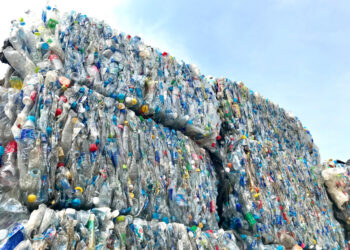
About 25% of US post-consumer PET processing capacity has closed in the past 18 months, according to the Association of Plastic Recyclers (APR), amid a prolonged influx of cheap imported resin, both virgin and recycled. APR owns Resource Recycling, Inc., publisher of Plastics Recycling Update.
Producer Alpek announced closure of its Pennsylvania RPET plant in January, after also closing an operation in North Carolina. Evergreen closed operations in Ohio and New York as well this year. Last year, Phoenix Technologies closed one of its Ohio RPET plants, and rPlanet Earth in California also closed, but water bottler Niagara later bought and restarted the California facility.
In September, several members of Congress including Diana Harshbarger, who represents Tennessee’s 1st District that contains Kingsport, appealed to the US Trade Representative to consider the struggling sector in its Section 301 investigations of excess capacity in foreign manufacturing.
Updated scope, restarting plants
Although the grant originally was meant to help fund construction of Eastman’s second methanolysis plant, located in Longview, Texas, the company has revised the project scope.
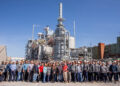
The money will go toward a previously announced capacity increase of about 30% at Eastman’s flagship methanolysis plant in Kingsport, through debottlenecking and technology advancements.
In addition, the money will support “restart and repurposing of underutilized US recycling assets,” according to a company statement, including expanded feedstock processing capabilities as well as polymer capacity. The grant also will support “milestone-based planning for a potential second US methanolysis facility.”
Under the reinstated grant – amounting to $340 million, after Eastman previously received $35 million – the company must provide about half the costs for capacity expansion and development of the planned Texas plant. Costa said the grant “is structured where up to 50% of the capital, if we can get the number at the right target, can be paid for by the DOE.”
The second plant was postponed after the DOE canceled the grant in 2025. During the call, Costa said the project would have “substantially less capex” than in previous plans. “You have to remember that the Longview project was not just a methanolysis plant; it was also a polymer line. It was feedstock processing, the front end, it was infrastructure to support all that together. And about 40% to 50% of the capital is actually not the methanolysis plants; it’s all the other things: the processing, the polymer lines, the infrastructure, etc.”
Costa added, “We are very excited to get the grant back. I would say that the Department of Energy has been a phenomenal partner in coming back to us and talking about how we could collaborate on a reinstatement.”
Reiterating Eastman’s positioning of the plant as part of shoring up domestic manufacturing capabilities, he said, “I think we’re fully aligned in their vision, which is priority on reindustrializing US supply chains to America, building resiliency.”
In recent years, China has built up vast capacity for the entire PET value chain, in a push toward self-sufficiency for the massive polyester sector. During the call Costa said, “When China is getting to be 75% of the industry, you know, you have a serious issue about how you can put food and water on the shelves, and so [supply] security is incredibly important.”
“The Department of Energy is proud to support this strategic investment in American ingenuity, industrial competitiveness, and the future of U.S. manufacturing,” said Assistant Secretary of Energy Audrey Robertson. “By expanding its proven, American-made recycling technology and putting underutilized assets back to work, Eastman is demonstrating how innovation can strengthen domestic manufacturing, revitalize existing industrial infrastructure, and build more resilient supply chains. DOE will continue to collaborate with private industry to make U.S. manufacturing the strongest in the world and grow jobs and economic prosperity.”