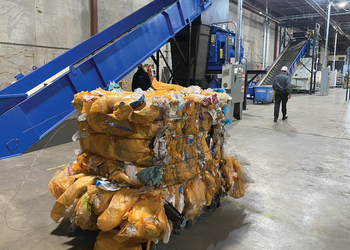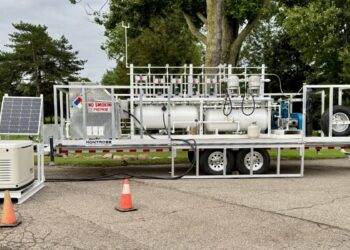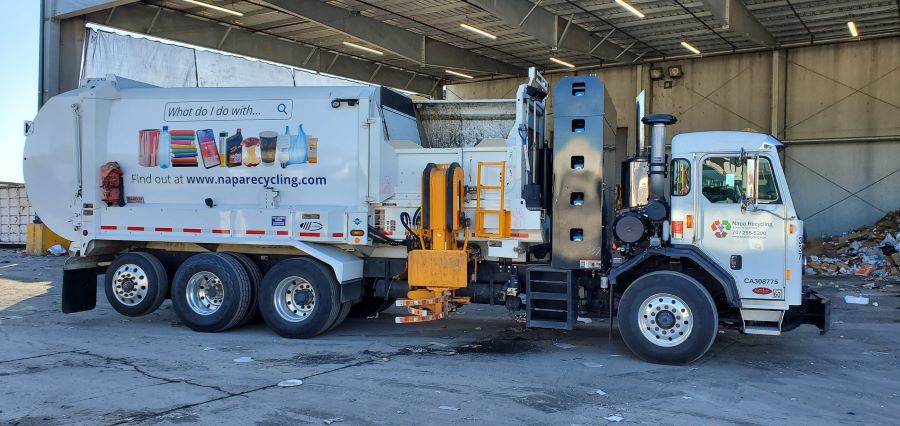


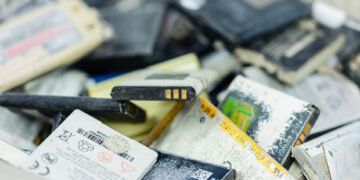



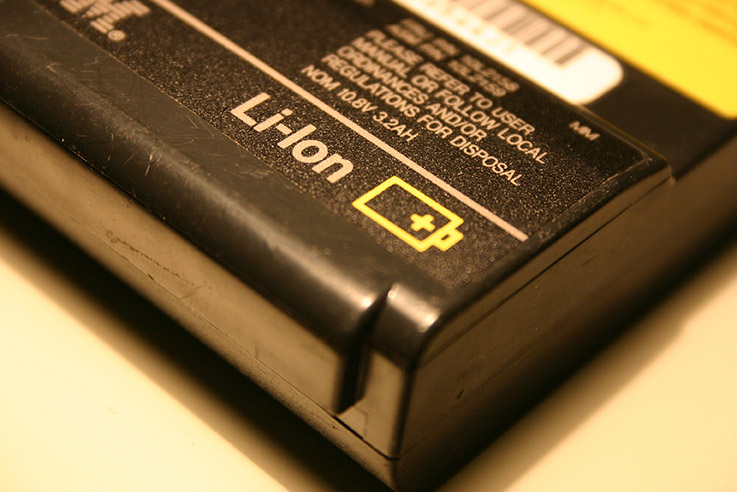
Many MRF operators cite batteries as their greatest challenge, and for good reason. Fires at waste management facilities have been steadily increasing in recent years, many traced back to improper disposal of household batteries.
During a May 7 webinar hosted by the Northeast Recycling Council, speakers from two information technology asset disposal firms as well as the U.S. EPA explored a wide range of efforts to help improve consumer education and reduce fire risks.
Various analyses, done with both public and private funds, have explored battery-related fire trends. For example, the EPA conducted a 2021 study showing the increasing incidence of lithium-ion battery fires in waste management and recycling between 2013 and 2020. The most recent study by fire detection equipment supplier Fire Rover showed that in 2024, publicly reported fires at U.S. and Canadian MRFs and transfer stations increased by 20% on the year to reach their highest recorded level.
Also in 2024, the National Waste and Recycling Association estimated that more than 5,000 fires occur each year at recycling facilities, linking many of them to improperly discarded lithium-ion batteries.
Yet despite the broad availability of data, quantifying battery-related fires is an imperfect science.
“We know it’s a massive undercount,” said Jessica Young, chief of the recycling and generator branch at the EPA’s Office of Resource Conservation and Recovery, during the webinar.
“Underreporting of fires is a significant barrier to understanding the issue fully,” added moderator Christina Seibert, executive director of the Solid Waste Agency of Northern Cook County in Illinois.
Each analysis employs its own methodology, but they all largely rely on public reporting of fires, and not all fires are reported, Young said. Further, analysts must also determine whether the blaze was related to an improperly managed battery, which may prove challenging.
Regardless of the methodology, it’s clear that fires are occurring more often. A report from Call2Recycle found a sharp increase in the number of products containing embedded batteries, which pose a unique danger because consumers may not realize a greeting card or a vape pen contains a battery.
And the number of lithium-ion batteries placed on the U.S. market is expected to grow, Young said, citing data from analytics firm Circular Energy Storage.
Meanwhile, North American capacity to process these batteries is “quite insignificant,” according to a report from consultancy Deloitte and the American Chemical Society, though the U.S. is working on expanding capacity.
Nevertheless, public education remains inconsistent, and consumers have varying degrees of access to battery recycling services, said panelist Joe Lange, plant general manager at Wisconsin-based Universal Recycling Technologies.
Some areas prohibit disposing of batteries in household trash, and while a ban provides a clear message to residents, localities must build ongoing education and awareness about battery recycling — as well as the risks of mismanagement, Seibert said: “There’s a lot to be done around behavior change and messaging to make people realize it’s a safety concern.”
Emerging detection technologies
Waste handlers can use manual or automated detection to identify devices that are likely to contain batteries, Lange said. Even so, current processes result in a high rate of false positives, and standardization is limited, he added.
Panelist David Hirschler, chief sustainability officer at ERI, agreed, saying that more than 60% of devices his company flags for containing a battery may not actually have one. Based in California, ERI is developing a process using X-ray density analysis to detect embedded batteries within electronics.
Other research is exploring how to shred battery-embedded devices most effectively. And while no standard has yet emerged, Hirschler and Lange both said the most likely process will be compartmentalized, similar to the technique used to segregate mercury and other harmful materials from plasma-screen TVs before the device enters a shredder.
Adaptive design
While advances in detection are vital to reducing battery-related fires, device design changes are important as well, the panelists said.
Electronics manufacturers are making strides toward increasing repairability, whether by choice or by legislation. One example is Apple’s switch to a more easily removed battery adhesive, which took the company years to develop.
But manufacturers may resist design changes for reasons both valid and less so, Hirschler said. ERI frequently discusses the issue with OEMs, who cite quality and durability concerns, he added.
There’s “tons” of ongoing research into alternative battery materials that pose less of a fire risk than lithium and could ease dependence on lithium-rich countries, Hirschler said. But most of the solutions are meant for larger-format batteries, such as those used in energy storage and occasionally electric vehicles.
Federal initiatives to increase collection, recycling
The EPA is working on a proposal to establish a new category of universal waste specifically tailored to lithium batteries, Young said. The new category would improve safety standards and reduce fires from mismanaged end-of-life lithium batteries, promote battery recycling and align industry best practices to harmonize battery management, according to the agency’s website.
Although the change in administration has delayed the proposal — originally scheduled for June 2025 — an updated schedule will be included with the spring regulatory agenda from the Office of Management and Budget, she said.
Among its efforts to increase industry engagement and community education, the EPA has held a series of working sessions on household battery collection and recycling. The agency includes recordings of past working sessions on its site.
In addition, the Infrastructure and Jobs Act has provided grants to bolster domestic supply chains for battery manufacturing and recycling. However, whether funding changes are permanent or regulations will change is still a significant unknown for federal agencies, Young acknowledged.
In the end, Lange said, everyone in the product life cycle has a role in managing end-of-life lithium batteries – from OEMs to consumers to recyclers.
Every community in the U.S. must work to amplify a unified message to keep embedded batteries out of curbside collections, to help reduce fires and the associated risks to communities and waste management workers, Young said.