




Resource Recycling
  • The Latest
  • Analysis
    • All
    • Certification Scorecard
    • Industry Announcements
    • Opinion
    Recycling council emphasizes importance of supply

    Sorted: Why recycling isn’t a ‘scam’

    AI and the changing economics of retired hardware

    Certification Scorecard — Week of June 8, 2026

    ITAD is moving past its adolescent phase: beyond end-of-life

    Rainforest

    Inside the Circle: What the rainforest can teach us about EPR

    Closeup of a printed circuitboard

    Hardware demand puts new focus on parts harvesting

  • Conferences
    • Resource Recycling Conference
    • Plastics Recycling Conference
    • E-Scrap: The Longevity Conference
    • Textiles Recovery Summit
  • Publications
    • E-Scrap News
    • Plastics Recycling Update
    • Policy Now
    • Resource Recycling
    • Other Topics
      • All Topics
      • Brand Owners
      • Critical Minerals
      • Glass
      • Grant Watch / RFPs
      • Markets
      • Organics
      • Packaging
      • Research
      • Technology
      • Textiles
Subscribe
No Result
View All Result
Resource Recycling
  • The Latest
  • Analysis
    • All
    • Certification Scorecard
    • Industry Announcements
    • Opinion
    Recycling council emphasizes importance of supply

    Sorted: Why recycling isn’t a ‘scam’

    AI and the changing economics of retired hardware

    Certification Scorecard — Week of June 8, 2026

    ITAD is moving past its adolescent phase: beyond end-of-life

    Rainforest

    Inside the Circle: What the rainforest can teach us about EPR

    Closeup of a printed circuitboard

    Hardware demand puts new focus on parts harvesting

  • Conferences
    • Resource Recycling Conference
    • Plastics Recycling Conference
    • E-Scrap: The Longevity Conference
    • Textiles Recovery Summit
  • Publications
    • E-Scrap News
    • Plastics Recycling Update
    • Policy Now
    • Resource Recycling
    • Other Topics
      • All Topics
      • Brand Owners
      • Critical Minerals
      • Glass
      • Grant Watch / RFPs
      • Markets
      • Organics
      • Packaging
      • Research
      • Technology
      • Textiles
Subscribe
No Result
View All Result
Resource Recycling
No Result
View All Result
Home Recycling

Plastics recovery project underway in Pacific Northwest

Colin StaubbyColin Staub
August 20, 2019
in Recycling
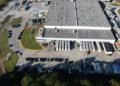
An industry-backed demonstration project is taking place at a former Far West Recycling facility in Portland, Ore. | Jared Paben / Resource Recycling, Inc.

Aug. 1 kicked off public demonstrations of an effort to sort a variety of resins from loads of material otherwise bound for disposal. The goal is to develop a pool of data that can help guide future industry investments.

The Pacific Northwest Secondary Sorting Demonstration Project is in the middle of its 60-day run, operating in a shuttered recycling center in Portland, Ore. Equipment from Titus MRF Services was transported up from Los Angeles, and the project is currently working through loads of material provided by several materials recovery facilities (MRFs).

Led by the Plastics Industry Association, the project is also sponsored by the American Chemistry Council (ACC), Americas Styrenics (AmSty), Berry Global, the Carton Council, LyondellBasell, the Metro regional government that covers the Portland metropolitan area, and industrial products manufacturer Milliken.

The volume and variety of funding organizations “speaks to the breadth of interest” from different sectors, said Kim Holmes, vice president of sustainability for the Plastics Industry Association.

The project was announced in June.

Data is the driver

At a warehouse that formerly housed a recycling center operated by Far West Recycling, the secondary sort project will work through four separate 40-ton loads of material, or 160 tons in all.

The inbound stream is MRF residue otherwise destined for disposal. The secondary facility is taking that material and using sorting equipment to further separate it to recover additional value.

The 160 tons is a relatively small volume, but it’s a sample size that will generate data that can be generalized for wider application. The Portland project is separating out six streams of material: PET, HDPE, LDPE, PP, PS, and gable top and aseptic cartons.

Material is coming in from several MRFs around the Pacific Northwest, including facilities operated by Far West, Waste Connections and others.

(Story continues below slideshow. Hover over a photo to bring up arrows that allow you to advance through the sequence.)

This project is primarily geared toward developing an in-depth look at the types of recyclables that are for one reason or another not being recovered by MRFs, Holmes explained during an Aug. 1 tour. The resulting information can be used to help stakeholders make more informed decisions about investing in processing infrastructure, end markets and recycling technology.

Over the last year, a variety of entities have shown interest in putting more capital behind materials recovery as recycling and pollution concerns have been amplified in the media. Having better data about what MRFs are sending to landfill and incineration could help investors make wiser choices.

“Every pound of material will be accounted for in the final report,” Holmes said, noting the final analysis will be made public and will just present the numbers, not specific investment recommendations.

The project will run trials through the end of August, and the report is slated for completion in October.

California facility provides model

Titus MRF Services operates a commercial-scale secondary sorting facility in Los Angeles, the only facility of its kind in the U.S. Under a secondary sorting model, the idea is that a single facility taking in material from many MRFs throughout a region could operate with benefits of scale. For a single MRF, it might not make sense to invest in equipment to effectively recover material that makes up a very small portion of the stream, but with a larger concentration of that material, the economics could pencil out.

Under the Titus model, MRFs pay a toll fee to the secondary sorting facility – a sum that’s lower than the local landfill tip fee.

Depending on a variety of factors, including material and market conditions, the secondary sorting facility shares commodity sales revenue with the MRF supplying the material. Ideally, the model provides a cheaper way for MRFs to get rid of material they aren’t recovering and generates a greater volume of sorted recyclables.

If the secondary sort idea were to be brought to other markets, the model would likely vary significantly based on region, given differences in what recycling programs accept, the presence or lack of a container deposit, MRF sorting procedures and more.

As for where the material from the Portland pilot project will go after it’s sorted and tabulated, a number of end users have expressed interest. According to Holmes, Exxon Mobil has asked for the PE; Loop Industries is interested in the low-grade PET; Regenyx (a partnership of AmSty and chemical recycling firm Agilyx) will take the PS; Exxon Mobil and chemical recycling company Renewlogy are interested in the recovered film; and Berry Global will take the PP.

Impetus for study

The world of plastics recycling is changing and the industry will look very different in the years to come, Holmes said. The secondary sorting project is an example of one model that could emerge. There’s no one solution for the challenges facing the recycling industry, she added, but the idea is that the secondary sorting facility concept could be one of several tools.

The secondary sorting model could tackle several challenges facing the recycling sector. For instance, it could help MRFs adapt to the ever-changing material stream, Holmes said, by enabling recovery of different types of material without requiring investments in each MRF.

A secondary sort could also help the industry address another emerging challenge. There has been unprecedented investment from brand owners in recycling companies, as well as unprecedented recycled-content commitments from brand owners, but all signs indicate that without a significant increase in recycling rates there will be insufficient supply of recycled material available for brand owners to meet their goals.

A version of this story appeared in Plastics Recycling Update on August 7.

 

Tags: Industry GroupsPlasticsTechnology
TweetShare
Colin Staub

Colin Staub

Colin Staub was a reporter and associate editor at Resource Recycling until August 2025.

Related Posts

Crystal Bayliss of the U.S. Plastic Pact

Bayliss tapped to lead US Plastics Pact 

byAntoinette Smith
June 15, 2026

Crystal Bayliss had served in an interim capacity since January, after the departure of CEO and executive director Jonathan Quinn.

AI and the changing economics of retired hardware

byDavid Daoud
June 12, 2026

The technology offers challenges and opportunities for the ITAD space.

Smartphones in store.

Consumers’ expectations climb along with use of tech: Report

byPaul Lane
June 10, 2026

A new report on consumer technology found it’s become integral to users’ lives, but the ways companies refine the ownership...

GP Recycling offers on-ramp for smaller recyclers

GP Recycling offers on-ramp for smaller recyclers

byAntoinette Smith
June 9, 2026

The company's hubbIT platform is a way for smaller generators to sell plastic, glass and metal bottles to the brokerage,...

DOE commits federal funds toward critical minerals

ABTC wins DOE appeal for Tonopah Flats lithium refinery project

byStefanie Valentic
June 8, 2026

ABTC has won back a DOE grant that was among hundreds terminated last fall.

House resolution aims to make recyclability central to product design

NY EPR bill fails to advance after third try

byStefanie Valentic
June 8, 2026

This marks the third session in which the bill cleared the Senate only to stall in the Assembly.

Load More
Next Post

Indonesia's fiber import rules become more clear

More Posts

House resolution aims to make recyclability central to product design

NY EPR bill fails to advance after third try

June 8, 2026
Various PET thermoform containers.

Thermoform recovery soars, PCR content falls

June 10, 2026
CalRecycle withdraws proposed regs for SB 54

Oceana, NRDC, CAW sue CalRecycle over SB 54 regs

June 5, 2026

Three-bill package aims to revamp Michigan’s bottle return system

June 9, 2026

Battery fires still a major risk to recyclers: report

June 9, 2026
Rare look inside the world’s largest plastics recycler

Mass balance matters: Why different rules can lead to different outcomes 

June 5, 2026
Circular Materials to supply PlasCred chem recycling plant

Circular Materials to supply PlasCred chem recycling plant

June 4, 2026
Recycling industry addresses Beyond Plastics report

Recycling industry addresses Beyond Plastics report

May 26, 2026

ITAD is moving past its adolescent phase: beyond end-of-life

June 10, 2026
GP Recycling offers on-ramp for smaller recyclers

GP Recycling offers on-ramp for smaller recyclers

June 9, 2026
Load More

About & Publications

About Us

Staff

Archive

Magazine

Work With Us

Advertise
Jobs
Contact
Terms and Privacy

Newsletter

Get the latest recycling news and analysis delivered to your inbox every week. Stay ahead on industry trends, policy updates, and insights from programs, processors, and innovators.

Subscribe

Welcome Back!

Login to your account below

Forgotten Password?

Retrieve your password

Please enter your username or email address to reset your password.

Log In

Add New Playlist

No Result
View All Result
  • The Latest
  • Analysis
  • Recycling
  • E-Scrap
  • Plastics
  • Policy Now
  • Conferences
    • E-Scrap Conference
    • Plastics Recycling Conference
    • Resource Recycling Conference
    • Textiles Recovery Summit
  • Magazine
  • About Us
  • Advertise
  • Archive
  • Jobs
  • Staff
Subscribe
This website uses cookies. By continuing to use this website you are giving consent to cookies being used. Visit our Privacy and Cookie Policy.