

Resource Recycling
  • The Latest
  • Analysis
    • All
    • Certification Scorecard
    • Industry Announcements
    • Opinion
    e-Stewards to develop an ITAD-specific standard

    Certification scorecard — week of Sept. 21

    Who should pay for lithium-ion battery fire damage?

    America’s critical-materials buildout has a feedstock problem

    Certification scorecard – week of Sept. 14

    Canada Plastics Pact reports 2024 progress

    Trade tensions shift global mineral partnerships 

    Spin-off lets Linca focus on battery mineral recovery

    Critical mineral policy shift creates opportunity

  • Conferences
    • Resource Recycling Conference
    • Plastics Recycling Conference
    • E-Scrap: The Longevity Conference
    • Textiles Recovery Summit
  • Publications
    • E-Scrap News
    • Plastics Recycling Update
    • Policy Now
    • Resource Recycling
    • Other Topics
      • All Topics
      • Brand Owners
      • Critical Minerals
      • Glass
      • Grant Watch / RFPs
      • Markets
      • Organics
      • Packaging
      • Research
      • Technology
      • Textiles
Subscribe
No Result
View All Result
Resource Recycling
  • The Latest
  • Analysis
    • All
    • Certification Scorecard
    • Industry Announcements
    • Opinion
    e-Stewards to develop an ITAD-specific standard

    Certification scorecard — week of Sept. 21

    Who should pay for lithium-ion battery fire damage?

    America’s critical-materials buildout has a feedstock problem

    Certification scorecard – week of Sept. 14

    Canada Plastics Pact reports 2024 progress

    Trade tensions shift global mineral partnerships 

    Spin-off lets Linca focus on battery mineral recovery

    Critical mineral policy shift creates opportunity

  • Conferences
    • Resource Recycling Conference
    • Plastics Recycling Conference
    • E-Scrap: The Longevity Conference
    • Textiles Recovery Summit
  • Publications
    • E-Scrap News
    • Plastics Recycling Update
    • Policy Now
    • Resource Recycling
    • Other Topics
      • All Topics
      • Brand Owners
      • Critical Minerals
      • Glass
      • Grant Watch / RFPs
      • Markets
      • Organics
      • Packaging
      • Research
      • Technology
      • Textiles
Subscribe
No Result
View All Result
Resource Recycling
No Result
View All Result
Home Plastics

EFS-plastics invests as EPR takes shape

Antoinette SmithbyAntoinette Smith
August 31, 2026
in Plastics
EFS-plastics invests as EPR takes shape

The Alberta provincial flag | Nina Images / Shutterstock

Editor’s note: EPR and resin markets will be explored during the 2027 Plastics Recycling Conference, March 1-3 near Washington, DC. Register now!

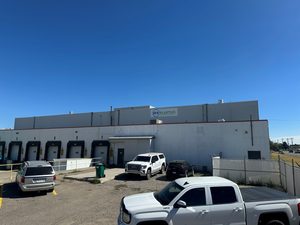
EFS-plastics recently completed a US $12 million expansion in Lethbridge, Alberta, shifting the facility from a regional sorting operation into a fully integrated recycling hub that can process HDPE and PP – and for the first time for EFS, PET – on a single wash line. 

The company is currently starting up HDPE and PP processing, with PET flake capacity expected online this fall, CEO Martin Vogt told Plastics Recycling Update. EFS anticipates producing food-grade PCR for all three resins starting in 2027, and is conducting challenge testing and preparing regulatory submissions for letters of no objection (LNO) from the US FDA. 
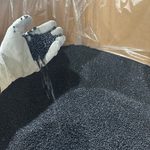
Resin pellets produced with the expanded capabilities at the Alberta facility | Courtesy EFS-plastics
The Alberta EFS-plastics facility | Courtesy EFS-plastics
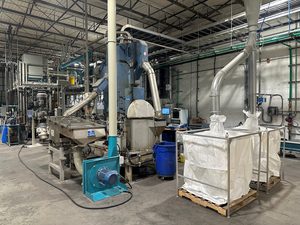
An extruder in the expanded Alberta capacity | Courtesy EFS-plastics

Equipment and construction costs ran 15–25% above initial estimates between planning and installation due to inflation, Vogt said. Project support from the government-funded organization Alberta Innovates shows how targeted public investment can unlock private recycling infrastructure, he said.

Vogt began his career in his native Germany in the early 1990s and founded EFS in Listowel, Ontario, in 2007. Since 2015, the company has operated as a joint venture with Inteplast Group, which he says paved the way for the current multi-plant footprint. 

In addition to the Ontario and Alberta facilities, EFS operates flexible packaging processing in Hazleton, Pennsylvania. In 2023, they added a third production line to the plant, allowing the plant to purchase much cheaper B- and C-grade bales for upgrading. The same year, EFS debuted R-LDPE resin produced at the plant. 

Flexible design for rigid plastics

The Alberta expansion represents the company’s most technically ambitious project to date. At its heart is a highly flexible, batch-style wash line — a unique configuration in the industry. While lines that can handle PE and PP are fairly common, the ability to process PET alongside polyolefins on the same system is rare. Vogt says EFS is among the first to implement a three-material setup at this scale.

The front end runs continuously, sorting material into storage silos. As each silo fills, an operator selects a new program and the wash line automatically purges and restarts on the next material stream. The line can also switch to single-resin processing when market conditions or EPR program design call for greater material segregation.

Rather than relying on outside engineering firms and turnkey processing lines — the industry norm — EFS designed and integrated the system through its own engineering arm, EFS Equipment. The business designs process and control systems, integrates third-party equipment, and provides ongoing maintenance and upgrade support across all EFS plants, Vogt said.

“We’re not reinventing the wheel, but we have the ability to design if we need to, and make changes if we need to.” 

Closing the gap between feedstock and resin

The Alberta facility opened in 2021 as a secondary sorting plant, upgrading mixed rigid plastic bales before shipping them to Ontario for further processing. The expansion eliminates that cross-country haul, keeping more value and jobs in western Canada, Vogt said.

It also closes the geographic gap between EFS and its feedstock. “The West Coast does not have the amount of supply that the East Coast has. So you can’t build three production lines,” he said. “We needed to come up with an idea to adjust to the available volumes, and so we built a production line which can handle three different streams.”

The company has long imported post-consumer plastics from Oregon, Washington and California; processing capacity in Alberta now sits close to those sources, shortening supply chains and cutting transportation costs and emissions. That proximity also positions EFS to serve emerging West Coast EPR programs for packaging as they come online.

Vogt pushed back on assumptions about material segregation, stressing that the highest overall system yield often comes from mixed streams processed at specialized facilities — rather than from highly fragmented MRF sorting. The new line’s flexibility, he noted, means EFS can adapt as EPR program designs evolve.

“Because of the market, many markets are shifting towards single types of materials. Of course we can also run just straight single-type material… but the highest yield we will always get from a mixed rigid bale.”

Policy drives investment

The investment comes as the industry faces significant pressure, with recyclers closing globally. And yet the long-term mission to create a circular economy continues to drive many stakeholders. 

“Recycling currently is not a business model, it’s a passion,” he said. “And if you’re not passionate about it then you shouldn’t get into it, because you can get easier and more money in many other areas.” 

With Canadian provinces and territories having adopted packaging EPR programs, the US now has a growing library of lessons to draw from as state-level policy develops. Vogt said he sees those lessons being applied, particularly by groups paying close attention to what has worked — and what hasn’t — in Canada.

He’d like to see US EPR programs focus on end-to-end efficiency, from curbside collection to finished PCR, rather than optimizing a single link in the chain such as sorting for maximum commodity revenue. Involving recyclers early in program development is a valuable and often underused opportunity, he added. Transparency and balanced governance are also critical, particularly where a small number of producer responsibility organizations (PROs) represent large shares of the market.

“The innovation of the recyclers over the last 20 years brought us to the level where we are. That was only possible because there was actually at some point a business case to be made to be a recycler. Over the last couple of years there is not, and that’s why you see the industry declining.” 

Tags: CanadaEPRHDPEPETPP
TweetShare
Antoinette Smith

Antoinette Smith

Antoinette Smith has covered commodity plastics and supply chains for more than a decade, with a special focus on economic impacts and consumer behavior. She brings a balanced, thoughtful view to recycling stories, and isn't afraid to ask "why?" Contact Antoinette at antoinette@resource-recycling.com.

Related Posts

Recyclers reeling from NJ PCR extension

Recyclers reeling from NJ PCR extension

byAntoinette Smith
September 23, 2026

The recent three-year extension for exemptions to the state's PCR mandates elicited frustration and confusion among recyclers.

Textile EPR and the definition of recycling

Textile Exchange reports progress in production

byPaul Lane
September 22, 2026

The organization said the industry has made some sustainability progress, but there’s much room for improvement.

ALPLA’s holistic approach to packaging design

ALPLA’s holistic approach to packaging design

byAntoinette Smith
September 18, 2026

The packaging and recycling company's North American design lead explains why recyclability goals can't exist in isolation.

Colorado’s EPR programs move from planning to practice

Colorado’s EPR programs move from planning to practice

byStefanie Valentic
September 17, 2026

Colorado's producer responsibility organizations move to implement the state's extended producer responsibility law.

Van filled with rolled carpeting for recycling or disposal.

California carpet recycling rate reaches 37%

byBrian Clark Howard
September 17, 2026

The state’s recycling rate rose for the sixth year in a row, despite challenging market conditions.

SB 54 plan for cartons, film draws warning

byStefanie Valentic
September 15, 2026

The new law's cartons and film targets could add 100,000 tons of plastic contamination to California's paper exports annually, a...

Load More
Next Post
ERI’s Asian expansion continues with move into India

ERI’s Asian expansion continues with move into India

2026 Buyers’ Guide

Equipment, services and technology suppliers serving the recycling industry.

Browse the Guide

More Posts

Colorado’s EPR programs move from planning to practice

Colorado’s EPR programs move from planning to practice

September 17, 2026
Recyclers reeling from NJ PCR extension

Recyclers reeling from NJ PCR extension

September 23, 2026

SB 54 plan for cartons, film draws warning

September 15, 2026
US packaging is evolving. The recycling system isn’t ready

US packaging is evolving. The recycling system isn’t ready

September 16, 2026
Study assesses environmental cost of excess data storage

BAN paper says AI e-scrap estimates are low

September 17, 2026
Alpek closing Pennsylvania RPET plant

Alpek seizing on war-related opportunity 

July 27, 2026
New Jersey pushes back PCR mandate to 2030

New Jersey pushes back PCR mandate to 2030

September 10, 2026
Van filled with rolled carpeting for recycling or disposal.

California carpet recycling rate reaches 37%

September 17, 2026
Canada tariffs latest in new normal for RPET

Canada tariffs latest in new normal for RPET

September 11, 2026
Spin-off lets Linca focus on battery mineral recovery

Critical mineral policy shift creates opportunity

September 14, 2026
Load More

About & Publications

About Us

Staff

Archive

Magazines

Work With Us

Advertise
Jobs
Contact
Terms and Privacy

Newsletters

Get the latest recycling news and analysis delivered to your inbox every week. Stay ahead on industry trends, policy updates, and insights from programs, processors, and innovators.

Subscribe

Welcome Back!

Login to your account below

Forgotten Password?

Retrieve your password

Please enter your username or email address to reset your password.

Log In

Add New Playlist

No Result
View All Result
  • The Latest
  • Analysis
  • Recycling
  • E-Scrap
  • Plastics
  • Policy Now
  • Conferences
    • E-Scrap Conference
    • Plastics Recycling Conference
    • Resource Recycling Conference
    • Textiles Recovery Summit
  • Magazines
  • About Us
  • Advertise
  • Archive
  • Jobs
  • Staff
Subscribe
This website uses cookies. By continuing to use this website you are giving consent to cookies being used. Visit our Privacy and Cookie Policy.