



Resource Recycling
  • The Latest
  • Analysis
    • All
    • Certification Scorecard
    • Industry Announcements
    • Opinion
    Researchers work on fluorine-free battery binder

    Researchers work on fluorine-free battery binder

    CommanderAI launches searchable hauler database

    Blancco brings agentic AI to data erasure, ITAD operations

    APR adds PCR content verification to cert program

    Certification scorecard — week of Oct. 12

    Ingram Micro looks to digital platform and AI

    APR training clicks recycling ‘pieces’ into place

    APR training clicks recycling ‘pieces’ into place

    Southeast grows into US’ critical mineral hub

  • Conferences
    • Resource Recycling Conference
    • Plastics Recycling Conference
    • E-Scrap: The Longevity Conference
    • Textiles Recovery Summit
  • Publications
    • E-Scrap News
    • Plastics Recycling Update
    • Policy Now
    • Resource Recycling
    • Other Topics
      • All Topics
      • Brand Owners
      • Critical Minerals
      • Glass
      • Grant Watch / RFPs
      • Markets
      • Organics
      • Packaging
      • Research
      • Technology
      • Textiles
Subscribe
No Result
View All Result
Resource Recycling
  • The Latest
  • Analysis
    • All
    • Certification Scorecard
    • Industry Announcements
    • Opinion
    Researchers work on fluorine-free battery binder

    Researchers work on fluorine-free battery binder

    CommanderAI launches searchable hauler database

    Blancco brings agentic AI to data erasure, ITAD operations

    APR adds PCR content verification to cert program

    Certification scorecard — week of Oct. 12

    Ingram Micro looks to digital platform and AI

    APR training clicks recycling ‘pieces’ into place

    APR training clicks recycling ‘pieces’ into place

    Southeast grows into US’ critical mineral hub

  • Conferences
    • Resource Recycling Conference
    • Plastics Recycling Conference
    • E-Scrap: The Longevity Conference
    • Textiles Recovery Summit
  • Publications
    • E-Scrap News
    • Plastics Recycling Update
    • Policy Now
    • Resource Recycling
    • Other Topics
      • All Topics
      • Brand Owners
      • Critical Minerals
      • Glass
      • Grant Watch / RFPs
      • Markets
      • Organics
      • Packaging
      • Research
      • Technology
      • Textiles
Subscribe
No Result
View All Result
Resource Recycling
No Result
View All Result
Home Plastics

SB 54 Unpacked: Can film catch up to cartons?

Stefanie ValenticbyStefanie Valentic
September 4, 2026
in Plastics, Policy Now

Ramann / Shutterstock

Editor’s note: This is the third installment of a three-part Policy Now series on SB 54 implementation covering the local collection deadline and exemption process, responsible end markets and reimbursement funding, as well as packaging progress, challenges and opportunities under SB 54.

Carton recycling has crossed a threshold that flexible film is nowhere near reaching, and that gap is shaping how California’s Circular Action Alliance (CAA) is spending SB 54 money in 2027.

That contrast anchored a facilitated roundtable on challenged and not-yet-recyclable materials at the California Resource Recovery Association’s San Diego conference. Panelists examined materials at different stages of recyclability under SB 54. CalRecycle approved permanent regulations for the law in May.

Access to recycling for cartons now reaches 74% of California households, and sorting capability is at 62% of the state’s recycling programs, according to Jordan Fengel, president of the Carton Council.

Both figures clear the thresholds SB 343 requires before a material can carry the “chasing arrows” recyclability label of 60% collection access and 60% sortation access statewide.

Fengel said that’s a shift from where the industry started. The Carton Council formed in 2008, when national household access to carton recycling was around 18% and the national recycling rate was about 6%.

Fengel pointed to a new in-state market at a former General Mills cereal plant in Lodi, California. He said the site processes 750 tons of cartons a month into a gypsum-alternative board used in Amazon warehouses and Tesla’s Gigafactories.

He called it an example of an open-loop circular economy, noting the boards have an estimated 35-year lifespan. Deconstruction ordinances already adopted in cities including San Antonio, Dallas and Santa Rosa could eventually route torn-down buildings’ board material back into the recycling stream, he added.

He also pointed to a MRF in Oregon that’s installing an optical sorter on its residual line specifically to catch cartons and redirect them back into the fiber stream instead of the landfill. “None of this would be possible without EPR,” Fengel said, relaying the operator’s own assessment of the project.

The film story

Film, on the other hand, tells a different story. California generates roughly 550,000 tons of residential flexible film a year, said Katherine Huded, director of circular ventures at The Recycling Partnership. “It is not currently considered recyclable or on the statewide recyclable list in California,” she said, adding that end markets can currently absorb only about 10% of that volume.

Patrick Keenan, a packaging engineer at General Mills who also served on the SB 54 advisory board, said most large brands are mid-journey on shifting multi-material flexible packaging to single-resin formats like polyethylene or polypropylene. “It’s more costly than what we’d expect the EPR fees to offset,” he said.

“We’re seeing about 50% of people know that alternative collection exists for film,” he added, referring to in-store drop-off bins. “When they know it exists, they use it,” and those bins currently move material to market at a profit.

Emily Coven, CAA’s California executive director, cautioned against treating film as one material.

 “We don’t look at it as one big bucket,” she said. “Not all film and flex is created equal.” 

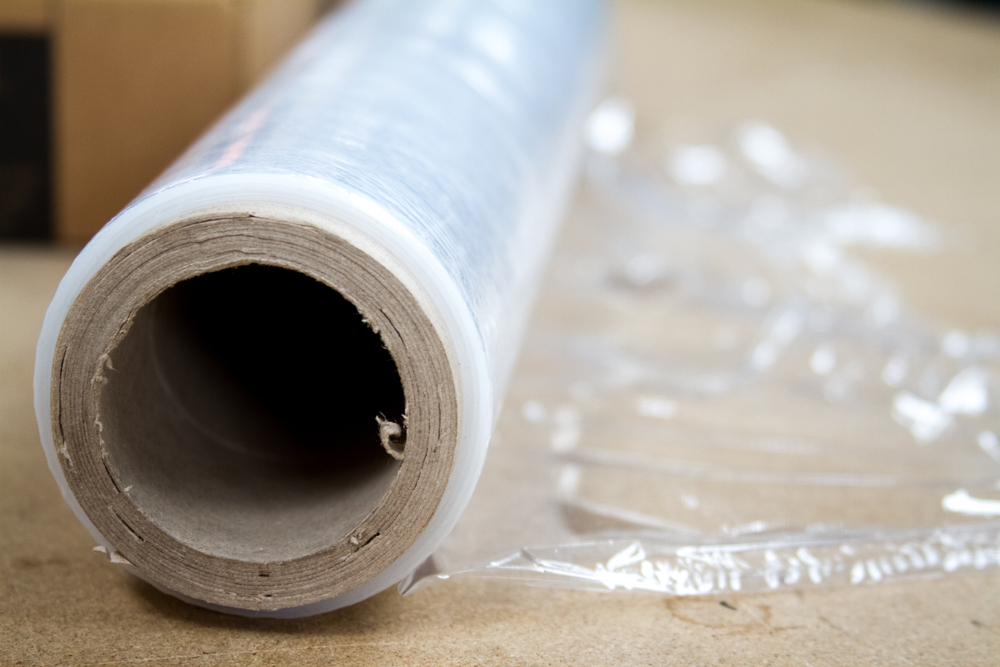
Clean commercial PE film, like pallet wrap, already has an established collection and market pathway, she said. Other resin types and multi-material film are much further behind.

Fengel added that the Lodi carton facility is itself already consuming some of that recovered film, about 30% of what goes into its board is mono-material LDPE film pulled from California MRFs, alongside the cartons.

Two funding models

The Recycling Partnership’s CalFFlex initiative has funneled roughly $6 million into eight end markets and is running an on-the-curb collection pilot with more than 600 households, funded by CAA, the latest in a string of California film-collection pilots launched this year.

A parallel effort from the US Flexible Film Initiative (USFFI) pays MRFs a per-pound fee to route “incidental” film, the material consumers already put in curbside bins by mistake, to end markets instead of landfills, then pays a second fee to those markets to cover contamination cleanup.

“We’re talking hundreds of millions of dollars of investment,” Keenan said of the state’s infrastructure needs assessment, adding that roughly 70% of that figure is earmarked for flexible packaging.

Coven said the PRO is testing multiple collection models such as mail-back, drop-off and curbside pilots rather than committing to one statewide approach before the data is in.

“It’s a dial, not a switch,” she said, adding that CAA’s 2027 program plan will lean on waste characterization data to decide what scales. Her stated goal for 2032 isn’t a single collection method but a roster of end markets CAA has vetted and can point to as certified and responsible, so the state can say with confidence where the material actually goes.

Capital investment

As for the “hundreds of millions of dollars” figure, MRFs need capital upgrades to capture film as a sellable bale in the first place, and the equipment varies by facility, Huded said: some need ballistic separators to catch material that tangles in sorting lines, “but also there’s things like film screens, there’s opticals — there’s many different ways to go about it.”

USFFI has already issued an RFP and is finalizing long-term contracts with three California MRFs, each committing to bale incidental film and route it to an end market under a set per-pound price.

Keenan said he couldn’t disclose the figure but said it lines up with the state’s needs-assessment estimate.

Huded said CAA is also weighing that MRF-upgrade-and-subsidy model against the cost of scaling alternative collection outright, an added on-the-curb cart, extra truck routes and pickups to determine which mechanism recovers the most material per dollar spent.


Tags: EPRFilm & FlexiblesLegislation & EnforcementPlasticsPolicy Now
TweetShare
Stefanie Valentic

Stefanie Valentic

Stefanie Valentic is an award-winning journalist who has covered the waste and recycling industry for more than five years. Throughout her career, she has led editorial teams and served as a keynote speaker, moderator and panelist at numerous trade shows and conferences.

Related Posts

Fireside Chat at PRC features CAA chief

Fielkow to step down as CAA CEO

byStefanie Valentic
October 14, 2026

Chief Strategy Officer Jeff Meyers has been named interim CEO as CAA prepares for its transition.

Lawsuits hover days after SB 54 approval

CAA trims first-year SB 54 budget in final plan

byStefanie Valentic
October 13, 2026

The final plan sets a $1.1 billion budget for 2027, down from as much as $1.87 billion in June, and...

Removing an eBike battery pack.

EPR’s next fight is over embedded batteries

byStefanie Valentic
October 13, 2026

Eleven states have passed battery EPR laws since 2022, but Product Stewardship Institute staff told RCon attendees that most still...

Study explores  reusable containers in California DRS

Inside the Circle: The bottle bill’s unfinished business

byBill Shireman
October 13, 2026

California’s pioneering bottle bill just turned 40. It has lessons to teach us for the future.

Southeast grows into US’ critical mineral hub

byPaul Lane
October 12, 2026

A wave of development has shored up the mineral infrastructure, but some are calling for more to be done to...

ABTC gets black mass export exemption

ABTC gets black mass export exemption

byPaul Lane
October 9, 2026

Company leadership said the move allows the minerals to be used while the nation’s processing infrastructure gets up to speed.

Load More
Next Post

R3 Lithium launches pioneering mineral processing facility

2026 Buyers’ Guide

Equipment, services and technology suppliers serving the recycling industry.

Browse the Guide

More Posts

Lawsuits hover days after SB 54 approval

CAA trims first-year SB 54 budget in final plan

October 13, 2026
Fireside Chat at PRC features CAA chief

Fielkow to step down as CAA CEO

October 14, 2026
Northeast recycled commodity values hit 5-year lows

HDPE, PP prices climb for October

October 14, 2026

Southeast grows into US’ critical mineral hub

October 12, 2026
Removing an eBike battery pack.

EPR’s next fight is over embedded batteries

October 13, 2026

Ingram Micro looks to digital platform and AI

October 14, 2026

MRF battery fires burn ‘really fast’ and ‘really hot’

March 5, 2024
Panelists discuss construction waste reuse at the NERC conference in New Jersey October 7, 2026.

Ramping up reuse of construction materials

October 8, 2026

Republic breaks ground on St. Louis MRF

October 15, 2026
Study explores  reusable containers in California DRS

Inside the Circle: The bottle bill’s unfinished business

October 13, 2026
Load More

About & Publications

About Us

Staff

Archive

Magazines

Work With Us

Advertise
Jobs
Contact
Terms and Privacy

Newsletters

Get the latest recycling news and analysis delivered to your inbox every week. Stay ahead on industry trends, policy updates, and insights from programs, processors, and innovators.

Subscribe

Welcome Back!

Login to your account below

Forgotten Password?

Retrieve your password

Please enter your username or email address to reset your password.

Log In

Add New Playlist

No Result
View All Result
  • The Latest
  • Analysis
  • Recycling
  • E-Scrap
  • Plastics
  • Policy Now
  • Conferences
    • E-Scrap Conference
    • Plastics Recycling Conference
    • Resource Recycling Conference
    • Textiles Recovery Summit
  • Magazines
  • About Us
  • Advertise
  • Archive
  • Jobs
  • Staff
Subscribe
This website uses cookies. By continuing to use this website you are giving consent to cookies being used. Visit our Privacy and Cookie Policy.