Editor’s note: This is the first of a three-part Policy Now series on SB 54 implementation covering the local collection deadline and exemption process, responsible end markets and reimbursement funding as well as packaging progress, challenges and opportunities under SB 54.
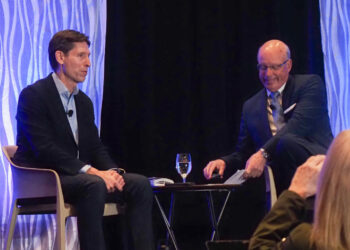
Nearly every jurisdiction in California will have to take action by the end of the year to comply with SB 54’s local collection mandate, state and producer officials said during a panel at the California Resource Recovery Association (CRRA) conference in San Diego.
The law requires jurisdictions and their recycling service providers to collect all packaging and foodware materials that CalRecycle deems recyclable or compostable, with compliance tied to the state’s approval of Circular Action Alliance’s (CAA’s) producer program plan.
CalRecycle approved SB 54’s permanent regulations on May 1, and program plan approval is expected by Dec. 28, effectively giving jurisdictions until Jan. 1, 2027 to be in compliance.
CalRecycle’s 2026 covered material category list identifies 95 packaging and foodware categories, said Michelle Fay, program manager at StopWaste, a joint powers authority serving 17 jurisdictions in Alameda County. Of those, 56 are considered recyclable or compostable: 34 recyclable, 22 compostable and 14 on both lists.
Jurisdictions have two options for each category: add the material to their program or apply to CalRecycle for an exemption. Fay pointed to several “tricky” materials many programs don’t currently collect, including waxed cardboard, compostable plastic cups and utensils, single-use wood crates and pallets, and rigid plastic packaging labeled #1, #2 and #5.
The rigid category includes thermoforms, cups, lids, nursery pots, blister packs and produce baskets. Mixed paper with plastic, which covers wax paper bags, meat-absorbent pads and butter wrappers, is also commonly missed, Fay said.
Expanded polystyrene foodware is a separate case. SB 54 required a 25% recycling rate for EPS by January 2025. The target wasn’t met, which under the law effectively banned polystyrene foodware in California.
Exemption applications go through CalRecycle’s Packaging EPR System, or PEPRS, said Marcus Santillano, an environmental program manager at CalRecycle. The system emerged from a rulemaking process CalRecycle opened for public comment earlier this year. CAA has 90 days to review each application and can object, though CalRecycle makes the final decisions.
Jurisdictions and haulers serving multiple communities can file bulk exemptions through the same portal, Santillano said. This is useful for counties like Alameda, where StopWaste found only 29 of the 56 categories are collected uniformly across all 17 member jurisdictions, which are served by roughly 11 franchise haulers with no two acceptability lists alike.
Santillano said the regulations built in a grace period. CalRecycle won’t pursue enforcement while an exemption application is under review, and the department’s stated approach is compliance assistance before penalties, which can run up to $50,000 per day per violation. He also noted SB 54, unlike SB 1383, doesn’t carry specific bin-labeling or public education requirements for jurisdictions. Their sole collection-related obligation is collection itself.
To request access, jurisdictions must first fill out an electronic EPR contact request form on CalRecycle’s website, which links an existing WebPass account to PEPRS. Approval typically takes a few days, Santillano said. Recycling service providers follow a separate path, registering directly for a WebPass account and then enrolling in PEPRS as a service provider. CalRecycle has also posted an 11-minute training video walking through the exemption application itself.
Santillano said the scope of an exemption request matters. Applicants can seek an exemption for an entire covered material category or for a single material within it, but he recommended the narrower approach in cases where a jurisdiction already collects some, but not all, items in a category, since claiming a whole category is impracticable to justify once part of it is already being collected. Fay cited meat-absorbent pads, part of the mixed-paper-with-plastic category, as a recurring example of this gray area.
Fay described a coordination effort already underway in Alameda County, where StopWaste convened a joint meeting with jurisdiction representatives from Alameda and Santa Clara counties this spring to map out acceptability lists side by side. The exercise showed wide variation.
Across the county’s 17 jurisdictions and roughly 11 franchise haulers, no two lists matched, and only 29 of the 56 covered categories were accepted uniformly countywide. Jurisdictions at the meeting backed pursuing more alignment across their lists going forward, she said.
Santillano confirmed that bulk exemption filings extend to recycling service providers as well as jurisdictions. Haulers serving multiple communities can submit a single application covering several jurisdictions, provided one party coordinates the submission and the underlying materials and justifications match.
The stakes extend beyond collection lists. SB 54 also set a 65% recycling rate requirement for plastic packaging and food service ware by 2032, alongside a 25% source-reduction goal, 10 percentage points of which must come from reuse and refill systems, a $5 billion mitigation. Producers must also fund a $5 billion mitigation fund, paying $500 million annually for 10 years starting next year to fund cleanup in disadvantaged, low-income and rural communities.