





President Donald Trump said the US is poised to soon join China as a global critical mineral power, but mineral experts and the federal government’s own data indicate that goal is an especially lofty one.
Trump was in Asia earlier this week to shore up security agreements with the Quad, a grouping consisting of the US, India, Australia and Japan. Among those agreements was one relating to critical minerals, which was aimed at preventing “coercion by any single foreign supplier.” While China wasn’t specifically cited, that nation holds more than 70% of the world’s capacity of minerals like graphite and tungsten and has restricted imports to nations like the US and Japan.
Trump later said the US would have everything it needs to catch China in terms of rare earths within 10 months. Yet earlier this year, the US Government Accountability Office (GAO) said in a report that the US was at least 41% import-reliant for supplies of 11 minerals used in batteries and semiconductors, and 100% reliant upon foreign supplies for five of those, including gallium and indium.
Then just last week, the US Geological Survey (USGS) issued a report reaffirming China’s dominance in the global market for various critical minerals used in defense and advanced manufacturing. Federal forecasters expect increased US capacity for certain minerals like antimony, but they said China is expected to remain the world’s leading supplier of several key minerals through the time period they studied, 2026-2030.
“We’ve got a long way to go,” said Simon Jowitt, Nevada’s state geologist and director of the Nevada Bureau of Mines and Geology, part of the University of Nevada at Reno. “A 10-month turnaround would be a challenge to meet US domestic demand alone … If we’re going to compete with China, that goes beyond what we need as a domestic supply chain.”
Digging for answers
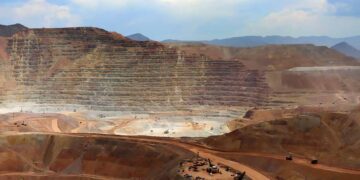
For starters, Jowitt said, the US’ mining capacity isn’t nearly enough to meet domestic needs. The nation’s only active rare earth element mine/processing facility is the Mountain Pass mine in California, from which MP Materials extracts minerals like neodymium and praseodymium for use in wind turbines and electronics.
These light rare earths are useful, but Jowitt said there is minimal onshore production of heavy earths like dysprosium and terbium, which are used in EVs and defense systems. With no projects near completion to generate heavy rare earths (mines can take decades to come online), and the nation sitting on mineral deposits that companies either can’t economically mine or identify the viability of, it could take years just to form a fully formed plan to obtain these minerals, he said.
China, in contrast, has been producing rare earth concentrates for decades. It has also invested billions of dollars in global operations to obtain more minerals like lithium and nickel that are needed for microelectronics.
Agreements such as those among nations in the Quad could help the US, Jowitt, by giving it access to deposits such as the Mount Weld rare earth mine in western Australia. Building rapid, secure agreements could help the nation build up its mineral infrastructure and eventually make its materials viable on the global market — a task that could be more difficult as the US maintains trade wars with several allies, including Canada.
But the more realistic option for the US would be for the nation to build up internal operations to obtain the mineral independence the administration has sought, rather than trying to compete on a worldwide level with China.
“If you really push for it, you might be talking very optimistically five years to create mineral independence,” he said. “We’re moving in the right direction, but there’s also always going to be market forces that say, ‘It’s easier to buy from China, so why do this?’ ”
Building mineral infrastructure
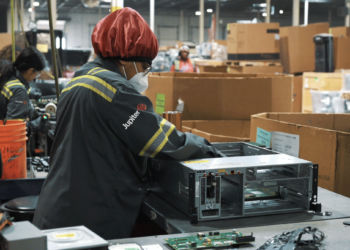
Private businesses are doing their part to build up domestic critical mineral infrastructure. Modern Mining Technology Corp., Nth Cycle and Cyclic Materials are among the companies that have moved this year to get recycling and/or processing facilities operational.
Such private buildup has to be complemented by government investment, Jowitt said. Federal agencies have done so this year, with the Department of Energy investing $500 million in seven processing/manufacturing projects and the Department of War pouring more than $1 billion into several production projects.
But it has to be the right investment. Offering money to a project that’s already planned and permitted would have a more immediate impact than an investment in a startup whose fate is unknown.
“The federal government can invest to make sure a project would go ahead in a timely fashion,” he said. “If the company already has offtake agreements and outside investment, an investment like that can get you over the line.”
The GAO report also cited this as one way to build a national supply chain. Another GAO suggestion was to update policy to allow companies to more easily obtain permits, repurpose infrastructure and take other steps to enable their mineral production and/or processing capabilities. Jowitt noted that where he lives in Nevada, the permitting process is faster than it is with the federal government, so steps on that front could help the nation move forward.
“We are seeing a move on the policy side,” he said. “You can reduce some of the bureaucracy in that area. That can make a difference.”
Those moves, including a temporary ban on black mass and tungsten waste along with a restriction on the export of critical minerals, will move the country in the right direction in alignment with private investment.
But without a massive infrastructure ramp-up, Jowitt said the progress will be more gradual. The nation lacks the infrastructure to mine new minerals, recycle mineral-containing products and process those second-hand materials in the volumes needed to curb foreign reliance, he said. Some minerals are also meant not to be reused, such as the samarium that goes into missiles.
So, until every step of the value chain catches up, the US will be forced to play from behind in the critical minerals market.
“Because some of the usage is so specialized, you can’t recycle it. Samarium is niche but is crucial,” he said. “There’s going to be a whole lot of challenges. Even if we had some initial processing done to materials we have access to, we don’t have that processing ability to make them ready to go straight into manufacturing. We need to figure out what gaps we need to fill in the supply chain.”