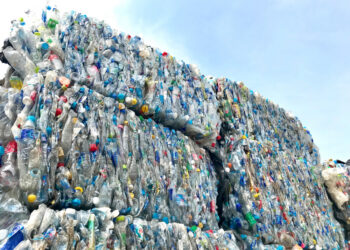

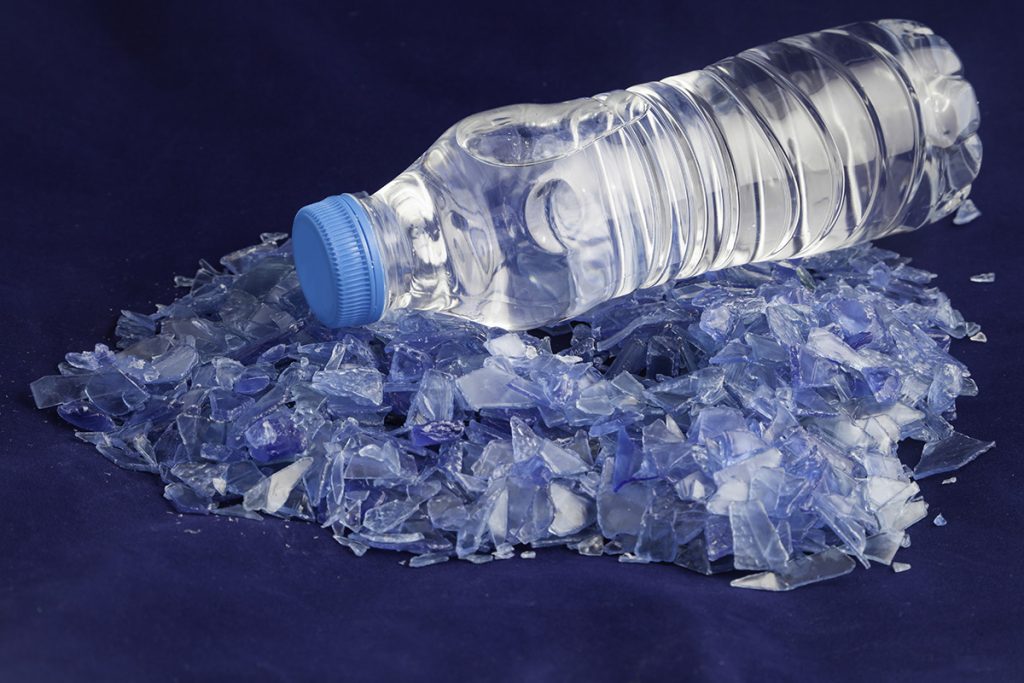
Five members of Congress are asking the US Trade Representative to factor the struggling US RPET sector into its Section 301 investigations of structural excess capacity in foreign manufacturing.
In a September letter to US Trade Representative Jamieson Greer, Reps. Nick Langworthy, Mike Ezell, Diana Harshbarger, Mariannette Miller-Meeks and Jefferson Shreve said government-supported plastics overcapacity abroad is driving low prices for virgin and recycled PET. They pointed to subsidized production, preferential tax treatment and export-oriented growth as drivers of a vast increase in PET production, which has resulted in a wave of cheap imported resin in the US.
“The challenges facing the domestic recycling industry are not the result of declining public participation or because these materials cannot be recycled. Rather, market-distorting foreign practices are weakening the domestic end markets necessary to sustain American recycling infrastructure, manufacturing, and future investment,” the lawmakers wrote.
Citing industry data, the lawmakers wrote that more than a quarter of US PET recycling capacity has been lost in the past 12 months. Seven of about 30 domestic PET reclaimers closed during that time.
Amid those closures, prices for feedstock PET bales reached an all-time low in April 2026, at 1.44 cents/lb, according to RecyclingMarkets.Net data.
Echoing industry concerns, the lawmakers questioned whether imported material sold as recycled content can be traced and verified, and whether it meets US food-grade standards.
They also noted that the US is not a party to the Basel Convention, making the country “uniquely vulnerable.” As such, recyclers have fewer export options than foreign competitors, “making strong domestic end markets essential to the long-term viability of our recycling infrastructure.” One example is last year’s Malaysian ban on plastic scrap imports from non-Basel countries – effectively targeting the US.
The lawmakers asked Greer to:
- Examine the practices of Vietnam, Malaysia, Indonesia, India, Thailand and South Korea relating to structural excess capacity
- Consider targeted, data-driven trade remedies on PET imports under HTS subheadings 3907.61, 3907.69 and 3907.99.50
- Support better traceability for recycled-content and country-of-origin claims
- Improve interagency enforcement against misclassification
The letter points to the European Union, which has imposed anti-dumping duties on PET imports, and to Canada, which has opened dumping and subsidy investigations into PET resin.
Several countries have imposed anti-dumping measures on some Chinese PET grades – including Canada, Mexico, South Korea and the European Union – and India is conducting a probe. In addition, Mexico and Brazil are conducting anti-dumping probes into bottle-grade PET resin from Vietnam and Malaysia. In most of these cases, Alpek and Thailand’s Indorama Ventures have filed complaints to initiate an investigation.
Four of the five lawmakers represent districts that are home to major PET operations:
- Harshbarger, Tennessee’s 1st District: Eastman in Kingsport
- Ezell, Mississippi’s 4th District: Alpek Pearl River plant in Bay St. Louis
- Shreve, Indiana’s 6th District: Alpek RPET in Richmond and Republic Services Polymer Center in Indianapolis
Langworthy, from New York’s 23rd District, and Miller-Meeks, from Iowa’s 1st District, sit on the Energy and Commerce Environment subcommittee, which handles recycling.
Industry provides support
The existential threat posed by imported resin is not a new issue. In its most recent data, the National Association for PET Container Resources (NAPCOR) found that RPET imports reached a record level in 2024. Earlier this year, a NAPCOR delegation traveled to Washington, DC, to put the crisis in focus for lawmakers.
Laura Stewart, executive director of the organization, said in a statement: “NAPCOR welcomes the attention these members of Congress are bringing to the serious challenges facing US PET manufacturing and recycling. In comments submitted to USTR in April, NAPCOR raised many of these same concerns, including the impact of global PET and rPET overcapacity and rapidly growing imports on domestic producers and recyclers. We have seen significant domestic recycling capacity shuttered at a time when the US needs more—not less—recycling infrastructure.”
She continued, “NAPCOR supports a strong North American circular economy and global trade that operates on a fair and transparent playing field. We continue to encourage USTR to closely examine the market dynamics affecting PET and rPET and to consider targeted measures that address unfairly discounted imports, strengthen traceability and transparency, and support domestic manufacturing and recycling capacity.”
In a separate statement, the Association of Plastic Recyclers (APR) said, “We strongly agree that greater transparency and more accurate data on PET imports are urgently needed to understand market conditions, strengthen enforcement, and ensure US recyclers can compete on a level playing field. APR has advocated for a specific HTSUS breakout that would allow recycled PET to be tracked separately from virgin PET—an important distinction that current trade data do not adequately capture.”
The group continued, “The plastics recycling industry is under significant pressure. Addressing global oversupply while improving the data available to policymakers are important steps toward protecting domestic recycling capacity, American manufacturing jobs and the long-term resilience of the US recycling system.”
APR owns Resource Recycling, Inc., publisher of Plastics Recycling Update.