




Resource Recycling
  • The Latest
  • Podcast
  • Analysis
    • All
    • Certification Scorecard
    • Industry Announcements
    • Opinion
    IT asset disposition and electronics recycling: Now and then

    Data center moratoriums cast development shadow

    Recycling tracking data is already on your truck

    Recycling tracking data is already on your truck

    A five star ranking with one under a microscope

    Certification scorecard — week of Nov. 9

    Data centers and AI combine to create ITAD ‘growth engine’

    Component shortages drive demand for data center hardware

    Ingram Micro again files to take company public

    Ingram Micro sees lifecycle services rise 35%

    Inside the Circle: Will we lose our shirts over CA textile EPR?

    Inside the Circle: Will we lose our shirts over CA textile EPR?

  • Conferences
    • Resource Recycling Conference
    • Plastics Recycling Conference
    • E-Scrap: The Longevity Conference
    • Textiles Recovery Summit
  • Publications
    • E-Scrap News
    • Plastics Recycling Update
    • Policy Now
    • Resource Recycling
    • Other Topics
      • All Topics
      • Brand Owners
      • Critical Minerals
      • Glass
      • Grant Watch / RFPs
      • Markets
      • Organics
      • Packaging
      • Research
      • Technology
      • Textiles
Subscribe
No Result
View All Result
Resource Recycling
No Result
View All Result
Home Plastics

Goodwill eyes EPR revenue, starting with waste audit

Stefanie ValenticbyStefanie Valentic
November 12, 2026
in Plastics, Policy Now, Recycling

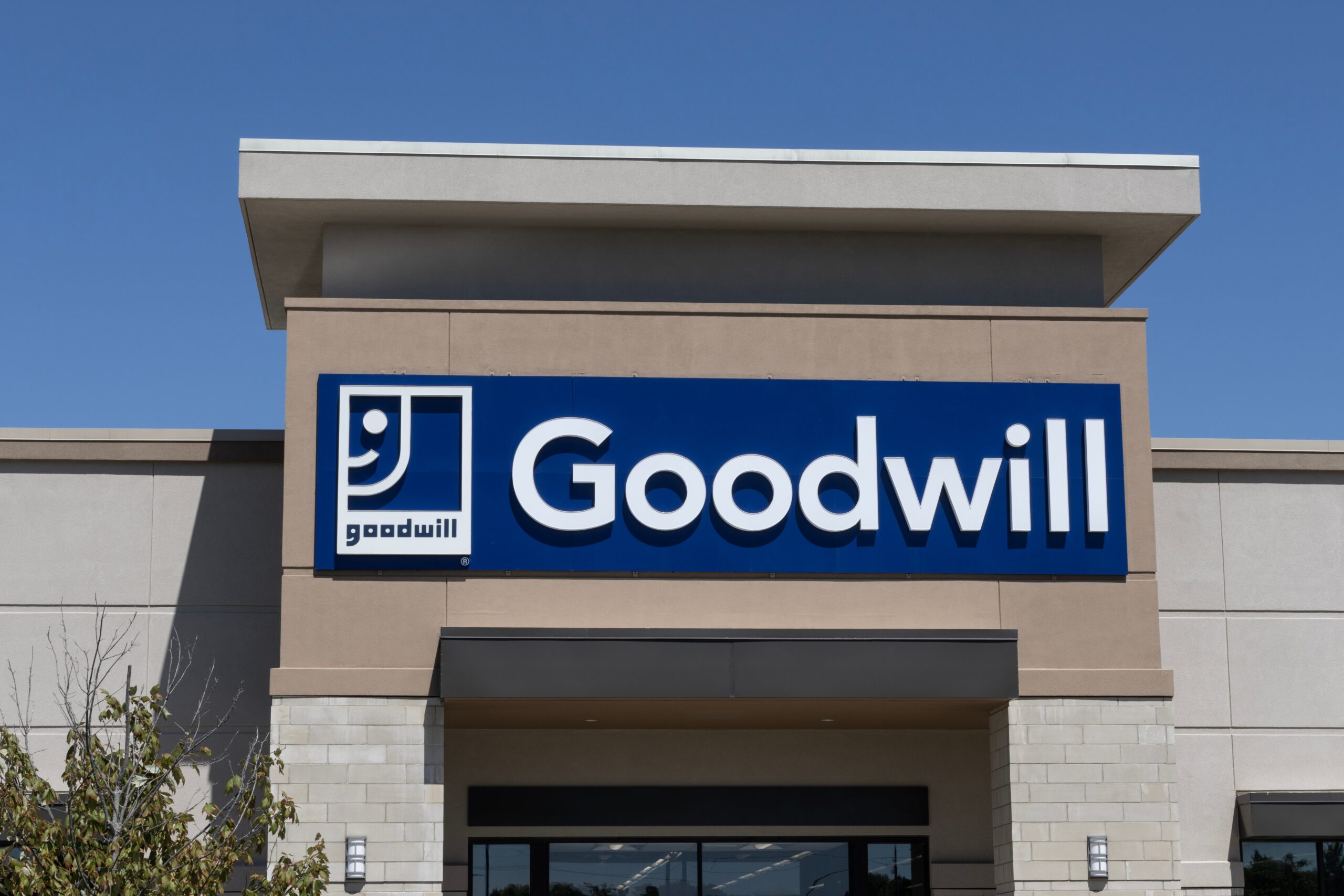
Jonathan Weiss/Shutterstock

Editor’s note: EPR will be explored at the Textile Recycling Summit, co-located with the Plastics Recycling Conference, March 1-3 in National Harbor, Maryland. Register now for the best rates!

Goodwill could become a recovery partner for packaging and textile EPR programs, but only after it measures what’s in its own waste stream. That was the message from executives on Nov. 10 at the Goodwill Sustainability Summit in Houston.

Executives from two Goodwill regions and Alphabet’s Materra project described pilots, producer funding and the data gaps that are slowing scale-up.

Beth Forsberg is senior vice president and chief sustainability officer for Goodwill of Central and Northern Arizona. Referencing a map showing the seven states with packaging EPR laws and 14 more with legislation introduced, she said, “It’s coming for all of us.”

Although Arizona is unlikely to adopt EPR, Forsberg said, neighboring California and Colorado already have programs that will need solutions. Goodwills should explore funding models both with and without EPR so they can become solution providers, she said.

“EPR in some states is going to allow it to monetize for Goodwills,” Forsberg said. “But until we know how to standardize, how to handle it, and the volume that is done, we’re not going to unlock everything that’s possible.”

She said textile EPR is likely to follow closely. California enacted the first US textile EPR law with SB 707 in 2024.

Producers ask, Goodwill measures

Dow is among the companies pushing Goodwill toward recovery work. Forsberg said the material science giant and other industry players kept asking how much film the organization handles and what types, as many of Goodwill’s textile donations arrive in plastic bags. But Goodwill didn’t have the capabilities to compile the answer, she said.

So Dow funded a waste characterization study, to recover the bags, sort them and measure the volume of each material. Forsberg said the results will feed financial modeling and a feasibility analysis for a revenue diversification program.

The study is part of GoodFlex, a pilot Dow selected through its 2025 Business Impact Fund to leverage Goodwill’s retail network and existing donation streams to collect, sort and process plastic bags for recycling into Dow applications. The characterization work begins in Arizona. Dow and Goodwill plan to scale recovery to other Goodwills nationally, particularly in California and other states with EPR laws.

The partnership also fits Dow’s own EPR strategy. Dow is watching eco-modulated fees closely, since EPR programs charge lower fees for packaging that is easier to recycle. In 2024, Dow also bought Circulus, a mechanical film recycler, which gives it a direct use for recovered film.

At the time, Forsberg said Goodwill couldn’t judge whether recovering a given material made economic sense because it didn’t know how much it had or how to grade it.

She said during the Houston summit that the arrangement took shape only after Goodwill turned down an early request. Funders initially wanted Goodwill locations to act as depots and accept material “without knowing the impact it was going to take,” she said.

“The Goodwill brand opens a lot of doors, but it can also close doors just as quickly if we don’t execute,” Forsberg said. She added that more funders will be announced in the next few weeks.

Film’s zero-value problem

Peter Chauvel is strategy and operations lead for Materra, the circularity project at X, Alphabet’s Moonshot factory. He said the US generates 7 million tons of film and flexible packaging a year and recycles less than 5% of it. Most of that 5% is post-industrial scrap.

Materra worked with Dow to show its sensors can identify the layers in multilayer film and estimate each layer’s share of the item’s weight. Chauvel said that information tells a recycler whether it can accept the material.

“Today, film and flexible has basically zero value to the world. It’s actually a cost.”

He argued that recycling largely operates blindly. Processors can’t see what is in incoming material, and contamination they have paid for ends up in their output. He described “circularity hubs,” single facilities that take in packaging, textiles and electronics and sell reuse, resale and recycling outputs.

“It might sound a lot like a Goodwill,” he said.

Ontario’s textile numbers

At the summit, Rainer Voigt, vice president of operations and sustainability at Goodwill Industries, Ontario Great Lakes, described the Worn or Torn pilot. The program is a textile recovery partnership with London, Ontario.

The 2025 pilot collected 30,000 to 35,000 pounds of textiles within several weeks, Voigt said. The material was kept separate from regular donations. Roughly 40% to 45% was resold through Goodwill’s retail stores. Less than 1% was too contaminated to use. The rest went to aftermarket buyers or to mechanical, chemical and thermal recycling.

“It wasn’t actual waste,” Voigt said. “It was the perception of what consumers or donors thought we would not want.”

Voigt said Ontario’s landfills are 10 to 20 years from capacity. He said Goodwill needs accurate data both to back up its diversion claims and to prepare for coming EPR rules. It also needs to be able to “flip on a dime” if export markets close, he said.

Voigt said standardization will be hard because each recycler sets different specs for the same commodity.

Forsberg said Goodwill could become a “solution provider for industry-level problems.” She noted it already collects everything from discarded electronics to furniture. That will require standardized reporting across a network of about 150 independent organizations, she said.

She also warned against moving too fast.

“We can’t just take on all kinds of projects that are going to disrupt our backrooms, impact our revenue, and therefore impact our mission,” Forsberg said.

Tags: CollectionEPRFilm & FlexiblesIndustry GroupsLegislation & EnforcementPolicy NowTextiles
TweetShare
Stefanie Valentic

Stefanie Valentic

Stefanie Valentic is an award-winning journalist who has covered the waste and recycling industry for more than five years. Throughout her career, she has led editorial teams and served as a keynote speaker, moderator and panelist at numerous trade shows and conferences.

Related Posts

IT asset disposition and electronics recycling: Now and then

Data center moratoriums cast development shadow

byDavid Daoud
November 12, 2026

Developers and decommissioning firms face uncertainty amid communities’ concerns over the impact centers create.

PET bottles for recycling

PET imports reshape US markets as demand grows

byAntoinette Smith
November 11, 2026

New NAPCOR data shows record RPET use in bottles even as US bottle recycling continues to fall.

Recycling tracking data is already on your truck

Recycling tracking data is already on your truck

byKatie Kinnear, director of brand strategy, Routeware
November 11, 2026

A collection truck is the only part of the system that meets the household where contamination behavior happens, again and...

Produce packers face narrow exits under SB 54

byStefanie Valentic
November 11, 2026

Fiber, compostables, PCR and monomaterial films all come with tradeoffs for fresh produce, and no single swap will work across...

Textile EPR needs end markets, not just collection

Textile EPR needs end markets, not just collection

byStefanie Valentic
November 10, 2026

Reju CEO Patrik Frisk said textile EPR programs will fall short unless they also create demand for recycled material.

Inside the Circle: Will we lose our shirts over CA textile EPR?

Inside the Circle: Will we lose our shirts over CA textile EPR?

byBill Shireman
November 9, 2026

Some advocates have worked to block chemical recycling under the packaging law, but their strategy is going to backfire.

Load More

2026 Buyers’ Guide

Equipment, services and technology suppliers serving the recycling industry.

Browse the Guide

More Posts

NexPoint Materials to shutter Alabama plastics plant

NexPoint Materials to shutter Alabama plastics plant

November 4, 2026
Blancco acquired by tech-focused investors

ITAD investors pursue capacity, services

October 30, 2026
PureCycle sees easing headwinds to R-PP adoption

PureCycle shifts focus, secures feedstock

November 5, 2026
Inside the Circle: Will we lose our shirts over CA textile EPR?

Inside the Circle: Will we lose our shirts over CA textile EPR?

November 9, 2026
Textile EPR needs end markets, not just collection

Textile EPR needs end markets, not just collection

November 10, 2026
The missing link in e-plastic recycling

The missing link in e-plastic recycling

October 28, 2026
UC Riverside expands reusable takeout program

UC Riverside expands reusable takeout program

November 6, 2026
PET bottles for recycling

PET imports reshape US markets as demand grows

November 11, 2026
New CAA chief talks markets, industry support

New CAA chief talks markets, industry support

November 4, 2026
Rhode Island bill would make brands pay for recycling

Midterms put e-scrap legislation in focus

November 6, 2026
Load More

About & Publications

About Us

Staff
Job Listings

Archive

Magazines

Work With Us

Advertise
Contact
Terms and Privacy

Newsletters

Get the latest recycling news and analysis delivered to your inbox every week. Stay ahead on industry trends, policy updates, and insights from programs, processors, and innovators.

Subscribe

Welcome Back!

Login to your account below

Forgotten Password?

Retrieve your password

Please enter your username or email address to reset your password.

Log In

Add New Playlist

No Result
View All Result
  • The Latest
  • Podcast
  • Analysis
  • Recycling
  • E-Scrap
  • Plastics
  • Policy Now
  • Conferences
    • E-Scrap Conference
    • Plastics Recycling Conference
    • Resource Recycling Conference
    • Textiles Recovery Summit
  • Magazines – Old
  • About Us
  • Advertise
  • Archive
  • Job Listings
  • Staff
Subscribe
This website uses cookies. By continuing to use this website you are giving consent to cookies being used. Visit our Privacy and Cookie Policy.