





Resource Recycling
  • The Latest
  • Podcast
  • Analysis
    • All
    • Certification Scorecard
    • Industry Announcements
    • Opinion

    E-scrap feedstock competition mixed amid investments

    Open pit copper mine in Arizona.

    Trump touts aggressive US critical mineral goals

    From claims to custody: PCR procurement grows up

    Certification scorecard — week of Nov. 16

    Adam Gendell

    PET producers ride ‘local for local’ wave

    May pricing bullish for most bales

    HDPE resists seasonal, economic forces

    IT asset disposition and electronics recycling: Now and then

    Data center moratoriums cast development shadow

  • Conferences
    • Resource Recycling Conference
    • Plastics Recycling Conference
    • E-Scrap: The Longevity Conference
    • Textiles Recovery Summit
  • Publications
    • E-Scrap News
    • Plastics Recycling Update
    • Policy Now
    • Resource Recycling
    • Other Topics
      • All Topics
      • Brand Owners
      • Critical Minerals
      • Glass
      • Grant Watch / RFPs
      • Markets
      • Organics
      • Packaging
      • Research
      • Technology
      • Textiles
Subscribe
No Result
View All Result
Resource Recycling
No Result
View All Result
Home Policy Now

Connecticut redemption rate slips 8 points in Q2

Stefanie ValenticbyStefanie Valentic
November 19, 2026
in Policy Now, Recycling
How to draw brand owners to recycled plastic

photka/Shutterstock

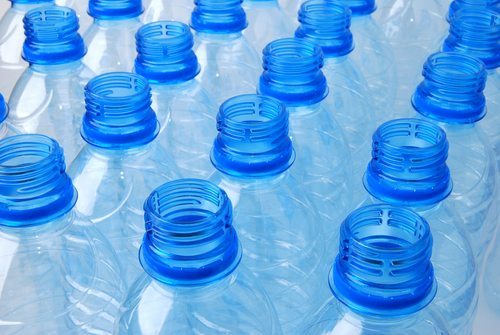
Connecticut’s beverage container redemption rate fell nearly 8 percentage points in the second quarter of 2026, from 86.6% to 79% compared with the same period last year.

It is the first quarterly reversal since the state doubled its deposit from 5 cents to 10 cents on Jan. 1, 2024.

The Container Recycling Institute (CRI) released the Q2 figures Nov. 18 alongside a new issue brief on Connecticut’s deposit-return system (DRS).

Beverage container sales reported to the state rose nearly 8%, compared with Q2 2025, while redemption volumes dropped 1.7%.

CRI, a Culver City, Calif.-based nonprofit that supports deposit laws, said the shift may reflect improved sales reporting by distributors and retailers, fewer out-of-state containers being redeemed, or both. The group also cautioned that one quarter of data cannot establish causation or signal a lasting trend.

The numbers come three months after CRI published that Connecticut’s annual redemption rate jumped from 65% to 92% between 2024 and 2025, a gain that stood out against flat performance in most other deposit states. At the time, CRI warned that underreported sales and cross-border redemptions could be inflating that figure.

Cross-border questions

Connecticut’s climb drew scrutiny almost immediately. Lawmakers and retailers raised concerns that empty containers purchased in New York and other neighboring states, where deposits are lower or nonexistent, were being trucked across the border to collect the 10-cent refund.

CRI’s data suggest New York alone does not explain the jump. From 2023 to 2025, the number of containers redeemed in Connecticut rose by more than 925 million. Over the same period, redemptions in New York fell by about 2 million.

Connecticut has passed four laws to date targeting DRS fraud and free riding, one that took effect in 2024 and three in 2026.

The first of this year’s measures, Public Act 26-2, moved through the General Assembly on emergency certification and was signed March 3. It requires redemption centers to be licensed by the Department of Energy and Environmental Protection (DEEP), bars dealers and redemption centers from accepting containers they know or should know were not sold in Connecticut, and raises fines for violations.

Public Act 26-148, effective Oct. 1, authorizes criminal penalties for high-volume collection of refunds on containers purchased outside the state. It also directs DEEP to study whether PA 26-2 has reduced over-redemption, with findings due by Dec. 31.

Another recent measure authorizes two new DEEP enforcement positions, but neither has been filled.

“Enforcement of provisions to address beverage container fraud and free riding is an important pillar of successful DRS programs, and we have seen it produce results in jurisdictions with personnel specifically assigned to this work,” said CRI President Susan Collins, in a statement.

Collins said the state deserves credit for writing enforcement staff into its legislation, but that the real test has not started.

“Once the positions are filled and the work begins, we can start to make informed decisions about the effectiveness of the legislation and whether additional measures are necessary,” she said.

Cross-border redemptions have fueled calls in some corners of the Capitol to roll Connecticut’s deposit back to a nickel. House Minority Leader Vincent Candelora, R-North Branford, called the switch to 10 cents an “unmitigated disaster.”

Collins pointed to Oregon as evidence the higher deposit works when paired with enforcement. Oregon raised its deposit from 5 cents to 10 cents in 2017, alongside other program changes. Its redemption rate climbed from 64% in 2016 to 86% in 2019 and has not fallen below 81% since, apart from one pandemic year. In 2025, it was 88%.

CRI estimates cross-border fraud in Oregon’s system at less than 5% annually, which it attributes to the state’s legal and operational safeguards.

The underreporting gap

Underreported sales are considered a form of free riding. When a distributor or retailer reports fewer containers sold than it actually sold, it pays less in deposits and fees, and the state’s calculated redemption rate goes up.

CRI used an example to illustrate: If 1 million containers are sold and 750,000 are redeemed, the rate is 75%. If sales are reported as 900,000, the rate becomes 83.3%.

CRI estimates sales of deposit beverages in Connecticut at 2.78 billion units in 2023. Sales reported to the state in 2025 totaled $1.95 billion, about 30% lower. CRI said that gap equals nearly $83 million in possibly unreported deposits. The comparison pairs CRI’s 2023 market estimate with 2025 reported figures.

If the 2023 estimate had been reported in 2025, CRI projects Connecticut’s 2025 redemption rate would have been 64%, not 92%, about where the state stood before the deposit increase.

The document offers four ways to tighten distributor and retailer auditing in Connecticut:

  • Develop tight internal policies and accounting requirements.
  • Revise previously submitted beverage sales reports.
  • Create independent audit requirements.
  • Continue to monitor existing legislation and practices.

CRI also pointed to a guidebook it recently released on preventing fraud, free riding and operational errors across all 10 US deposit states.

“Because every deposit state has its own laws, requirements and operating practices, there is no single solution to every problem,” Collins said.

The Connecticut analysis and the guidebook are available on CRI’s website.

Tags: CollectionLegislation & EnforcementPETPolicy Now
TweetShare
Stefanie Valentic

Stefanie Valentic

Stefanie Valentic is an award-winning journalist who has covered the waste and recycling industry for more than five years. Throughout her career, she has led editorial teams and served as a keynote speaker, moderator and panelist at numerous trade shows and conferences.

Related Stories

Open pit copper mine in Arizona.

Trump touts aggressive US critical mineral goals

byPaul Lane
November 19, 2026

Experts, data indicate that the nation’s mineral independence aspirations may be farther away than the administration hopes.

RecyClass hits 500 EU recyclability evals

EU PET import codes set to begin

byAntoinette Smith
November 18, 2026

The new codes for PET flake will take effect in January, but the global impact remains to be seen, according...

North Carolina nears battery disposal ban

North Carolina nears battery disposal ban

byDavid Daoud
November 17, 2026

North Carolina will ban the disposal of lithium-ion batteries in landfills and most permitted incinerators starting Dec. 1. The deadline...

Adam Gendell

PET producers ride ‘local for local’ wave

byAntoinette Smith
November 16, 2026

Alpek and Indorama Ventures have benefited from war-related tailwinds, but VPET pricing is expected to ease in early 2027.

Goodwill eyes EPR revenue, starting with waste audit

byStefanie Valentic
November 12, 2026

Goodwill sustainability leaders say the nonprofit’s donation network could serve packaging and textile EPR programs, but they first need hard...

IT asset disposition and electronics recycling: Now and then

Data center moratoriums cast development shadow

byDavid Daoud
November 12, 2026

Developers and decommissioning firms face uncertainty amid communities’ concerns over the impact centers create.

Load More

2026 Buyers’ Guide

Equipment, services and technology suppliers serving the recycling industry.

Browse the Guide

More Posts

Closeup of PP with a chasing arrows recycling symbol.

PureCycle, WM sign rare 3-year bales contract

November 16, 2026

Goodwill eyes EPR revenue, starting with waste audit

November 12, 2026
Artificial intelligence is altering the marketplace for ITAD providers in numerous ways. | Shutterstock

AI alters ITAD economics

November 3, 2026

Alphabet’s Materra wants recyclers to see molecules, not bottles

November 13, 2026
PureCycle sees easing headwinds to R-PP adoption

PureCycle shifts focus, secures feedstock

November 5, 2026
The missing link in e-plastic recycling

The missing link in e-plastic recycling

October 28, 2026
NexPoint Materials to shutter Alabama plastics plant

NexPoint Materials to shutter Alabama plastics plant

November 4, 2026
Modern Mining raises $40 million in IPO

Modern Mining raises $40 million in IPO

November 12, 2026
Adam Gendell

PET producers ride ‘local for local’ wave

November 16, 2026
Vessel gives excess inventory a second life

Vessel gives excess inventory a second life

November 13, 2026
Load More

About & Publications

About Us

Staff
Job Listings

Archive

Magazines

Work With Us

Advertise
Contact
Terms and Privacy

Newsletters

Get the latest recycling news and analysis delivered to your inbox every week. Stay ahead on industry trends, policy updates, and insights from programs, processors, and innovators.

Subscribe

Welcome Back!

Login to your account below

Forgotten Password?

Retrieve your password

Please enter your username or email address to reset your password.

Log In

Add New Playlist

No Result
View All Result
  • The Latest
  • Podcast
  • Analysis
  • Recycling
  • E-Scrap
  • Plastics
  • Policy Now
  • Conferences
    • E-Scrap Conference
    • Plastics Recycling Conference
    • Resource Recycling Conference
    • Textiles Recovery Summit
  • Magazines – Old
  • About Us
  • Advertise
  • Archive
  • Job Listings
  • Staff
Subscribe
This website uses cookies. By continuing to use this website you are giving consent to cookies being used. Visit our Privacy and Cookie Policy.