




Resource Recycling
  • The Latest
  • Analysis
    • All
    • Certification Scorecard
    • Industry Announcements
    • Opinion
    The electronics recycling industry is undergoing a transformation from labor-intensive manual operations to highly automated, AI-driven facilities that use advanced robotics, cleaner chemistry and digital tracking systems to extract critical materials.

    The cyber-physical MRF: AI and robotics reshape e-waste recovery

    Certification scorecard for the week of Feb. 9, 2026

    Meta-Corning deal signals IT hardware retirement wave

    Meta-Corning deal signals IT hardware retirement wave

    Malaysia clamps down on illegal e-waste imports amid probes

    Malaysia clamps down on illegal e-waste imports amid probes

    URT builds alliance to remake electronics plastics at scale

    ICYMI: Top 5 e-scrap stories from January 2026

    The electronics recycling industry is undergoing a transformation from labor-intensive manual operations to highly automated, AI-driven facilities that use advanced robotics, cleaner chemistry and digital tracking systems to extract critical materials.

    Certification scorecard for the week of Feb. 2, 2026

    Auditors warn EU may fall short on critical metals

    Auditors warn EU may fall short on critical metals

    Industry announcements for January 2026

    Industry announcements for February 2026

    ICYMI: Top 5 recycling stories from January 2026

  • Conferences
  • Publications

    Other Topics

    Textiles
    Organics
    Packaging
    Glass
    Brand Owners

    Metals
    Technology
    Research
    Markets
    Grant Watch

    All Topics

Subscribe
No Result
View All Result
Resource Recycling
  • The Latest
  • Analysis
    • All
    • Certification Scorecard
    • Industry Announcements
    • Opinion
    The electronics recycling industry is undergoing a transformation from labor-intensive manual operations to highly automated, AI-driven facilities that use advanced robotics, cleaner chemistry and digital tracking systems to extract critical materials.

    The cyber-physical MRF: AI and robotics reshape e-waste recovery

    Certification scorecard for the week of Feb. 9, 2026

    Meta-Corning deal signals IT hardware retirement wave

    Meta-Corning deal signals IT hardware retirement wave

    Malaysia clamps down on illegal e-waste imports amid probes

    Malaysia clamps down on illegal e-waste imports amid probes

    URT builds alliance to remake electronics plastics at scale

    ICYMI: Top 5 e-scrap stories from January 2026

    The electronics recycling industry is undergoing a transformation from labor-intensive manual operations to highly automated, AI-driven facilities that use advanced robotics, cleaner chemistry and digital tracking systems to extract critical materials.

    Certification scorecard for the week of Feb. 2, 2026

    Auditors warn EU may fall short on critical metals

    Auditors warn EU may fall short on critical metals

    Industry announcements for January 2026

    Industry announcements for February 2026

    ICYMI: Top 5 recycling stories from January 2026

  • Conferences
  • Publications

    Other Topics

    Textiles
    Organics
    Packaging
    Glass
    Brand Owners

    Metals
    Technology
    Research
    Markets
    Grant Watch

    All Topics

Subscribe
No Result
View All Result
Resource Recycling
No Result
View All Result
Home Plastics

Reclaimer hopes to ‘break the log jam’ in scrap supply

byJared Paben
June 16, 2021
in Plastics
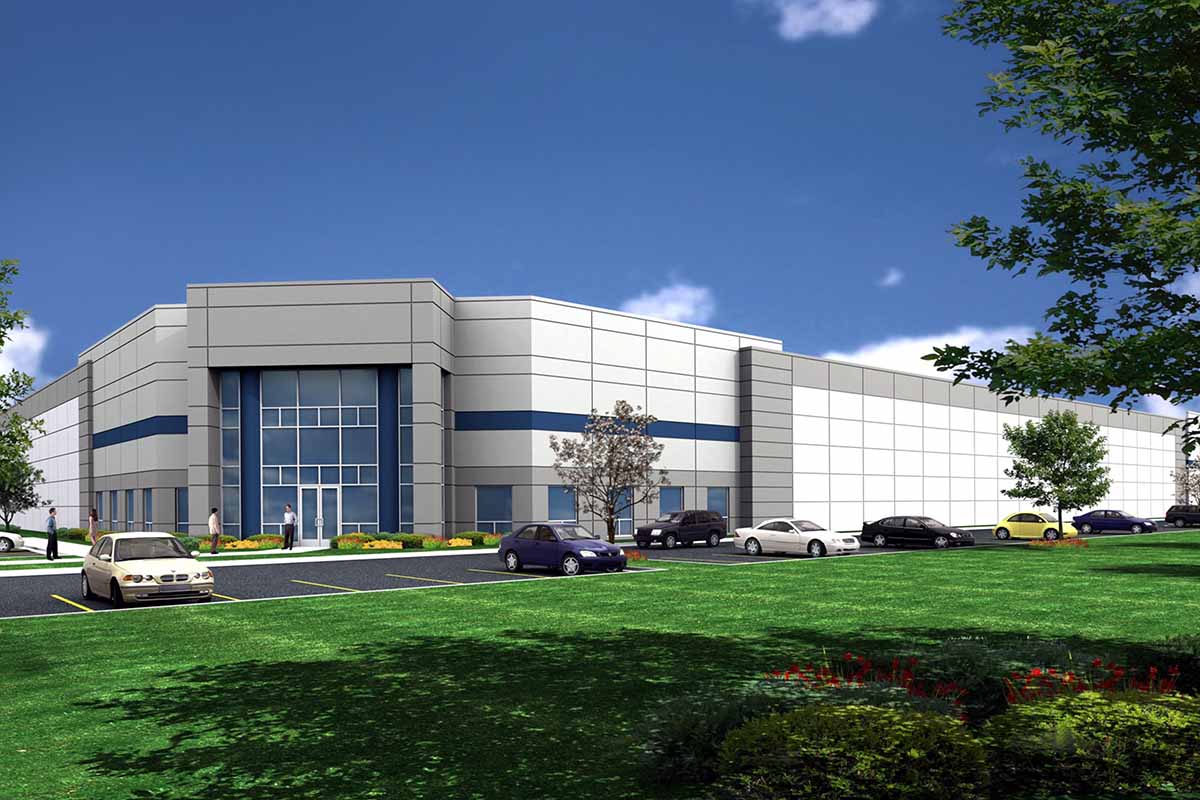
Rendering of the planned “SuperPRF” courtesy of International Recycling Group.

International Recycling Group hopes to finish financing a $150 million plastics recovery facility by the end of the year, with the massive plant scheduled to come on-line in 2023.

Mitch Hecht, founder and chairman of Erie, Pa.-based International Recycling Group (IRG), recently provided Plastics Recycling Update with an update on the company’s “SuperPRF” project, first announced last summer.

The plastics recovery facility (PRF), to be located in Erie, will bring in hundreds of millions of pounds of mixed plastics per year. At full production, within five years, the plant is expected to process about 500 million pounds of material. An automated system will sort out PET, HDPE and PP polymers that will be processed on-site into washed flakes. The remaining plastics will be processed into an iron-reducing fuel agent to replace coal in steelmaking processes.

Eventually, the PRF’s scrap appetite will be met by a sister company using a gig-economy model to collect plastics from homes and businesses, side-stepping traditional haulers and materials recovery facilities (MRFs), according to Hecht. He sees that approach as recovering more scrap plastic than today’s curbside collection systems can.

“That is the future of plastic curbside collection,” he said.

Financing a $150M project

Hecht said IRG has a contract to buy a 26-acre parcel in Erie that was a former International Paper site. Next month, IRG will begin the permitting process. RRT Design and Construction has been hired to handle design, engineering and project management.

The project is currently estimated to cost about $150 million, Hecht said. The plan is to pursue about $50 million in equity investments from impact investment funds and strategic partners, he said. IRG can finance the remaining $100 million with either tax-advantaged bonds or bank loans that could be guaranteed through environmentally advantageous loan programs, he said. 

Hecht said he thinks ample impact investment and infrastructure funding is sitting on the sidelines waiting for good green-tech projects.

“There’s enormous demand in post-consumer resin, and investors who understand the industry realize that there’s really enormous tailwinds towards having a large-scale regional sorting facility, or PRF,” he said. 

So far, IRG has received a combined $9 million commitment from the founding members of injection-molding company Plastek Group, which would use recycled PP flakes produced by IRG’s plant, and Erie Insurance, which established a $50 million fund to spur economic development in economically distressed parts of the Rust Belt city. 

A number of other plastics recovery facilities (PRFs) have failed in recent years, including those owned by QRS Recycling and Titus MRF Services. Hecht said one of the advantages his company enjoys is its steelmaking additive, called “Clean Red,” which allows IRG to find value in “everything but the squeal,” a hog-farming expression that means wasting none of the animal. 

“The name of the game is yield loss. You need to minimize your yield loss,” Hecht said. “The beauty of our model is we have a non-landfill, not-tip-fee home for absolutely every pound of plastic that comes in the door.”

Hecht said that if IRG can close on financing by the end of 2021, the company can break ground during the first quarter of 2021, with commissioning expected in mid-2023. 

The project has been criticized by local activists, including the local Sierra Club chapter, who circulated a list of pointed questions to local leaders in March. 

Hecht insisted the letter includes nine inaccurate or misleading statements about the project and recycling in general. “The letter does not even accurately reflect the national Sierra Club’s position on recycling, which is that all three ‘Rs’ – reduce, reuse and recycle – are essential to the fight against pollution,” he said. 

Side-stepping traditional collection

Hecht and his associates plan to launch a separate sister company, called New Bin, to collect material for the plant directly from generators.

The existing curbside system has suffered from the chicken-and-egg conundrum, Hecht explained: Processors aren’t creating markets for many post-consumer mixed plastics because haulers aren’t collecting them, but haulers aren’t producing those bales because viable markets are lacking, he said. 

Using an Uber-like gig-economy model, New Bin will rely on individuals with pickup trucks earning extra money by fulfilling app-based requests to collect recyclables from homes and businesses. They’ll bring material to New Bin collection sites, where material will be aggregated and shipped to Erie either loose or baled. For the technology, IRG signed an agreement with the Dubai-based developers of the ZeLoop app. 

Hecht said he expects the collection strategy to particularly grow in states without deposit programs and in communities where recycling programs have been cut back or discontinued. He sees the strategy as accessing the majority of plastic that never lands in a recycling bin. 

“Our vision is that we really need to break the log jam in available supply of recycled materials,” he said, “and the best way to do that is to go direct to the plastic generators.” 

New Bin will be piloted starting in late summer or early fall 2021, Hecht said. It will be financed as a separate tech company, relying initially on crowd funding and then likely venture capital funding, he said. He expects that, within three years, New Bin will supply 100% of the scrap entering the Erie plant. 

Until then, IRG will be buying baled plastics Nos. 1-7 and 3-7 from MRFs, he said. 

Hecht previously worked on Wall Street, mostly covering the metals and mining industries as managing director of investment banking for Deutsche Bank and PaineWebber. Later, he became chief financial officer for International Steel Group, a startup that grew within a year to become the second largest integrated steel producer in North America. 

“I have a window on how you can transform an old legacy industry and make it profitable,” he said, “and that’s exactly what we’re hoping to do with the current recycling industry.”

 

Tags: Hard-to-Recycle MaterialsHDPEPETPPProcessorsTechnology
TweetShare
Jared Paben

Jared Paben

Related Posts

The electronics recycling industry is undergoing a transformation from labor-intensive manual operations to highly automated, AI-driven facilities that use advanced robotics, cleaner chemistry and digital tracking systems to extract critical materials.

The cyber-physical MRF: AI and robotics reshape e-waste recovery

byDavid Daoud
February 12, 2026

The electronics recycling industry is entering a new phase of technological acceleration. Advances in artificial intelligence, robotics, advanced chemistry, and...

APR, industry create proactive guidance for PET caps

byAntoinette Smith
February 12, 2026

The Association of Plastic Recyclers recognized that developing guidelines before PET caps were completely developed and commercialized was crucial, and...

NERC: Blended average prices fell 40% in third quarter

HDPE, PP bales rise as paper fiber and cans stabilize

byRecyclingMarkets.net Staff
February 12, 2026

National average prices of post-consumer material bales were flat to higher on the month.

Certification scorecard for the week of Feb. 9, 2026

byEditorial Staff
February 11, 2026

The following facilities achieved, renewed or otherwise regained certifications recently.

Alpek talks PET overcapacity, soft demand

byAntoinette Smith
February 11, 2026

Executives from the Mexico-headquartered polyester giant said the Chinese government has acknowledged issues and convened PET producers, but Alpek is...

Texas sues over dumped wind turbine blades

Texas sues over dumped wind turbine blades

byScott Snowden
February 10, 2026

The state attorney general sued Global Fiberglass Solutions over alleged illegal storage and disposal of all turbine blades at two...

Load More
Next Post

How brands plan to work toward ambitious 2025 goals

More Posts

Oregon’s Recycling Modernization Act faces injunction

Court partially blocks Oregon EPR law, dismisses bulk of lawsuit

February 10, 2026
Chinese processing group details goals for US visit

AMP lays out vision of next-generation, AI-driven MRFs

July 24, 2024

Greenchip launches fund for community impact and trust

February 5, 2026

REUSE Act heads to US House for consideration

February 9, 2026

Allied Industrial portfolio companies complete two early-year deals

February 5, 2026

Amcor expects flat sales volumes to continue 

February 6, 2026
Packaging Corp. to buy Greif containerboard segment

Export trends offset containerboard production decline

February 6, 2026
Agilyx leaves US chem recycling, Houston sorting center

Agilyx leaves US chem recycling, Houston sorting center

February 4, 2026
Third ExxonMobil recycling plant operational

Third ExxonMobil recycling plant operational

February 4, 2026

ecoATM recycled 7.5M phones in 2025 as payouts hit $1.5B

February 10, 2026
Load More

About & Publications

About Us

Staff

Archive

Magazine

Work With Us

Advertise
Jobs
Contact
Terms and Privacy

Newsletter

Get the latest recycling news and analysis delivered to your inbox every week. Stay ahead on industry trends, policy updates, and insights from programs, processors, and innovators.

Subscribe

Welcome Back!

Login to your account below

Forgotten Password?

Retrieve your password

Please enter your username or email address to reset your password.

Log In

Add New Playlist

No Result
View All Result
  • The Latest
  • Analysis
  • Recycling
  • E-Scrap
  • Plastics
  • Policy Now
  • Conferences
    • E-Scrap Conference
    • Plastics Recycling Conference
    • Resource Recycling Conference
    • Textiles Recovery Summit
  • Magazine
  • About Us
  • Advertise
  • Archive
  • Jobs
  • Staff
Subscribe
This website uses cookies. By continuing to use this website you are giving consent to cookies being used. Visit our Privacy and Cookie Policy.