



Editor’s note: Electronics recycling will be featured in sessions at the 2026 E-Scrap: The Longevity Conference in New Orleans October 26-28.
ITAD is gradually moving past its adolescent phase and into maturity. Some leading providers are starting to treat AI-era hardware, lifecycle data and sustainable IT strategy as part of a single, ongoing service, and are pivoting their outbound messaging away from traditional end-of-life disposition.
We track messaging from more than 60 US ITAD providers. Three recent examples illustrate where the industry’s leading edge is moving. While these moves are not breakthroughs, they provide early concrete indicators of a sector that is starting to frame itself differently.
AI hardware gets its own lane
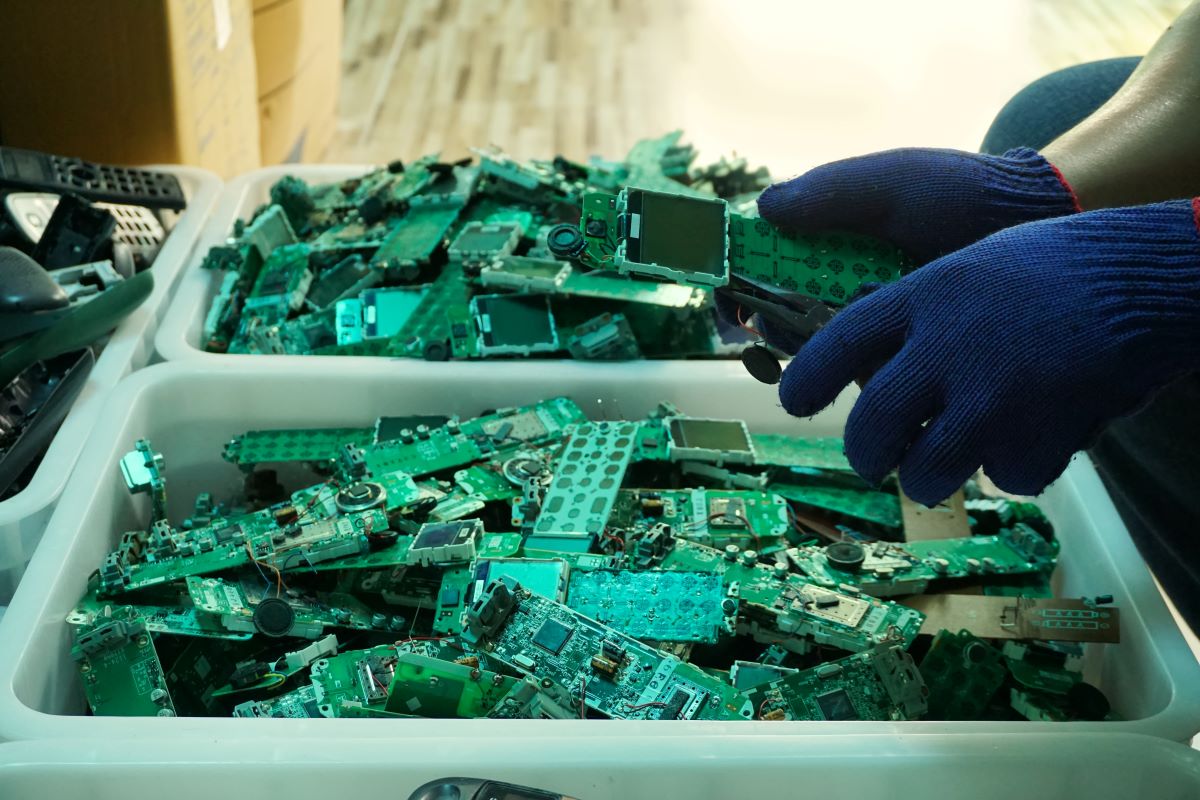
In a June 2 post, ERI explicitly named AI hardware as the fastest-growing source of e-waste, carving it out as a distinct future stream rather than folding it into generic “IT equipment.” For most of ITAD’s history, the industry has spoken in undifferentiated terms: “electronics,” “IT assets,” “end-of-life equipment.” Explicitly segmenting AI hardware means that at least some operators are thinking ahead, staking out a position on infrastructure decisions that won’t hit scale for years, rather than waiting for the retirement wave to arrive.
What’s at stake for these ITADs is the fact that GPU clusters and AI accelerators have different residual value curves, different data destruction considerations, and are headed to different downstream markets than conventional enterprise laptops and servers. Getting ahead of that publicly, before the retirement wave arrives, is a more deliberate posture than the industry has typically taken.
Lifecycle data is getting sharper
The 2026 IT Asset Management Benchmarking Report from Sage Sustainable Electronics — released following its acquisition of Cascade Asset Management — puts hard numbers on trends ITAD operators have been watching informally for years. NIST 800-88 adoption as a data erasure standard jumped from 34% to 52% in a single year, effectively making it a baseline expectation rather than a differentiator. That shift has real operational implications as clients who once accepted a certificate of destruction without asking about the underlying standard are now specifying it. Average laptop retirement age dropped from 4.3 to 4.0 years, compressing refresh cycles and increasing throughput volumes. And 2025 server resale prices ran nearly 2.5 times their seven-year average, with AI-related demand cited as one factor behind those elevated residuals.
That last data point cuts both ways when it comes to ITAD operators: higher resale values improve the economics of reuse-first programs, but they also raise client expectations about returns and create pressure to demonstrate that remarketing channels are actually performing.
IT continues to maintain the sustainability conversation
Quantum Lifecycle’s “The Circular Future” podcast recently featured representatives from the Business Development Bank of Canada walking through how BDC built a green IT program, measured its IT-related carbon footprint, and connected those efforts to the organization’s broader sustainability strategy. Earlier episodes have covered circular business transformation and sustainable procurement as components of net-zero planning.
The intended audience for that content includes the traditional base of IT asset managers, but more importantly it also expands to sustainability officers and executives who need to account for technology infrastructure in climate commitments and ESG disclosures. That’s a different buyer than the IT director scheduling a pickup. Reaching them requires a different vocabulary than end-of-life logistics, and it requires showing up in the conversations where infrastructure decisions get made.
None of this means the core work changes. Collection, data destruction, reuse, and recycling remain the core business of ITADs, and they will for the foreseeable future. But how that business is framed — and who it’s framed for — is shifting. We expect more ITAD operators to put out this kind of content to position themselves as participants in asset lifecycle strategy, expanding their framing of security planning and sustainability reporting, to meet their clients’ needs.