




Following a competitive selection process, Circular Materials chose PlasCred for a tolling arrangement to process post-consumer flexible plastics collected in Alberta under the province’s new EPR program for packaging.
Under the arrangement, the producer responsibility organization (PRO) will supply the plastic feedstock for PlasCred’s planned chemical recycling plant northeast of Edmonton, Alberta, in the country’s natural resource-rich western region.
The steady supply of sorted flexible plastics for processing will help to de-risk feedstock procurement and transportation while supporting commercial processing revenue through the tolling arrangement, Circular Materials said.
“This initiative with PlasCred reflects Circular Materials’ ongoing commitment to advancing the circular economy and leveraging new technology to help return recycled material directly back to producers for use in new products and packaging,” said Allen Langdon, CEO of Circular Materials. “This will drive local innovation for a plastics circular economy that is environmentally effective and economically efficient.”
The PRO launched Alberta’s packaging EPR program in April 2025, and will begin managing the province’s program for paper, packaging and product starting Oct. 1, 2026. Program enhancements include an expanded and unified list of accepted materials, new curbside service in some communities, and a transition from depots to single-stream collection.
Last month, the PRO selected WM for a new recycling facility in Edmonton, expected to open in early 2027.
Circular Materials is the PRO for several other Canadian EPR programs, including New Brunswick, Nova Scotia, Ontario and Yukon Territory.
Feedstock security, guaranteed offtake ahead of FID
Although PlasCred has not yet reached a final investment decision (FID), output from the planned Neos project is already fully contracted, under a five-year offtake agreement with a global commodities company at a fixed price of Canadian $120 per barrel ($86/bbl). The price is on an FCA basis (free carrier), which means the buyer takes custody of the finished product at the Neos facility, and assumes all further costs including transportation and insurance.
Funding for the $25.3 million facility so far has consisted of:
- $5.0 million grant from Emissions Reduction Alberta
- Non-binding term sheet for up to $8.5 million in senior debt, from the federal Business Development Bank of Canada
- $2.35 million from the National Research Council of Canada Industrial Research Assistance Program (NRC-IRAP)
- $500,000 grant from Alberta Innovates
- $6.68 million in equity raise
The plant is projected to generate $19 million in annual revenue and $6.9 million in EBITDA, with a payback period of 4.3 years.
The site’s approval process is taking place through the Industrial Heartland Designated Industrial Zone framework, which offers a shorter approval timeline than for a greenfield project.
The plant is designed to process 100 metric tons per day (36,500 mt/year) of hard-to-recycle mixed plastics (types 1-7), yielding about 500 barrels a day of a naphtha-like substance for use in making new plastics. Engineering partner Grey Owl estimates construction would take 12 months.
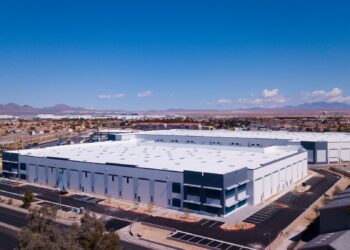
The facility is planned for the CN Rail Scotford Yard industrial complex, northeast of Edmonton, in western Canada. The area is home to a concentration of chemical producers, including Heartland’s Inter Pipeline (polypropylene) and Shell Canada’s complex, both at Scotford, and Dow Canada (polyethylene) nearby in Fort Saskatchewan.