
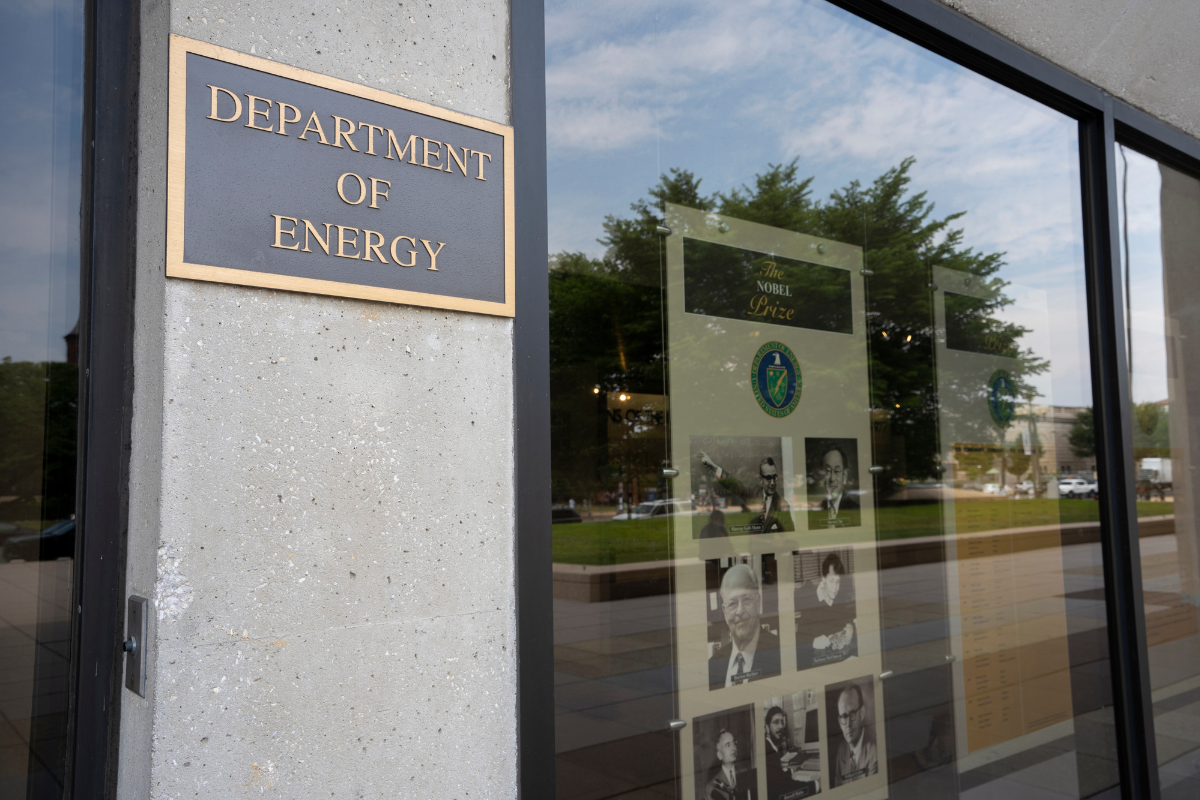
American Battery Technology Company (ABTC) has successfully appealed the termination of a $57 million US Department of Energy (DOE) grant supporting its $115 million commercial-scale lithium refinery, keeping one of the largest critical mineral projects in the country to date.
The Reno, Nevada-based company announced June 8 that the DOE reinstated the competitive grant in its entirety with no change to funds awarded, no change to technical and commercial milestones and an updated project schedule to account for time spent in the review process.
“Of the hundreds of DOE grants terminated last fall, very few have been able to successfully appeal the decisions and have their contracts reinstated,” said CEO Ryan Melsert in a statement. “I am very proud of our team for relentlessly demonstrating the performance of these internally-developed critical mineral technologies.”
The grant, which was originally awarded in October 2022 through the Bipartisan Infrastructure Law, supports the first phase of ABTC’s Tonopah Flats Lithium Project and targets an initial production capacity of 5,000 tonnes of battery-grade lithium hydroxide per year.
The project is a collaboration with DuPont Water Solutions, University of Nevada Reno and Argonne National Laboratory. The federal contribution is $57 million toward the $115 million total project cost.
ABTC was among hundreds of companies notified of grant terminations in October 2025. The company filed its appeal the following day and entered an Informal Dispute Resolution process with the DOE, which included a series of technical and commercial reviews before a final IDR meeting in December 2025. The DOE ultimately concluded that “recission of the termination notice and continuation of the project is warranted.”
The reinstatement spans three administrations: the project received initial bench-scale support during the first Trump term, was awarded this manufacturing grant under Biden, and has now been recommitted under the second Trump administration, a continuity Melsert said is validation of the project’s merit across changing political priorities.
The latest appeal win comes as ABTC builds momentum with both its recycling and extraction business segments.
In May, the company reported $7.8 million in revenue for Q3 fiscal year 2026, a 64% increase from the prior quarter and 680% year over year, alongside its first-ever positive gross margin of $0.7 million. For the first nine months of the fiscal year, ABTC reported $13.5 million in revenue, 792% growth year-over-year.
“This is an achievement that many start-ups never get to,” Melsert said of the gross margin milestone at the time.
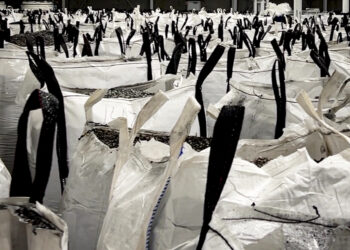
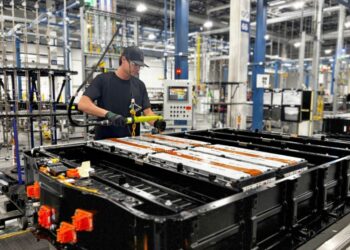
Growth during the quarter was driven largely by increased operational capacity at ABTC’s Nevada recycling facility, with a significant portion of feedstock coming from battery energy storage systems supporting data centers and AI development, alongside end-of-life electric vehicles and consumer electronics.
“We work very closely not just with automotive companies to recycle electric vehicle batteries, but also with large grid operators,” Melsert said in a statement. “A significant portion of our feed over the past few months has come from these large energy storage systems that are largely used to support data centers and artificial intelligence development.”
ABTC also confirmed in May it is moving forward with a second critical mineral recycling facility in the Southeast US, expected to exceed the capacity of its Nevada plant. The company said it has met with economic development agencies and state-level officials, with a site announcement expected soon.
“A lot of the decision of where we actually specifically put the second facility is in consultation with our partners throughout the supply chain so that we continue to enhance operations as we scale the second facility,” Melsert said.
He said the company’s dual focus on recycling and critical mineral extraction is two sides of the same supply challenge.
“Closing the loop is extremely important for gaining access to these critical minerals,” Melsert said in a statement. “However, in addition to closing the loop, we also need to fill that loop the first time.”