


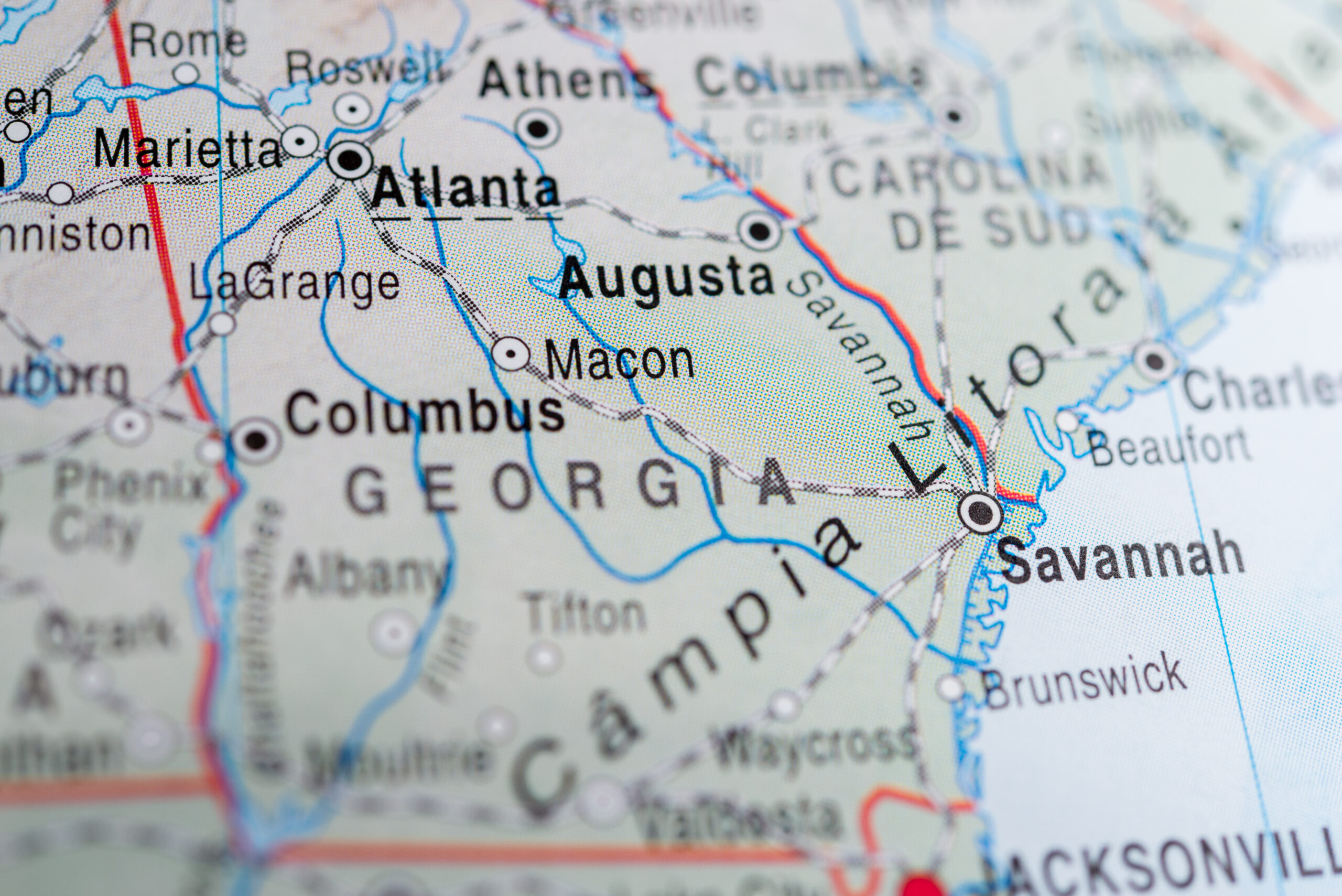
The surge of critical mineral-related enterprise in the United States’ “Battery Belt” is showing no signs of slowing down, with continued development coming as the nation’s attention turns toward shoring up domestic supplies. But more investment in mineral- and battery-related businesses across the value chain would ensure the region’s place in the industry, experts say, as well as get the nation closer to true mineral independence.
The US Southeast has seen a lot of investment in battery- and mineral-related business this decade, due in large part to investments offered under the Inflation Reduction Act of 2022. That helped drum billions of dollars of investment in EV battery-related projects and create tens of thousands of jobs in the months and years following passage of the bill.
As that infrastructure developed, so did the need for the lithium, nickel and other minerals needed for batteries. And recent federal policy shifts to bolster domestic mineral supplies have put an increased emphasis on building up domestic mineral supply chains.
That emphasis seems to have followed the battery network to the Southeast:
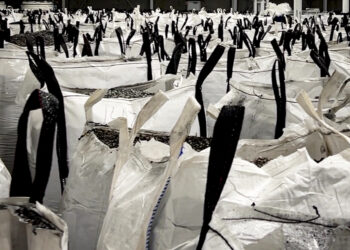
- Nth Cycle has secured money and off-take agreements for a black mass processing facility it’s building in a to-be-determined location in the Southeast.
- Cyclic Materials is following up the opening of a mineral recovery facility in Arizona this year with a rare earth recycling campus that’s expected to open in South Carolina in 2028.
- Red Metals has secured seed funding to build a copper refinery in South Carolina that’s expected to open later this year.
- R3 Lithium acquired some of the assets of Ascend Elements and opened a lithium carbonate recovery facility in Georgia last month.
- Solarcycle began processing solar panels at its recycling facility in Georgia earlier this year.
- USA Rare Earth announced plans over the summer to open a magnet manufacturing and refined metals operation in South Carolina by 2028, complementing a similar facility it runs in Oklahoma.
- Novelis Inc. started producing coils of recycled aluminum this fall at its $5 billion recycling and rolling plant in Alabama.
Creating a welcoming environment
States are doing their part to create a business-friendly environment for these companies. South Carolina, as one example, offers tax credits for investments in manufacturing products made of at least 50% post-consumer waste; renovating abandoned sites; machinery and equipment used in processing, mining and recycling; and industrial power and fuel. The federal government offers an additional manufacturing production tax credit for companies that extract or process materials from a list of 60 approved minerals, including copper and lithium.
The state’s Coordinating Council for Economic Development approved job development credits for the Red Metals project, among others.
“We’re pleased to welcome Red Metals to the Charleston region,” Will Russell, chairman of the Charleston Regional Alliance Board, said when the announcement was made. “Their investment reflects the continued momentum we’re seeing across Charleston.”
USA Rare Earth likewise received grants, tax credits and other incentives to build its $1.2 billion facility in Cherokee County, where the company is expected to create almost 500 jobs.
“South Carolina offered the workforce, the infrastructure and the partners we needed to move quickly,” Rare Earth CEO Barbara Hampton said. “With this investment, we’re bringing home the advanced manufacturing capabilities that America and its allies depend on, from the factory floor to the front lines.”
Government cooperation went a long way toward ElementUSA deciding to build a rare earth and critical mineral refining facility in Louisiana. Company executives said last year the state’s leaders began working at the start of the decade to bring the $850 million project to St. John Parish; production should begin in 2028. The state offered the company a $6 million grant for utility and infrastructure work, as well as tax abatements.
The Louisiana Economic Development (LED) agency said forming partnerships with companies involved in mineral-related fields is part of an overall plan to bolster the local economy.
“ElementUSA’s investment decision is another clear sign that Louisiana’s strategy is working,” LED Secretary Susan B. Bourgeois said. “By strengthening our competitiveness, aligning agencies through a whole-of-government model and listening directly to companies, we’ve built the conditions that turn interest into investment.”
Building a better workforce
Both Hampton and Megan O’Connor, Nth Cycle’s CEO, had high praise for the potential employees in the Southeast, many of whom have exposure to batteries and minerals due to the sector’s emergence there.
“A lot of the other pieces of the battery supply chain are being built down there,” O’Connor said. “There’s a large, viable workforce there. There’s a lot of people with manufacturing skill sets.”
That’s thanks, in part, to higher education efforts to create a new generation of workers. The University of South Carolina’s Carolina Institute for Battery Innovation, for one, serves as a hub for the development of new battery technologies, and as a training ground for the workers who will put them in action. The University of Alabama’s Mobility and Power Center serves a similar function in the Yellowhammer State, hosting battery cell manufacturing pilots and creating a stronger power ecosystem.
Transportation and other infrastructure also helps. O’Connor said access to ports simplifies shipping, while Hampton touted proximity to major highways such as I-85 and energy delivery capabilities from utilities such as Duke Energy.
Along with an infrastructure the government built, already-existing resources in the region also help. The US Geological Survey identified the Southeast coastal plain as containing heavy-mineral sands containing titanium, zirconium and other rare earth elements, constituting “an enormous, underutilized domestic source of these minerals.”
Researchers at Georgia Tech have been tasked with finding more of those resources along the Atlantic coastal plain. The university received a $7.5 million grant from the US Department of Energy (DOE) to locate them, optimize extraction and gather data for future recovery and recycling efforts.
And sometimes, it’s simply a matter of spreading out. Among Cyclic’s reasons for expanding in the Southeast was to have a presence in the eastern half of the country. That’s also why American Battery Technology Co. is looking at the region; that company operates a battery recycling facility in Nevada and plans to build a larger facility in a to-be-determined location in the Southeast.
“We wanted geographic diversity,” CEO Ryan Melsert said. “We want a plant on the East Coast in order to minimize the movement of material.”
More can be done
Initiatives like those from the DOE and LED are vital to fuel further growth, according to researchers from the Center for Climate and Energy Solutions. That organization discussed the Southeast critical mineral supply chain in a report this past spring.
The report noted that the Southeast has secured 43% of all US battery investment since 2021, making more collaboration a natural next step to secure the supply chain. A coordinated buildout, researchers said, could result in more than $100 billion in total investment in facilities building battery components and securing minerals. Mineral extraction/refining, they found, was the part of the supply most in need of investment, with the US still 100% reliant upon imports of several key minerals.
But delays in permitting, a lack of funding and other barriers endure in allowing mineral refiners from establishing a US presence, researchers found. The Southeast, with its conducive geography, fairly low costs and supportive local governments, would benefit — as would the nation as a whole — with more of a federal focus on funding initiatives and maintaining tax credits such as those relating to environmentally friendly vehicles.
Canceled loans and grants have impacted the region as it looks to expand its mineral infrastructure, researchers said, and tariffs and other economic decisions have mitigated some of the impact of the administration’s critical mineral push.
A federal push to accelerate domestic production would strengthen the nation’s — and particularly the Southeast’s — mineral production capabilities, they said. So would expanded incentives for products containing domestically produced minerals, the creation of a nationwide entity to coordinate battery- and mineral-related strategy, and the establishment of a Southeast regional financing authority to provide additional funding for mineral-related projects.
Federal policy reversals “have destabilized investment at a critical moment, leaving midstream suppliers without offtake certainty and downstream manufacturers without a clear demand signal,” the authors wrote. “The window to establish a competitive American battery industry is narrowing.”