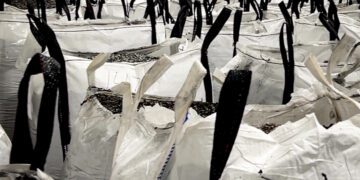




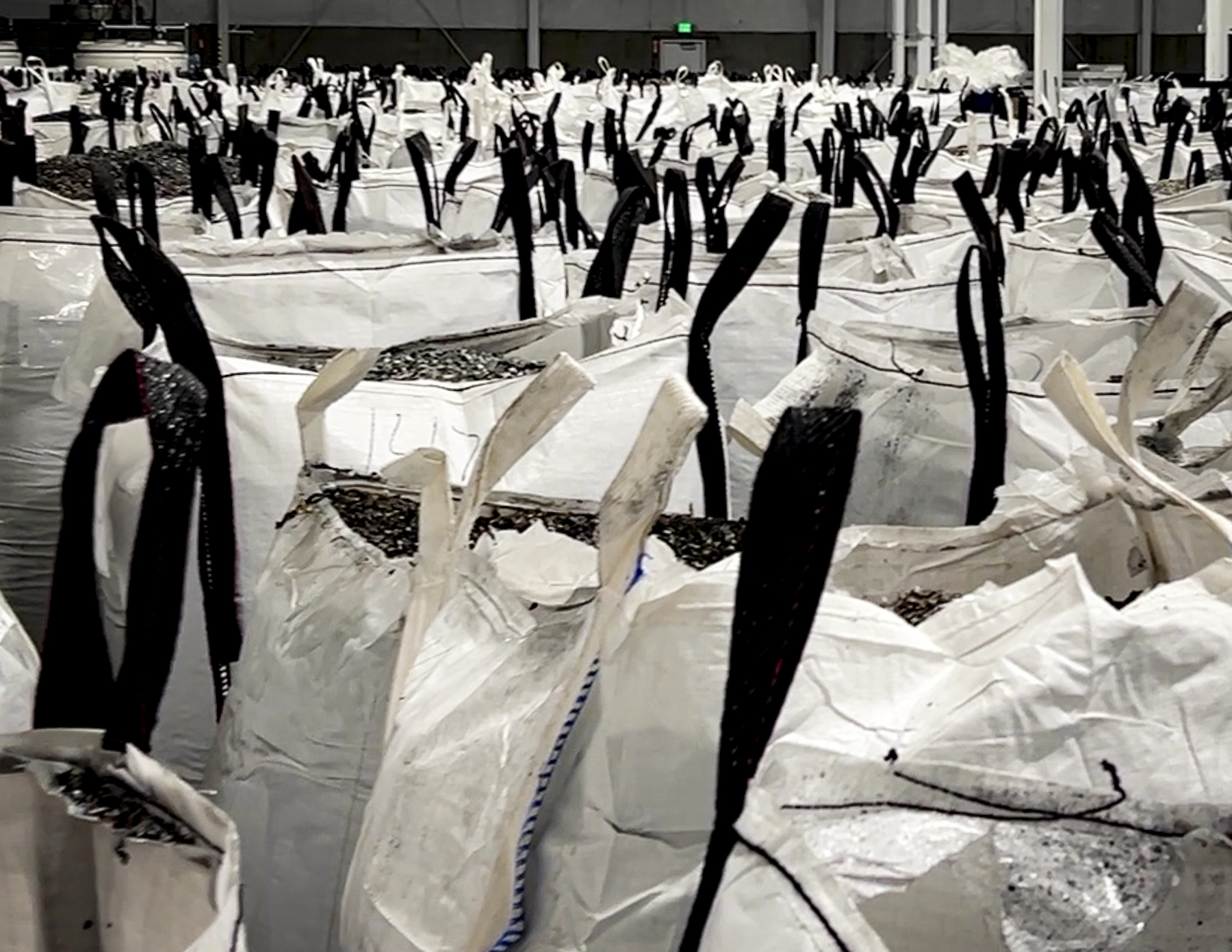
American Battery Technology Co. (ABTC) has received a license to export up to $100 million in black mass, which CEO Ryan Melsert said will help the company raise money from the batteries it recycles while giving the US mineral processing infrastructure time to catch up to domestic collection and shredding.
The license was given by the US Department of Commerce Bureau of Industry, which ruled as of Aug. 27 that black mass and tungsten from US companies had to be sold domestically. That followed a presidential determination in July authorizing the Secretary of Commerce to restrict the export of critical minerals.
The black mass comes from ABTC’s critical mineral recycling facility near Reno, Nevada, which has been in operation since 2023 and has a processing capacity of 20,000 metric tons per year. Melsert said the license, which will be good for the year that the export ban will be in place, gives the company more time to build up its recycling infrastructure and that of its downstream partners.
ABTC is finalizing a location for a second refinery in the US Southeast, which the company hopes will have five times the capacity of the Nevada facility. Both projects received federal grants from the Department of Energy.
“The export ban was put in place to encourage domestic production,” he said. “We’re building a refinery on our own. We’re doing what this was intended to encourage.”
ABTC’s recycling focuses on shredded lithium-ion battery scrap that comes from data centers, EVs, consumer electronics and other devices. Without enough offtake partners to sell the black mass to, the company will send much of it to be processed in Asian countries like South Korea, where the cobalt, nickel and other minerals can be extracted.
The license — which is the first publicly known license granted since the ban took place — indicates that ABTC has proven itself a reliable part of the mineral infrastructure, Melsert said. It also allows the company to work with its partners to bolster refining and other efforts to make sure these minerals can eventually stay on shore, he said.
“That’s been our business plan to build incrementally, build one step of the supply chain of the time,” he said.
Several companies took steps of their own over the summer to help build out the domestic supply chain. Gloyd Recycling Solutions began installing its BIDS system in US facilities, allowing processors to shred battery-embedded devices in house. Cyclic Materials opened a facility in Arizona to recycle rare earth minerals. R3 Lithium opened a facility in Georgia to recover lithium carbonate from black mass and scrap to use in lithium-ion batteries, while Nth Cycle entered several feedstock and off-take agreements for its black mass processing facilities.
ABTC has secured off-take agreements for its products, Melsert said. That and other steps in the process of creating a supply chain are difficult enough without shifts in federal policy, he said; incentive-based policy under the previous administration has made way for tariff- and import-centered policy now. But companies like his, by controlling what they can control, will help the nation meet its mineral needs.
“It’s a lot of coordination,” he said. “Our customers are more partners than just someone who buys products. Building these facilities takes several years. The industry is looking for consistency.”
The company is coming off its strongest year to date. ABTC posted $21.7 million in revenue in fiscal 2026, a 407% increase from the year prior, while reporting an adjusted gross profit of $1.7 million compared to a $6.2 million loss in 2025.