






This article originally appeared in the May 2019 issue of Resource Recycling. Subscribe today for access to all print content.
For years, communities across the country have taken incremental steps to enhance recycling efforts – changing their lists of accepted materials, for instance, or reconfiguring contracts.
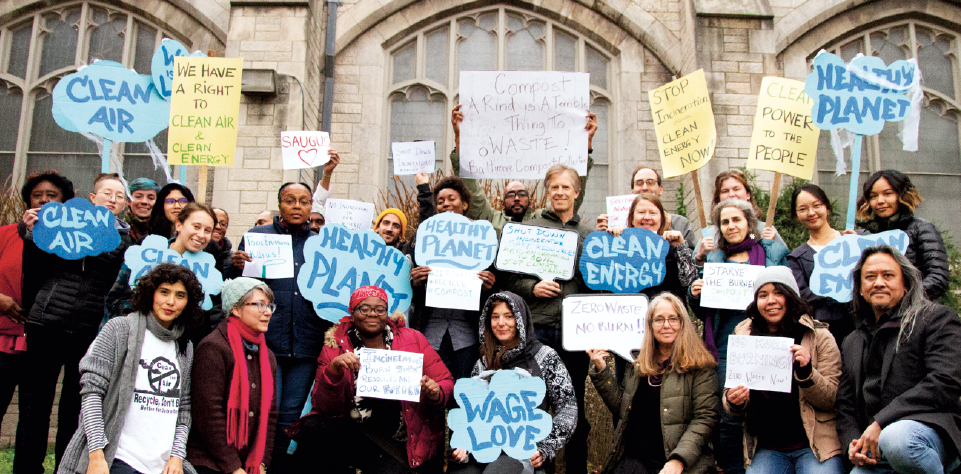
But of late, a variety of large municipalities have pushed to make waste shifts at a deeper level. Elected officials and concerned citizens in major cities that have struggled with the health and pollution impacts of waste incineration are moving to replace tired, burn-based infrastructure with initiatives geared toward zero waste economies.
In other areas, officials are enacting product bans that have the potential to force critical upstream changes by product manufacturers.
With National Sword bringing unprecedented public attention to the shortcomings of the current materials recovery system and with many waste contracts reaching the end of their timelines, we can expect to see even more bold moves on the municipal level in the coming months and years. Here are some examples of communities that can serve as inspiration in that wider push to not just manage waste, but reduce it altogether.
Pushing past pollution in Baltimore
The city of Baltimore is a perfect example of both the problem, and the solution. Maryland’s biggest municipality is home to one of the nation’s most notoriously polluting incinerators, owned and operated by Wheelabrator, which has a hand in more than two dozen facilities in the U.S. and U.K.
The Baltimore Wheelabrator site is the city’s single largest source of industrial air pollution, including sulfur dioxide, mercury and nitrogen oxide. Health impacts associated with its emissions have cost Maryland an estimated $55 million in health care expenses annually, according to a 2017 report from the nonprofit conservation group Chesapeake Bay Foundation.
The good news is that dedicated community members and organizations have joined together to protect their families from incinerator pollution and seed better alternatives.
This past February, activists led by the Environmental Justice Network and others succeeded in getting a unanimous vote from the City Council on a Clean Air Act, which would tighten emissions limits from the incinerator. The controls that would be required to keep the 35-year-old facility under these stricter limits would likely force the facility to close, according to news reports quoting representatives from Wheelabrator.
While the push around smarter regulatory policy unfolds, community-led efforts are working to revolutionize the city’s approach to waste. In March, the group United Workers launched the Zero Waste Challenge, a media campaign that asks individuals and elected leaders to adopt zero waste in their own lives.
Local activists are also working with city officials to come up with a zero waste action plan that would help build out composting infrastructure, improve recycling access and education, and phase out polluting products and packaging through enforcement of the city’s ban on expanded polystyrene and promotion of reusables. Additionally, the plan calls for a “save as you throw” program to increase diversion.
Already Baltimore has made great strides on the ground, particularly around food waste. The Baltimore Compost Collective is a community effort that is collecting food scraps from several neighborhoods. And the city recently received a $200,000 grant from the Rockefeller Foundation to launch a food waste recovery program focused on reduction, food donations and pilot compost collection sites.
Not surprisingly, barriers remain. On April 11, Wheelabrator announced that it is suing the city for not providing enough waste to burn. The damages, according to the company, are set to exceed $32 million. In other words, while municipalities like Baltimore are trying to move away from a wasteful economy, companies like Wheelabrator are punishing communities for not being wasteful enough. This could have a chilling effect as more cities prepare to reduce waste further.
A Midwest incinerator shutters
Detroit, meanwhile, is a good example of how the incinerator industry relies on lax emissions requirements, enforcement and externalizing costs to keep their facilities afloat. When communities rise up to hold the industry accountable, the waste-burning business model falls apart.
On March 27, the Detroit incinerator, perversely named Detroit Renewable Power, announced that it was closing for good. The news came as pressure built from citizens as well as community and environmental groups.
For years, residents living near the incinerator called in odor problems and other violations – carbon monoxide and particulate matter emitted at the site has contributed to Detroit having some of the highest rates of asthma in the country.
The incinerator had also caused significant problems for the city’s finances during 30 years of operation. Built by the city in 1986, the facility was sold the next decade to private investors (including Philip Morris, the tobacco giant) to pay down city debt. Taxpayers, however, remained responsible for paying bonds owed on it, and, all told, Detroit residents have paid more than $1.2 billion toward city debt caused by the incinerator facility, according to a study from the Michigan-based Ecology Center.
At the time of its closure this spring, the incinerator was facing $149,000 in state fines for environmental pollution and a potential citizen lawsuit filed by environmental groups on behalf of area residents, headed by the Great Lakes Environmental Law Center. A petition to close the incinerator with almost 15,000 signatures was delivered to the desk of Mayor Mike Duggan last year.
Many incineration facilities were built in the 1980s and ‘90s, meaning a wave of contracts are coming up for renewal in the coming years.
While community groups are celebrating the closure, they have raised concerns about the welfare of the workers who have lost their jobs, and are watching closely to ensure that the mayor makes good on his promise to find them jobs with comparable wages and benefits.
In addition, groups are hard at work to ensure that the city makes a just transition towards a zero waste system. According to a statement from Breathe Free Detroit, “This is an opportunity for Detroit’s elected leaders to help reduce global warming, and move toward environmental justice and a healthier future.”
Inspiration in Boston and Berkeley
Encouraging energy is also evident up in Boston and out on the West Coast.
In the Massachusetts capital, community activists and city officials are working toward a zero waste plan that will be one of the first to be formed in the wake of China’s ban on recyclables imports. The city has had a checkered history with waste management. Diversion rates have until recently been below 25%, and the vast majority of the waste generated has been sent to be burned in places such as Wheelabrator Saugus, an incinerator where toxic ash is threatening a nearby wetland and low-income communities surrounding the ash dump, according to a recent article published on environmental news site Grist.
It’s also been reported that the workers who made recycling possible in the city were often paid less than the living wage through special exemptions, making the regional waste and recycling is sector an unsustainable one in which to work.
However, times are changing, thanks to the efforts of Zero Waste Boston, a coalition of labor, environmental, community and youth groups. The coalition has succeeded in highlighting zero waste as an important way for the city to meet its climate goals and equity responsibilities. In 2018, the city announced its own Zero Waste Boston initiative, convening an advisory committee with the goal of recommending strategies to get the city to 80 percent diversion by 2035 and 90 percent diversion by 2050 from recycling and composting. Zero Waste Boston aims to cut disposal at landfills and incinerators, and it wants to do it all in a way that’s fair to industry workers and Boston-area communities.
The systematic shifts being envisioned in places like Boston are being complemented by other municipalities that are taking proactive upstream steps to reduce the use of items that cannot be composted or recycled.
In January of this year, the city of Berkeley, Calif. passed a historic Disposable-Free Dining ordinance, which is perhaps the most comprehensive piece of plastic waste reduction legislation in the country to date.
The ordinance, set to take effect in 2020, will require all restaurants to provide reusable foodware for customers dining in, and all takeout containers (which themselves must be compostable and free of certain chemicals like PFAs) will have a 25-cent charge attached. Other throwaway items like straws will be available only upon request.
Berkeley’s ordinance will apply to all restaurants, including big chains like McDonalds and Starbucks. This reality will force the retailers most responsible for churning out disposable packaging to change their business practices within the confines of the city.
And that may have national or global repercussions. Imagine what a headache it would be for a major chain to keep track of all the requirements if more cities and counties across the country adopted similar rules? It would become easier and cheaper for such companies to start phasing out wasteful packaging across the board.
A revolution underway
There’s no doubt today’s market pressures are bringing major concerns to cities when it comes to waste management and recycling. However, with great challenges come great opportunities.
The commitment to fixing broken waste management systems spans both geography and political divides. From Berkeley to Detroit, from Boston to Baltimore, citizens and elected leaders are leading a waste reduction revolution that is already sending ripple effects across the supply chain.
And the time seems right for more action in other regions. In the past year, at least five incinerators shut down, with planned closures of more facilities in the offing.
Many incineration facilities were built in the 1980s and ‘90s, meaning a wave of contracts are coming up for renewal in the coming years. Cities such as Long Beach, Calif. and Minneapolis will soon be facing the choice to either extend existing incinerator contracts for decades, or to go in a completely new direction: prioritizing waste reduction over waste burning through sound policy and systems.
The municipalities highlighted above help show how leaders can forge the new path ahead.
Claire Arkin is the communications coordinator for GAIA: Global Alliance for Incinerator Alternatives. She can be contacted at claire@no-burn.org.
In the March 2018 edition of Resource Recycling, GAIA wrote an opinion article about how plastic-to-fuel endeavors could be leading cities in the wrong direction.