





Resource Recycling
  • The Latest
  • Analysis
    • All
    • Certification Scorecard
    • Industry Announcements
    • Opinion

    Closed Loop Partners acquires Sutter Metals, connecting electronics disposition to metals recovery

    Certification Scorecard — Week of March 30, 2026

    Certification scorecard – Week of March 23, 2026

    Certification Scorecard – Week of March 16, 2026

    Groups identify recovered plastics users in the Northeast

    Bale pricing for recycled plastics diverges

    Why global ITAD is stranded in the Gulf

    Why global ITAD is stranded in the Gulf

    Certification scorecard for the week of March 9, 2026

    Diversion Dynamics: Secondhand exports slow down fast fashion

    Certification scorecard for the week of March 2, 2026

  • Conferences
  • Publications

    Other Topics

    Textiles
    Organics
    Packaging
    Glass
    Brand Owners

    Metals
    Technology
    Research
    Markets
    Grant Watch

    All Topics

Subscribe
No Result
View All Result
Resource Recycling
  • The Latest
  • Analysis
    • All
    • Certification Scorecard
    • Industry Announcements
    • Opinion

    Closed Loop Partners acquires Sutter Metals, connecting electronics disposition to metals recovery

    Certification Scorecard — Week of March 30, 2026

    Certification scorecard – Week of March 23, 2026

    Certification Scorecard – Week of March 16, 2026

    Groups identify recovered plastics users in the Northeast

    Bale pricing for recycled plastics diverges

    Why global ITAD is stranded in the Gulf

    Why global ITAD is stranded in the Gulf

    Certification scorecard for the week of March 9, 2026

    Diversion Dynamics: Secondhand exports slow down fast fashion

    Certification scorecard for the week of March 2, 2026

  • Conferences
  • Publications

    Other Topics

    Textiles
    Organics
    Packaging
    Glass
    Brand Owners

    Metals
    Technology
    Research
    Markets
    Grant Watch

    All Topics

Subscribe
No Result
View All Result
Resource Recycling
No Result
View All Result
Home Analysis Opinion

In My Opinion: Colorado’s EPR not set up for success

byJD Ambati, EverestLabs
May 24, 2022
in Opinion
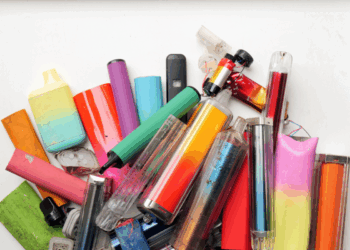
The head of an AI-powered robotics company argues extended producer responsibility legislation focused on material weight will fail to hold producers truly responsible. | Africa Studio/Shutterstock

Colorado’s extended producer responsibility (EPR) legislation, House Bill 22-1355, is a step forward in assuring improvement in recycling – but it is not enough for a state that, according to the bill, “recycled 15% of its waste, which is less than half of the national average,” in 2020.

While we try to make progress, today, EPR is an inaccurate system that will not hold producers responsible for recovering the packaging objects they produce.

The reason? Today’s EPR systems are based on the weight of packaging rather than the number of recyclable objects put into the market. And until every recyclable sold into the market can be accounted for and recovered, we will not truly have producer responsibility.

Weighty considerations

JD Ambati
JD Ambati

The Colorado bill describes the obligation of producers in “weight.” A portion of the bill states the following: “Recycling rate means the weight of covered materials that are recycled under the program in a calendar year divided by the weight of covered materials used for products sold or distributed by producers within or into the state in the same calendar year, expressed as a percentage.”

On May 5, New York introduced its own EPR bill, A10185. It was the second New York bill, with S1185 being introduced in 2021. Both bills measure recycling in weight.

Other state legislative EPR initiatives require that producers pay for a portion of the cost of recycling based on weight. EPR bills in Maine and Oregon became law last year. States that are considering or have recently considered EPR bills include California, Hawaii, Maryland and Massachusetts.

The California bill describes the problem facing America, and for that matter, the world: “The United States alone discards 30 million tons each year. Global plastic production is projected to more than triple by 2050, accounting for 20 percent of all fossil fuel consumption.”

How many more objects will result from this tripling? Can our recycling systems manage the number, not the weight, or will it continue to be overwhelmed?

Separately, American Beverage (formerly the American Beverage Association) has been running 30-second commercials under its Every Bottle Back initiative. The campaign notes that America’s beverage companies are “making 100% recyclable bottles and caps and working hard to ensure they’re recycled and remade into new bottles.”

While bottlers may have the best intentions, they are operating in a recycling system that is not yet able to assure 100% of bottles are recycled and recovered for making new bottles or cans. In fact, according to the EPA, in 2018, “the recycling rate of PET bottles and jars was 29.1 percent.”

A technological tracking solution

We have the technology to track down bottles and cans to the object level. Every consumer packaged goods (CPG) brand knows this detail. Look no further than their annual reports that report how many unit cases of “X” have been sold. These are all inventoried at manufacturing sites and distribution warehouses. Retailers like Walmart, Whole Foods and others have the technology and systems to account for every unit case of 24 individual bottles sold.

It’s time to move away from weight-based criteria as a measure of success in the recovery and recycling of packaging.

Consider that there are “more objects per pound” in the market with new manufacturing technologies. It dramatically impacts recovery at recycling plants. According to the American Chemistry Council, in the last 45 years, the 2-liter plastic soft drink bottle has gone on a diet, from weighing 68 grams to just 47 grams today, representing a 31% reduction per bottle. That reduction saved more than 180 million pounds of packaging in 2006 for just 2-liter soft drink bottles. The 1-gallon plastic milk jug has undergone a similar reduction, weighing 30% less than it did 20 years ago. But none of this weight reduction resulted in fewer soft drink bottles or jugs processed in recycling plants.

The EPA reports that the recycling rate of PET bottles and jars was 29.1% in 2018, and the rate for HDPE natural bottles was 29.3% in 2018. Around a 30% success rate is a failing grade.

If retailers are at the epicenter of retail sales and consumption, then MRF operators are at the center of successful recycling. Recycled objects flow down MRFs’ conveyor belts. We need the MRF operators to be the source to measure if an object is recovered. 

It is possible. With the advent of the low cost of computing and fast edge-compute AI, we now can document all visible objects at the MRF level to verify their successful recovery. Documentation empowers MRFs to report the recovery of recyclables back to producers. This continuous feedback loop is necessary for a circular system. While this process is not 100% error-prone, this is a good start. 

Recovery data from the MRFs can help producers make informed decisions about steps to meet business goals such as environmental, social and governance (ESG), EPR, building brand equity, consumer awareness and loyalty, supply chain efficiency, and others. 

Until we execute on easy-to-implement AI systems and use modern technologies, governments and society are asking producers and MRF operators to do the impossible: Be responsible for recycling without precise measurement.  

Producers need to be directly connected to MRFs to know if each container is recovered to meet extended producer responsibility. Until then, meeting states’ goals and American Beverage’s lofty goal of every bottle back is a pipe dream.


JD Ambati is CEO and founder of EverestLabs, a provider of AI and robotic sorting technology.

The views and opinions expressed are those of the author and do not imply endorsement by Resource Recycling, Inc. If you have a subject you wish to cover in an op-ed, please send a short proposal to [email protected] for consideration.

Tags: EPR
TweetShare
JD Ambati, EverestLabs

JD Ambati, EverestLabs

Related Posts

Apparel retailer organization challenges SB 707 textile PRO selection

byStefanie Valentic
April 2, 2026

With the July 1 deadline looming, the American Apparel & Footwear Association has filed a petition questioning CalRecycle's selection of...

Waste Connection recycling cart in The Dalles, Oregon

First Oregon community expands curbside recycling with EPR funding

byBrian Clark Howard
April 1, 2026

The City of The Dalles in northern Oregon is now rolling out nearly 5,000 new 90-gallon recycling carts to customers...

Quebec PRO reflects on first year of packaging EPR

byAntoinette Smith
March 30, 2026

The province's all-packaging collection approach has simplified messaging while providing lessons for the PRO as well as for industry.

ag plastics field

Ag industry holds potential for recycling feedstock

byStefanie Valentic
March 24, 2026

With less than 15% of US agricultural plastics currently being recycled, insiders say the gap between what's possible and what's...

Traceability tools add recycled material trust

Industry coalition seeks injunction against California’s SB 343

byStefanie Valentic
March 19, 2026

A coalition of packaging producers, farmers, restaurants and grocers has filed a class action lawsuit seeking to block enforcement of...

EPR expanding beyond packaging into tougher waste streams

EPR expanding beyond packaging into tougher waste streams

byScott Snowden
March 19, 2026

Proposals beyond packaging include boat wrap, hazardous products and oil containers, though infrastructure gaps and unclear producer rules remain, panelists...

Load More
Next Post

Local programs share tips for cost-effective recycling outreach

More Posts

Quebec PRO reflects on first year of packaging EPR

March 30, 2026

ReElement, Mitsubishi partner on rare earth supply chains

March 31, 2026
Belgian and Flemish flags fly against a backdrop of an ocean beach

PureCycle receives €40m EU grant for new plant

March 26, 2026

PCA closing Richmond plant

April 2, 2026

Report pegs fire losses at $2.5b in US and Canada recycling industry

March 27, 2026
#ESC2025 Speaker Spotlight: Matthew Young

From bootstrap to boom: EVR poised for growth after capital injection

March 26, 2026
Waste Connection recycling cart in The Dalles, Oregon

First Oregon community expands curbside recycling with EPR funding

April 1, 2026
URT builds alliance to remake electronics plastics at scale

Less premium smartphone inventory is reaching recyclers

March 30, 2026
Groups identify recovered plastics users in the Northeast

Bale pricing for recycled plastics diverges

March 17, 2026
With RPET in crisis, focus turns to solutions

With RPET in crisis, focus turns to solutions

April 2, 2026
Load More

About & Publications

About Us

Staff

Archive

Magazine

Work With Us

Advertise
Jobs
Contact
Terms and Privacy

Newsletter

Get the latest recycling news and analysis delivered to your inbox every week. Stay ahead on industry trends, policy updates, and insights from programs, processors, and innovators.

Subscribe

Welcome Back!

Login to your account below

Forgotten Password?

Retrieve your password

Please enter your username or email address to reset your password.

Log In

Add New Playlist

No Result
View All Result
  • The Latest
  • Analysis
  • Recycling
  • E-Scrap
  • Plastics
  • Policy Now
  • Conferences
    • E-Scrap Conference
    • Plastics Recycling Conference
    • Resource Recycling Conference
    • Textiles Recovery Summit
  • Magazine
  • About Us
  • Advertise
  • Archive
  • Jobs
  • Staff
Subscribe
This website uses cookies. By continuing to use this website you are giving consent to cookies being used. Visit our Privacy and Cookie Policy.