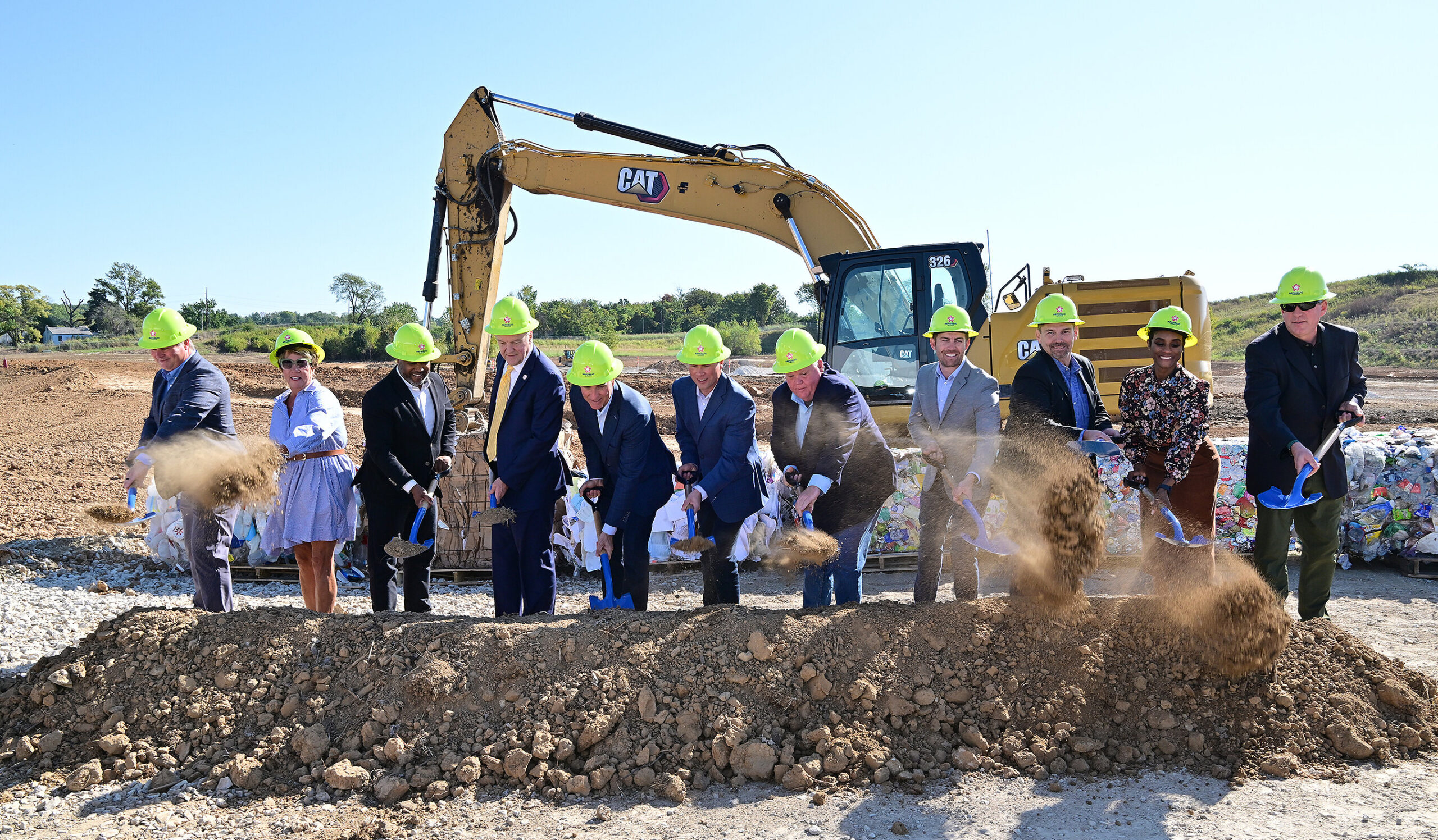
Republic Services has broken ground on a 105,000-square-foot MRF near St. Louis.
The recycling center, located in Bridgeton, Missouri, is expected to open in 2028. The new facility will process up to 45 tons of recyclables per hour for Greater St. Louis. It will serve businesses and about 3 million residents across the region.
That timeline is later than first anticipated. When Republic announced the project in May 2025, it expected to break ground in the first quarter of 2026, contingent on the permitting process, and expected to open in mid-2027. The company did not say what pushed the schedule back.
At full speed, the facility will handle about nine truckloads an hour of single-stream material. That includes paper, cardboard, plastic bottles and jugs, aluminum and steel food and beverage cans, and glass bottles and jars.
The sort line will use optical sorters and AI systems to boost recovery. Republic’s original plans called for at least 10 optical sorters, plus screening equipment to separate material by size and pull out non-recyclables.
“This project is a major investment in the future of recycling throughout Greater St. Louis and reinforces Republic Services’ commitment to advancing circularity and sustainability,” said Gregg Brummer, Republic’s chief operating officer, in a statement.
Construction is expected to create up to 200 full-time jobs. Once the facility opens, it will employ about 60 people full time. Republic did not disclose the project’s cost.
The company has more than 1,000 employees in Missouri. It operates 80 recycling centers nationwide, which diverted 6.4 million tons of recyclables from landfills in 2025, according to the company.
A new arch to resource recovery
The groundbreaking comes as the City of St. Louis rebuilds its own recycling program.
Before August 2025, shared alley dumpsters served about 80% of city households. In fiscal 2025, more than half of the city’s recycling collection was rejected at Republic Services’ MRF. Recycling also cost the city almost five times more per ton than trash, according to the city, which ended alley collection on Aug. 14, 2025. The city moved those households to drop-off sites, and the network has since grown to 46 sites, putting one within a mile of every home.
“The harsh truth was that it wasn’t working very well,” Mayor Cara Spencer said of the alley dumpsters at SWANA’s RCon 2026 conference earlier this month. “No one clapped, right? But the reality is it was necessary.”
The share of collected material successfully recycled climbed from 37% to 78% over the drop-off program’s first six months, according to the city’s refuse dashboard. It slipped to about 75% in early 2026. Officials are running a pilot on the two routes with the highest contamination.
“We are actually recycling more now with the drop-off site,” Spencer said.
The city’s longer-term collection model is still unsettled. A 13-member mayoral task force recommended in June that the city move to universal roll carts, with a recycling cart available at no extra cost. Spencer has said carts may not work for older residents or those with limited mobility.
The task force is waiting on a roll cart feasibility study before issuing final, nonbinding recommendations later this year. Whatever the city decides will shape the volume and quality of material headed to regional MRFs when Bridgeton comes online.
Republic’s release did not say how the new facility will fit alongside its existing MRF in Hazelwood. About 80% of St. Louis metro households are served by that facility.