



Resource Recycling
  • The Latest
  • Analysis
    • All
    • Certification Scorecard
    • Industry Announcements
    • Opinion
    Intel sign outside of company building.

    Intel’s CapEx tops $20B on server demand while PC volume shrinks

    Google sign on company building with blue sky and clouds above.

    Inside Alphabet’s Q2 results: More capital spending and cloud backlog

    Alpek closing Pennsylvania RPET plant

    Alpek seizing on war-related opportunity 

    Our top stories from March 2023

    Iron Mountain’s data center report: Strong on power, quiet on hardware

    Dow touts US PE advantage amid Iran war

    Dow bullish on August PE pricing

    Certification Scorecard — Week of July 20, 2026

  • Conferences
    • Resource Recycling Conference
    • Plastics Recycling Conference
    • E-Scrap: The Longevity Conference
    • Textiles Recovery Summit
  • Publications
    • E-Scrap News
    • Plastics Recycling Update
    • Policy Now
    • Resource Recycling
    • Other Topics
      • All Topics
      • Brand Owners
      • Critical Minerals
      • Glass
      • Grant Watch / RFPs
      • Markets
      • Organics
      • Packaging
      • Research
      • Technology
      • Textiles
Subscribe
No Result
View All Result
Resource Recycling
  • The Latest
  • Analysis
    • All
    • Certification Scorecard
    • Industry Announcements
    • Opinion
    Intel sign outside of company building.

    Intel’s CapEx tops $20B on server demand while PC volume shrinks

    Google sign on company building with blue sky and clouds above.

    Inside Alphabet’s Q2 results: More capital spending and cloud backlog

    Alpek closing Pennsylvania RPET plant

    Alpek seizing on war-related opportunity 

    Our top stories from March 2023

    Iron Mountain’s data center report: Strong on power, quiet on hardware

    Dow touts US PE advantage amid Iran war

    Dow bullish on August PE pricing

    Certification Scorecard — Week of July 20, 2026

  • Conferences
    • Resource Recycling Conference
    • Plastics Recycling Conference
    • E-Scrap: The Longevity Conference
    • Textiles Recovery Summit
  • Publications
    • E-Scrap News
    • Plastics Recycling Update
    • Policy Now
    • Resource Recycling
    • Other Topics
      • All Topics
      • Brand Owners
      • Critical Minerals
      • Glass
      • Grant Watch / RFPs
      • Markets
      • Organics
      • Packaging
      • Research
      • Technology
      • Textiles
Subscribe
No Result
View All Result
Resource Recycling
No Result
View All Result
Home Plastics

APR, industry create proactive guidance for PET caps

Antoinette SmithbyAntoinette Smith
February 12, 2026
in Plastics

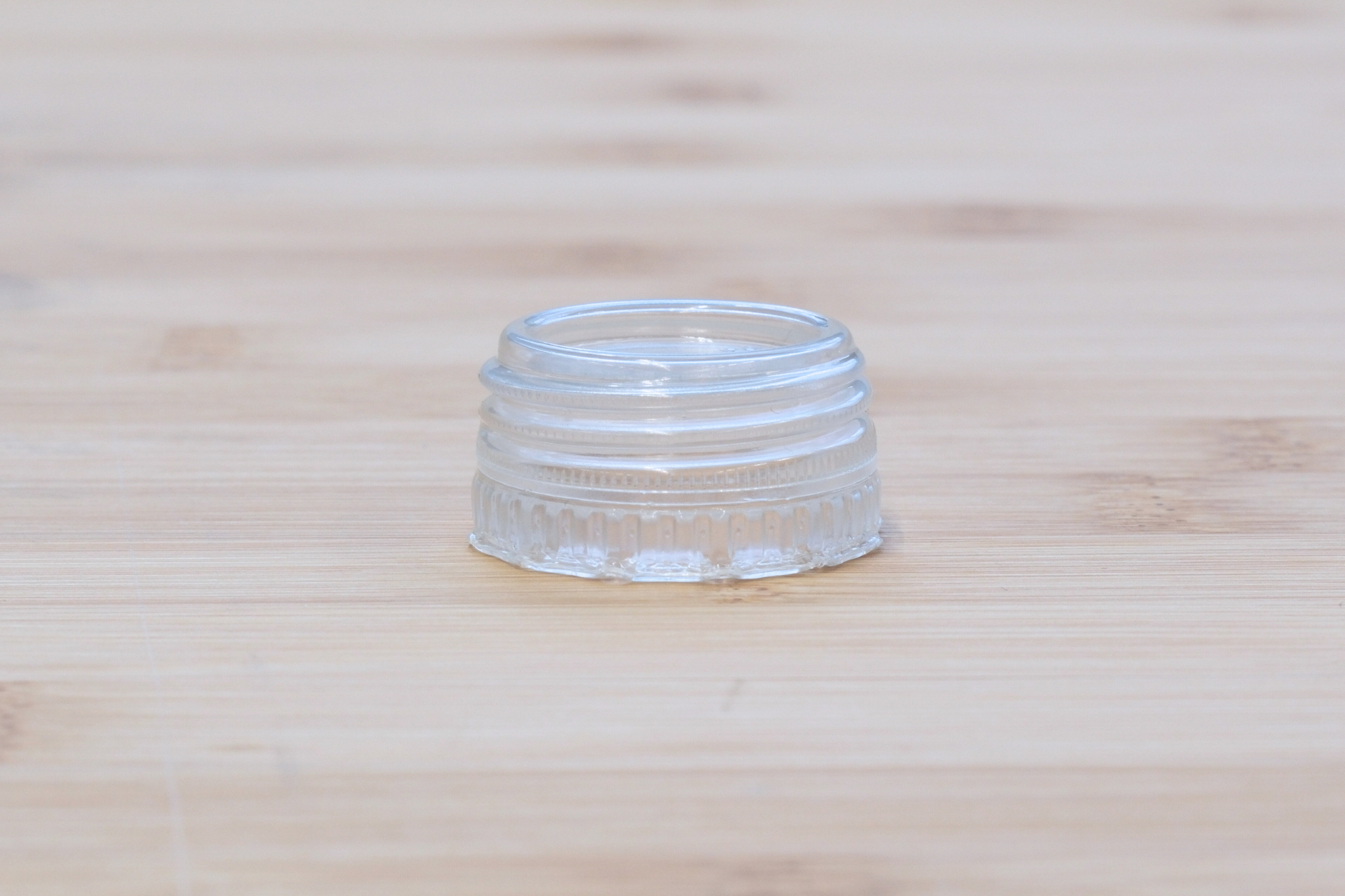
Photo courtesy of Origin Materials

More than 30 years after its first edition, the APR Design Guide is still experiencing firsts – most recently, the development of design guidance that proactively addresses an emerging packaging format rather than reacting to issues with recyclability later in its life cycle. 

Some states may be looking to regulate PET closures, but lack consensus or guidelines about the optimal form. While some groups advocate for PET caps to accompany PET bottles for a mono-material option, others argue that processes for handling different materials are well established. 

APR recognized that one way to circumvent confusion was to develop design guidance – and could provide a roadmap for future packaging formats.

And while discussions proved challenging at times, the working group ultimately reached consensus and gained broad support for the final guidance, said Megan Moore, program director for PET packaging at APR. 

APR’s PET Technical Working Group involved stakeholders from throughout the value chain – resin suppliers, closure and equipment manufacturers, bottle converters and PET recyclers. Throughout the process, recyclers were closely involved throughout the process to ensure the APR guidance reflected real-world conditions. 

APR owns Resource Recycling, Inc., publisher of Plastics Recycling Update. 

Traditional HDPE and PP bottle caps are separated from PET bottles during the recycling process. So because PET closures are meant to accompany the bottle throughout the process, a key concern for the working group was the potential for them to be present in the recycling stream at relatively high levels and to differ from standard PET bottle resin and additives, Moore said.  

If the material differences are significant, they can shift the properties of RPET enough to create issues for recyclers and end users. “The guidance was developed specifically to manage that risk,” Moore said.

At the top of the list of concerns for recyclers was the color and opacity of PET closures. Addressing color and material consistency was critical to gaining support from recyclers and ultimately acceptance of the APR guidance, Moore said. 

PET’s color and opacity have been in the spotlight in recent years, with most bottlers eschewing green packaging for clear or transparent light blue, to improve recyclability. As such, color was among the most important issues for the group to address, Moore said. Per the guidance, PET closures must be clear or transparent blue, or be able to pass the applicable critical guidance testing to be considered recyclable. PET closures that do not meet these color requirements are deemed not recyclable, as a result of the color contamination they cause on recyclate, she added.  

Potential windfalls – and pitfalls

As with any proposed solution, PET closures offer both benefits and caveats. Post-consumer bottle bale yields could benefit, for starters, by containing more recoverable PET. 

Srinivasan “Shankar” Prabhushankar, technical director at the National Association for PET Container Resources (NAPCOR), said that during his tenure at Indorama Ventures, 10%-12% of the reclamation stream consisted of caps. 

“So it’s a big thing. Whatever happens to that percentage is going to make or break the reclamation industry.” 

However, Shankar points to California’s ban on plastic shopping bags as an example of possible unintended consequences of PET cap regulations. Starting in 2016, the law allowed only shopping bags with thicker material, in hopes they would be reused. However, this allowance resulted in more plastic being used rather than less. A CalRecycle analysis of California’s trash sent to landfill in 2021 indicated a significant increase in plastic bags being discarded from 2018, amid mitigation measures put in place during the Covid-19 pandemic. 

“So there is an analogy here in the PET caps,” Shankar said, adding that if the volume of the bottle cap remains the same as current designs, PET is denser and as such requires 30%-40% more plastic. However, he acknowledged that cap manufacturers are working on lightweighting to reduce the total volume of plastic. Even so, Shankar said, a thinner cap may have less desirable performance characteristics such as less ability to retain carbonation in soft drinks. 

Aligning guidance with the real world 

Although Origin Materials was not directly involved in the discussions for the new guidelines, the APR committee asked how the company saw PET closures developing, CEO John Bissell told Plastics Recycling Update. 

“We laid all that out, which really is that we think that my material’s future is incredibly important, and it is sort of better for everybody involved,” saidBissell. “It’s better for the material producers, the packagers, the brands, consumers, and the environment. So we think it’s better across the board.”

PET is eminently recyclable, Bissell said, and “there’s a reason why it gets used extensively for bottles, right? And so for us, it’s a natural extension, if you’re trying to achieve mono-material packaging.”

Although mono-material packaging helps improve recyclability, solutions tend to center on multi-layer polyolefin films of PE or PP, used in hard-to-recycle flexible packaging. Europe’s emerging Packaging and Packaging Waste Regulation (PPWR) strongly encourages the use of a single material throughout packaging design, which is helping drive innovations globally as the region’s strict regulation is implemented.

And in the US, Illinois SB 132 was introduced in January 2025, proposing that from 2029 the state mandates that caps for single-use beverage containers be made of the same resin. 

“Really the goal is for it to be recyclable alongside the bottle,” Bissell said. “Sometimes I think there’s a sense that we’re trying to get to a PET cap in and of itself, and that we would therefore jeopardize recycling. That’s the opposite of what we’re trying to do. The goal is to make the recycling stream cleaner, better, more economic.”

He added that the caps are currently made of clear bottle-grade PET, and that he expected that if the company made a non-clear cap it would still be compliant with the APR guidelines, using acceptable color variations, washable inks and so on. “And so that’s exactly the way we view it: Let’s make sure that the material we’re using is not just recyclable or the same material in name only.” 

Bissell added, “Having looked at the guidance, I would say, it was completely unsurprising to us, which I think is a testament to its objectivity. If we came up with the same solution having not been involved in the guidance process as the other people did, then there must be some sort of similar thinking going on.”  

Tags: Industry GroupsPET
TweetShare
Antoinette Smith

Antoinette Smith

Antoinette Smith has covered commodity plastics and supply chains for more than a decade, with a special focus on economic impacts and consumer behavior. She brings a balanced, thoughtful view to recycling stories, and isn't afraid to ask "why?" Contact Antoinette at antoinette@resource-recycling.com.

Related Posts

Arca stresses investment amid headwinds

Arca stresses investment amid headwinds

byAntoinette Smith
July 29, 2026

As the second-biggest Coca-Cola bottler in Latin America, Arca Continental is taking the long view during challenging conditions.

Alpek closing Pennsylvania RPET plant

Alpek seizing on war-related opportunity 

byAntoinette Smith
July 27, 2026

The world's largest PET producer saw a big increase in spot volumes during Q2 thanks to supply chain disruptions, and...

Amazon plastic use flat despite shift to paper

Amazon plastic use flat despite shift to paper

byAntoinette Smith
July 22, 2026

In its latest sustainability report, the e-commerce giant noted a decrease of less than 1% for volumes of single-use plastic...

RecyClass hits 500 EU recyclability evals

RecyClass hits 500 EU recyclability evals

byAntoinette Smith
July 21, 2026

The most recent evaluations include Avery Dennison's RFID tag for PET bottles, ahead of the first PPWR enforcement in mid-August.

Surveys examine gaps in consumer recycling education

Interest up, volume down for battery recycling

byPaul Lane
July 21, 2026

Online engagement spurred a spike in battery collection sites, according to The Battery Network, although total participation fell slightly on...

Former president of CRT processor sentenced to prison

Groups say injunction doesn’t settle labeling issues

byStefanie Valentic
July 17, 2026

Californians Against Waste and the National Stewardship Action Council say a federal injunction blocking SB 343 pauses enforcement but still...

Load More
Next Post
The electronics recycling industry is undergoing a transformation from labor-intensive manual operations to highly automated, AI-driven facilities that use advanced robotics, cleaner chemistry and digital tracking systems to extract critical materials.

The cyber-physical MRF: AI and robotics reshape e-waste recovery

2026 Buyers’ Guide

Equipment, services and technology suppliers serving the recycling industry.

Browse the Guide

More Posts

2024 legislatures focus on batteries, state programs

NAW sues Colorado over EPR packaging law

July 30, 2026
CarbonLite to open $60 million Pennsylvania plant

Federal judge blocks CA ‘Truth in Recycling’ (SB 343) law

July 15, 2026
Alpek closing Pennsylvania RPET plant

Alpek seizing on war-related opportunity 

July 27, 2026

MTA loses track of recycling, costing NYC Transit $800,000

July 23, 2026
California releases deposit system update draft rules

Groups move to intervene in SB 343 lawsuit

July 27, 2026
Women in Circularity: Christine Nikander

Women in Circularity: Christine Nikander

July 28, 2026
Ivan Rangel of Happen Ventures speaks at the PROP conference in Lancaster, PA July 24, 2026.

Making reuse as easy as possible

July 27, 2026
Industry announcements for January 2026

Industry announcements for July 2026

July 1, 2026
Waste Connections company truck on an urban street.

Waste Connections sees Q2 lift on recycled commodity values

July 24, 2026
Dow touts US PE advantage amid Iran war

Dow bullish on August PE pricing

July 24, 2026
Load More

About & Publications

About Us

Staff

Archive

Magazine

Work With Us

Advertise
Jobs
Contact
Terms and Privacy

Newsletter

Get the latest recycling news and analysis delivered to your inbox every week. Stay ahead on industry trends, policy updates, and insights from programs, processors, and innovators.

Subscribe

Welcome Back!

Login to your account below

Forgotten Password?

Retrieve your password

Please enter your username or email address to reset your password.

Log In

Add New Playlist

No Result
View All Result
  • The Latest
  • Analysis
  • Recycling
  • E-Scrap
  • Plastics
  • Policy Now
  • Conferences
    • E-Scrap Conference
    • Plastics Recycling Conference
    • Resource Recycling Conference
    • Textiles Recovery Summit
  • Magazine
  • About Us
  • Advertise
  • Archive
  • Jobs
  • Staff
Subscribe
This website uses cookies. By continuing to use this website you are giving consent to cookies being used. Visit our Privacy and Cookie Policy.