
Students in California’s Bay Area are doing their part to educate the next generation about proper e-scrap usage and disposal.
The Fremont-based Bin to Better environmental nonprofit has brought together more than two dozen students from nearby high schools to “turn discarded materials into new opportunities,” according to Hala Amer, vice president and an 11th-grader at American High School.
The program consists of three components:
- Tech to Treasure, combining e-scrap education with hands-on technology experience, including recycling and reuse
- Bounce Back, which repurposes tennis balls that can’t be recycled due to the felt on their surface
- Eco-Filament, which directs plastic waste into 3D printer filament for sensory toys
Co-founders Lalit Sreekar Batchu and Rohan Sashank Babbellapati, students at American High School, have seen the program quickly grow since its inception in 2024. Launching it as a local agency, Bin to Better now has more than a dozen chapters, including international chapters in Nigeria, Armenia and Australia. Students can begin a chapter in their community, Amer said, to adapt it to the needs of their respective areas. Members are also welcome to stay on after graduation, if their post-high school schedules allow for it.
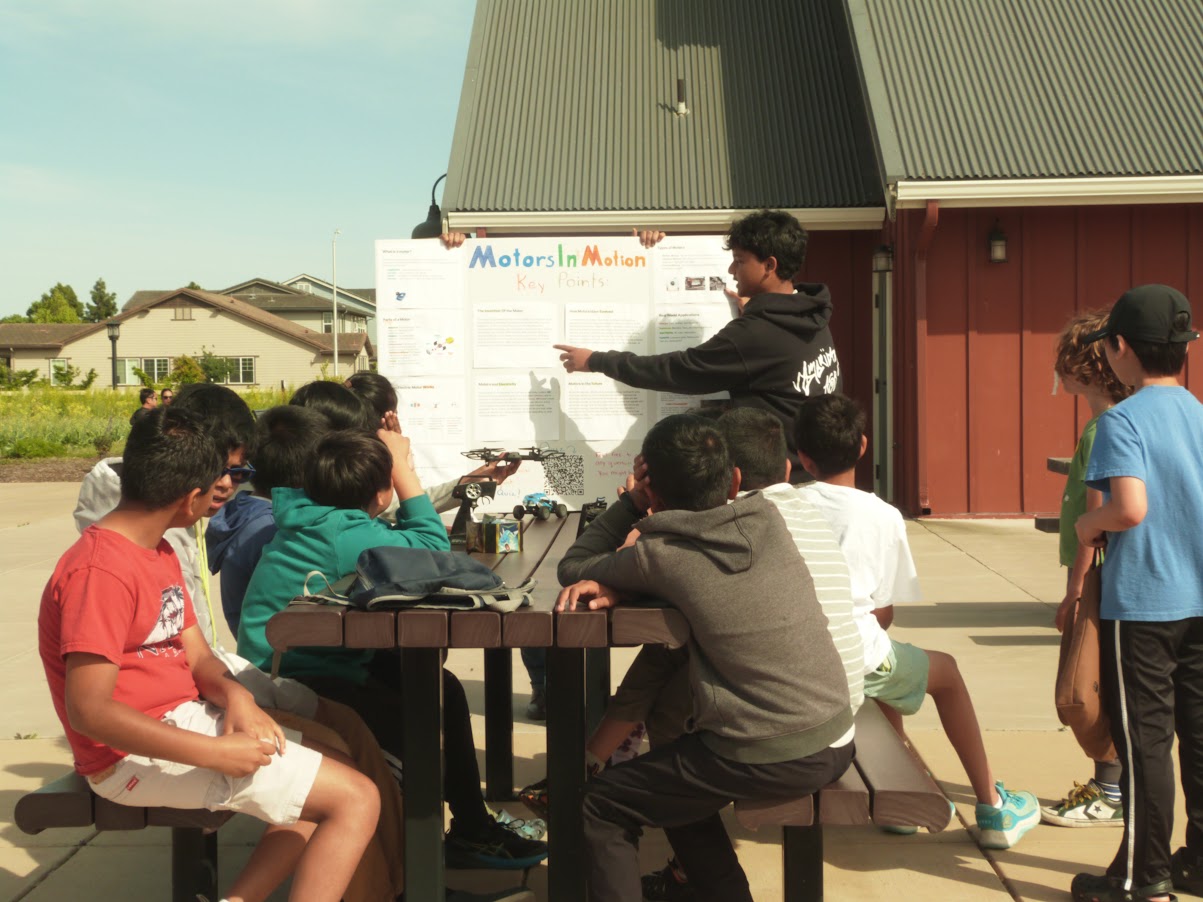
As for Tech to Treasure, she said the need for that program arose in the Bay Area because of a dearth of options for used devices. The program hosts workshops to educate participants on what’s inside of modern technology, while running students through boot camps to solve environmental challenges and use tech to build sustainability solutions. The program has also redirected at least 50 pounds of e-scrap, reusing items for programming when possible and recycling it when reuse isn’t an option; local companies EWaste Direct and Sun Dragon Computers have supported the program’s tech reuse work.
“All of these programs address a similar issue: Technology is often treated as disposable, while technical education can also feel inaccessible to younger students,” Amer said. “Instead of treating an old electronic device as something that immediately needs to be thrown away, we first look at how it can be used as an educational resource.”
Programming has allowed students to learn what goes into — and what can be taken out of — circuit boards, motors, routers and similar devices. That helps them figure out not only how to use electronics, Amer said, but also repurpose devices or their components when their original lives are over.
In addition to e-scrap retrieval and educating 3,000 students through Tech to Treasure, Bin to Better has repurposed nearly 74,000 tennis balls and produced/distributed 2,000 sensory toys.
Bin to Better will continue expanding workshops, collections and community events, Amer said, while working to make programming consistent and accessible. The group’s leadership also wants to make Bin to Better a model that can be emulated anywhere, she said, with local chapters becoming more self-determining rather than relying upon the Bay Area central team.
“Our chapter system already provides students with onboarding, impact tracking, outreach materials and regular support to help make that possible,” she said. “Ultimately, we want to continue growing the central idea of Bin to Better: Collect something that is being wasted, find where it still has value and connect it with a community that can use it.”