




Fire incidents at waste handling facilities remained elevated to close out the first half of the year, a new report shows, but the pace is regressing closer to the mean of previous years.
The July fire report from Ryan Fogelman, who works as a fire prevention consultant at Fire Rover, shows there were 38 incidents in June at facilities in the United States and Canada. That’s down from 40 in May and a bit below the 2016-2025 June average of 39.2.
Where May saw a rise in fires at facilities that handle metal, Fogelman said June returned to traditional norms, with fires at waste, paper and plastics facilities accounting for half of the month’s events. Fires at scrap metal facilities accounted for 31.6% of the month’s events, on par with the typical share.
“After May’s anomaly, June is a reminder that the underlying pattern hasn’t changed,” Fogelman said. “It just took a month off.”
For the year to date, the industry logged 193 fire events, Fogelman said, led by 95 incidents at water, paper and plastics facilities. Fires at scrap metal facilities are up 2.8% over the 10-year average, while incidents at chemical/hazmat facilities are also rising slightly, 0.3%.
That annual total is keeping pace with 2025, when a record-high 448 fires were seen between the two nations, causing more than $2.5 billion in damage. That beat the previous high of 430 that was set in 2024 and was nearly 25% above the previous 10-year average of 360.
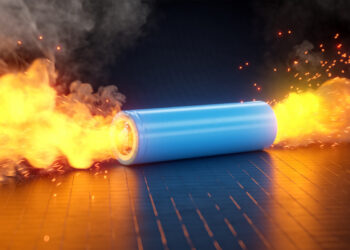
Fogelman attributes the elevated baseline largely to the increased volume of batteries entering the waste stream; that number is estimated by the federal government to be above 3 billion per year. Material volumes in general are also climbing, which he said provides more potential fuel to feed fires once they start.
Some states are taking a closer look at legislation to mitigate the issue. But stressing proper storage and recycling/disposal is key to reversing that, he said. He’s worked on a children’s book on the subject, “Supercharge: The Magic of Battery Recycling,” in conjunction with groups including the Solid Waste Association of North America and the Recycled Materials Association.
“The first half of 2026 confirms that the elevated fire-risk environment we’ve been tracking since 2020 hasn’t eased,” he said. “Better detection and suppression technology can catch the fires that result. It can’t prevent the battery from ending up in the wrong bin in the first place. Only education can do that.”
Fogelman’s report takes into account publicly reported fires, which are generally considered to be two alarms or greater so as to make them newsworthy. Actual incident totals are estimated to be six times higher.