




Fall has been busy for Aclara Resources as the Canadian company prepares its heavy rare earth supply chain to begin delivering minerals in a couple of years.
Leaders of the Vancouver-based company discussed their plans for operations across the Americas during its investor day Oct. 20. The presentation was made to find further funding to pay for mining, separation and metal processing facilities.
Aclara has worked to create a sustainable supply chain, according to Ramon Barua, the company CEO and director. It developed proprietary technology to extract heavy rare earth elements such as dysprosium, terbium and yttrium from ionic clays in Brazil and Chile.
Chinese companies control more than 90% of the world’s supply of these metals. Focusing on them will help the company tap into a desirable market while loosening China’s grip and potentially lowering prices. Yttrium prices are up more than 20% since March, while terbium prices have more than doubled this year.
Prices are expected to keep rising, Barua said, because supply is not keeping pace with demand. Chinese companies have kept supplies nearly constant at 2,614 metric tons per year this decade, he said, even as demand is expected to surge to 7,826 metric tons per year by 2035. That growth is due in part to growing demand from energy- and mineral-intensive industries such as AI and robotics that rely on these minerals for key parts of their processes.
“We are developing a supply chain that is vertically integrated and will be an alternative that is fully developed under one roof and competing with China,” he said.
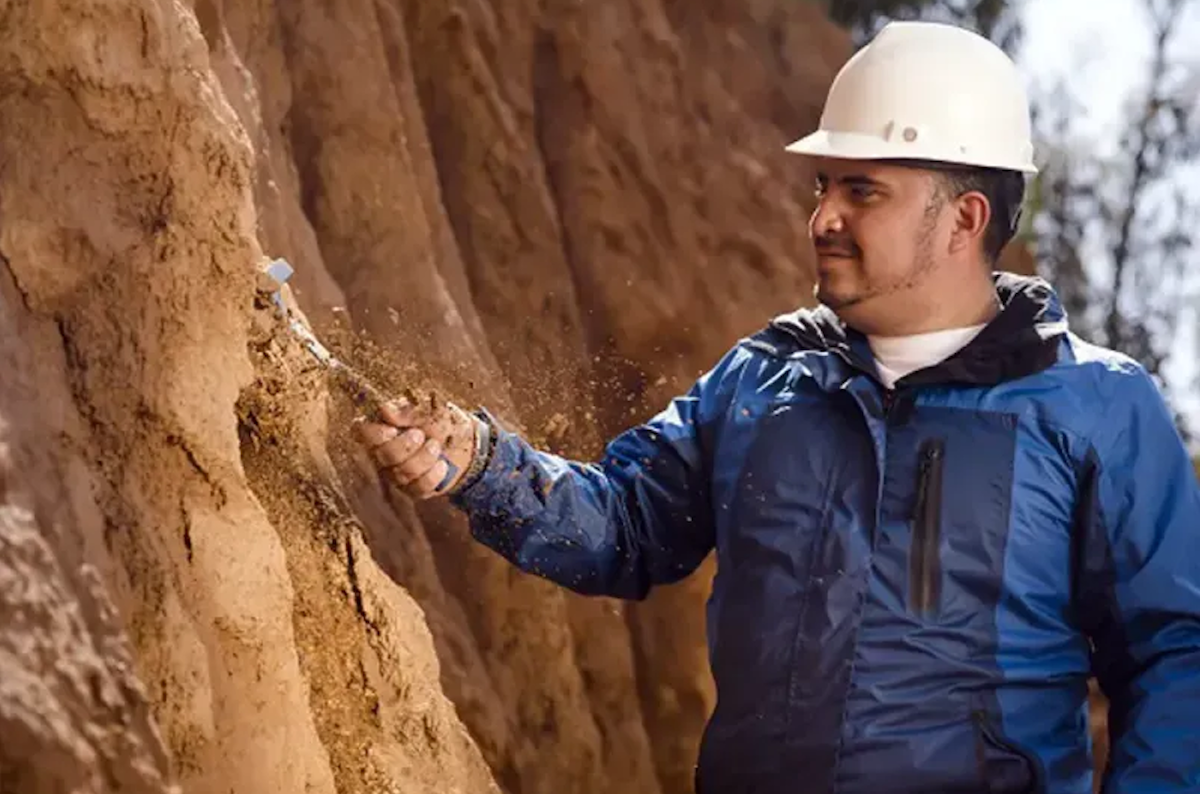
Aclara has access to mineral deposits in South America that are ready to be separated, Barua said. Despite their relative abundance, he said heavy rare earth minerals are hard to find and tough to separate, and China’s decades of extraction has given companies there a huge head start.
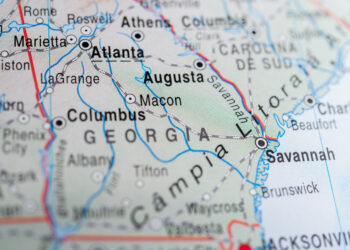
The company plans to mine and produce high-purity rare earth carbonate at its sites in Brazil and Chile, he said. That material would be sent to an Aclara facility in Louisiana and separated through solvent extraction into rare earth oxides, which would be processed at another facility in Louisiana to create high-purity metals and alloys. Aclara’s practices are more sustainable than those of many companies in the mineral space, he said, including a closed-loop water management system that uses 97% recycled water, and a mining process requiring no explosives, crushing or milling.
Company leaders expect to produce a combined 732 metric tons per year of heavy and light rare earth minerals. The company also intends to process light rare earths, Barua said, as they are encountered during the process and provide the company with an additional revenue stream.
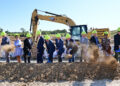
The company has made several recent moves to advance this work. Louisiana regulators approved Aclara’s air permit, allowing construction there to start in the first quarter of next year; the company expanded the scope of work at that “Project Dynamo” site to include gadolinium and samarium. Earlier this month, the company opened a demonstration site in Chile to develop technology there. It also completed basic engineering for its Louisiana separation facility.
“It is important that we develop the technology to turn the rare earths we mine into actual product,” Barua said.
The company has secured support from government sources, as the U.S. has pushed this year to build more mineral independence. Those investments include $750 million in financing from the Export-Import Bank of the United States and an 80% property tax exemption from the state of Louisiana. But the company seeks more money to help fund the final steps of the process.
Those steps should take about two years to complete, according to Aclara COO Hugh Broadhurst. He said feasibility studies and construction should begin across the hemisphere next year, with a target production start in the second half of 2028.
Much of that eventual product already has a home, according to Jose Augusto Palma, the company’s executive vice president. He said three offtake agreements have been signed so far with companies in the European Union, US and Asia.
The process has been long, Barua said, but the result will be worth it once the company establishes itself as a critical mineral source.
“We have a long-term vision of being the primary supplier of heavy rare earths in the Americas,” he said. “The benefits these rare earths bring to so many applications are incredibly valuable.”