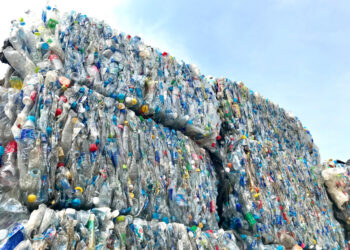





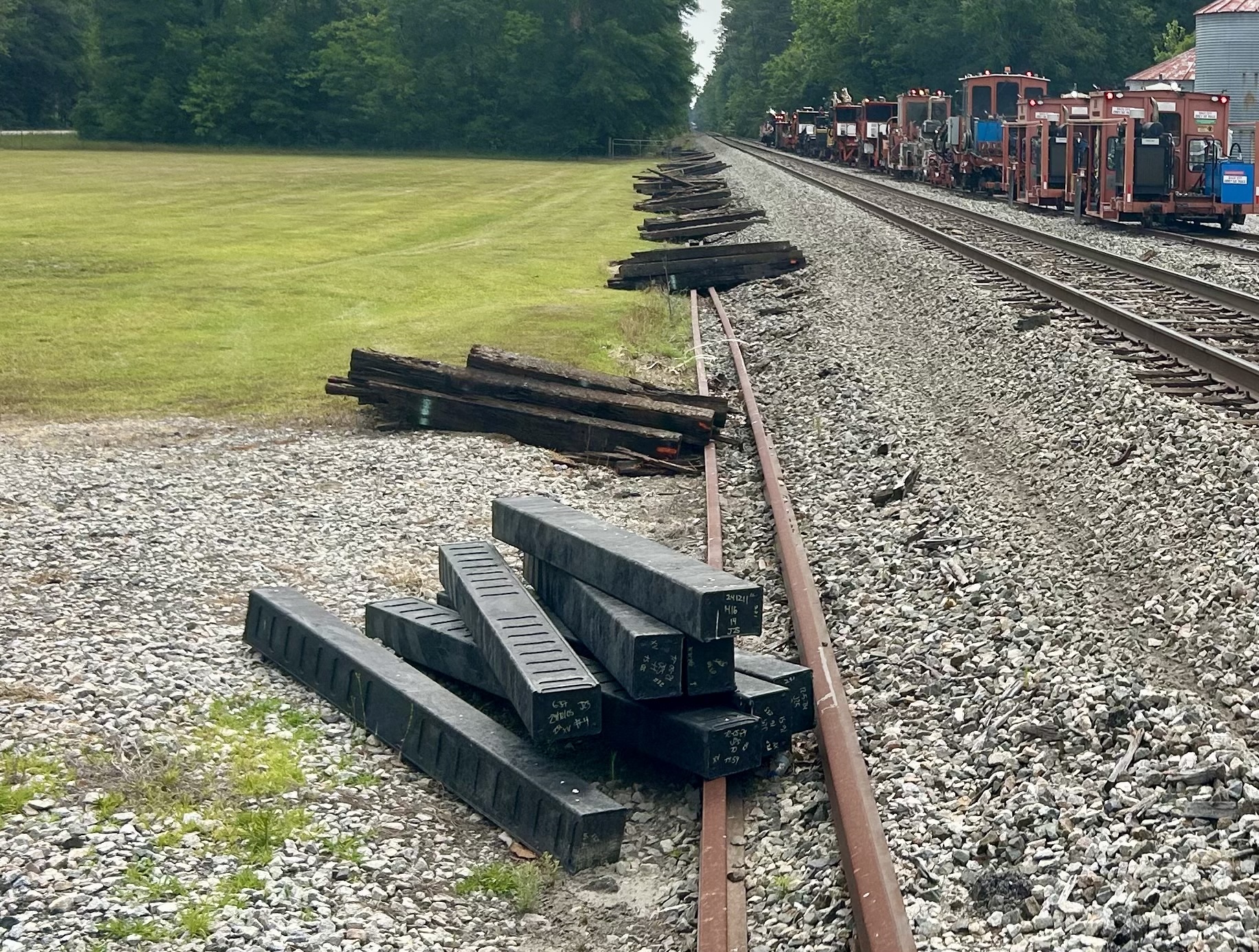
Missouri-based Triton Group is working to create demand for HDPE recovered from retired TenCate artificial turf by using the plastic in composite railroad ties, as part of a new recycling partnership.
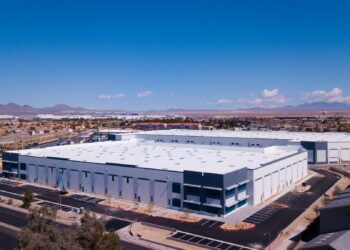
Triton will install a new production line to process up to 350,000 pounds a month of the recovered turf plastic, and expects to begin processing in April 2027. At full utilization, that would represent up to 21 million pounds over five years — about 600-800 turf fields, and enough raw materials for more than 300,000 composite ties.
“We are putting in equipment specifically for this material,” said Greg Janson, president and CEO of Triton Group.
Under the agreement, TenCate will recover material from retired fields and separate the infill — comprising sand and rubber — from the turf before baling and shipping to Triton for processing into post-consumer resin.
Janson said all of the residual rubber, sand and backing are removed during the Triton process before pelletization. “What we use in the tie is clean polyethylene resin. No rubber enters the tie. We want to be clear about that.”
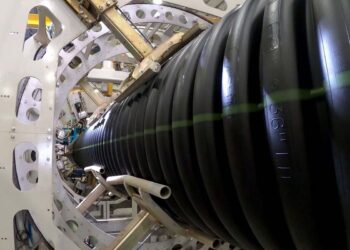
Triton engineered its glass fiber-reinforced composite railroad ties as a one-for-one replacement for wood ties. The ties meet or exceed AREMA (American Railway Engineering and Maintenance-of-way Association) standards and have been approved by all major railroads in the US, according to a statement.
With established mechanical recycling relationships in Europe, TenCate is now building that capability in the US, according to the statement. TenCate manufactures, distributes and installs synthetic turf systems for sports and landscape applications, and has operations in the US, Netherlands, UK and United Arab Emirates.
Creating demand
Despite the persistent global economic downturn, industry stakeholders have emphasized that post-consumer plastic processing capacity has flourished though PCR adoption has lagged.
“When the end market works, recycling works,” Janson said. “The turf comes to us at the end of its useful life on the field, and it leaves here as a railroad tie that will be in the track for decades.”
The Association of Plastic Recyclers (APR) recognizes Triton as a Demand Champion, among a group of companies committed to long-term use of PCR, especially in less-common formats. APR notes that these companies are “strengthening North American demand, encouraging investment in high-quality, certified PCR, and supporting the shift toward a more circular economy.”
APR owns Resource Recycling, Inc., publisher of Plastics Recycling Update.
iSustain, which helps companies identify recycling and material recovery opportunities – such as a closed-loop model for film recycling – brought the two companies together and is a party to the agreement.
“We recognized the opportunity to connect TenCate’s recovered turf with Triton’s composite railroad ties,” said Mark Huber, vice president of iSustain. “By bringing these companies together, we helped create a practical, scalable pathway that transforms a challenging material into durable infrastructure.”
Joe Fields, CEO of TenCate Americas, said: “We’re constantly looking for ways to make turf better, from how it’s designed and made to how its materials can be reused when a field is replaced.”