






Resource Recycling
  • The Latest
  • Analysis
    • All
    • Certification Scorecard
    • Industry Announcements
    • Opinion
    Sundry Photography / Shutterstock

    Iron Mountain puts ITAD at the center of its growth

    Industry announcements for January 2026

    Industry announcements for May 2026

    Apple store

    Apple leads on inputs, faces questions on ITAD

    Unlocking the power of source reduction in US EPR

    Unlocking the power of source reduction in US EPR

    Following petition, Microsoft extends Windows 10 support

    Windows AI Recall is pushing data destruction upstream

    Certification Scorecard — Week of April 27, 2026

  • Conferences
    • Resource Recycling Conference
    • Plastics Recycling Conference
    • E-Scrap: The Longevity Conference
    • Textiles Recovery Summit
  • Publications
    • E-Scrap News
    • Plastics Recycling Update
    • Policy Now
    • Resource Recycling
    • Other Topics
      • Brand Owners
      • Critical Minerals
      • Glass
      • Grant Watch
      • Markets
      • Organics
      • Packaging
      • Research
      • Technology
      • Textiles
      • All Topics
Subscribe
No Result
View All Result
Resource Recycling
  • The Latest
  • Analysis
    • All
    • Certification Scorecard
    • Industry Announcements
    • Opinion
    Sundry Photography / Shutterstock

    Iron Mountain puts ITAD at the center of its growth

    Industry announcements for January 2026

    Industry announcements for May 2026

    Apple store

    Apple leads on inputs, faces questions on ITAD

    Unlocking the power of source reduction in US EPR

    Unlocking the power of source reduction in US EPR

    Following petition, Microsoft extends Windows 10 support

    Windows AI Recall is pushing data destruction upstream

    Certification Scorecard — Week of April 27, 2026

  • Conferences
    • Resource Recycling Conference
    • Plastics Recycling Conference
    • E-Scrap: The Longevity Conference
    • Textiles Recovery Summit
  • Publications
    • E-Scrap News
    • Plastics Recycling Update
    • Policy Now
    • Resource Recycling
    • Other Topics
      • Brand Owners
      • Critical Minerals
      • Glass
      • Grant Watch
      • Markets
      • Organics
      • Packaging
      • Research
      • Technology
      • Textiles
      • All Topics
Subscribe
No Result
View All Result
Resource Recycling
No Result
View All Result
Home E-Scrap

Overseas e-plastics market dries up

Colin StaubbyColin Staub
August 15, 2019
in E-Scrap
Overseas e-plastics market dries up

Recovered plastic, including material from end-of-life electronics, has largely stopped flowing from the U.S. into India, which until recently has been among the top importers of scrap plastics.

The curtailment in material movement comes as the South Asian country prepares to implement an all-out ban on scrap plastic imports this month.

The Indian government in March announced its plan to ban scrap plastic imports, later indicating the ban would take effect Aug. 31. The ban is proposed to cover most plastics under the 3915 tariff code, including PET, PE, PP, PS, mixed plastics and more.

The announcement sent shockwaves through the recycling industry, because India is a major destination for U.S. material. The country was the second largest importer of U.S. scrap plastic during the first six months of 2019, bringing in 156 million pounds. June is the most recent month for which trade figures are available. E-plastics are generally classified under the international trade code for “other” plastics, and for the first six months of 2019, India was the fourth-largest importer of these materials from the U.S., bringing in 21.3 million pounds.

Since that highly publicized initial announcement and a subsequent clarification of the implementation date, there has been little news of the plastic ban. But in the intervening months there have been numerous indications the ban is still set to take effect later this month. Meanwhile, scrap plastic traders say the movement of material to India has stopped in preparation for the new restriction.

“There has been no change in the stance,” said Rakesh Surana of scrap plastics brokerage Gemini Corporation N.V. “Because of this, all the exports out of U.S.A. or Europe to India of plastic scrap have come to a standstill,” because it takes between 30 and 45 days for containers to reach India.

Under the upcoming regulations, there is “no chance” that baled e-plastics can be shipped into India, said Steve Wong of plastics recycling firm Fukutomi, citing information from industry contacts. For mixed e-plastic loads, the biggest concern is contamination with other e-scrap materials such as PCBs or metals, Wong reported. Clean, sorted regrind of e-plastic resins such as ABS or PS may be acceptable, but no level of contamination will be allowed.

Stakeholders adjust for end-of-August ban

In May, the Indian government continued to stress its upcoming plastics policy changes. In a press release describing the Indian delegation’s activities at the Basel Convention meeting in Geneva, the Indian Ministry of Environment, Forest and Climate Change praised the Basel countries for expanding regulations on global scrap plastic shipments. The Indian delegation was involved in negotiating the agreement to amend the Convention, the release stated.

“India has already imposed a complete prohibition of import of solid plastic waste into the country,” the release added, referencing the upcoming ban.

In June, shipping companies began to make adjustments as the Aug. 31 enforcement date came on the horizon. APL stopped accepting loads of scrap plastic moving from any country to India. Hapag-Lloyd issued an alert reiterating the Indian policy changes. The company announced that it would cut off shipments of “solid plastic waste” into India after July 10.

Sources told E-Scrap News the policy is still slated for an end-of-August implementation date. Scrap plastic shippers have received instruction that containers should reach the Indian ports by Aug. 20 at the latest, Surana of Gemini Corporation said, to enable the shipments to clear customs before Aug. 31.

As the ban approaches and shippers adjust accordingly, several key elements of the Indian policy remain unclear. Scrap plastic traders say it’s not certain whether post-industrial plastics or clean regrind will be banned, or whether the restriction is only covering baled, post-consumer material.

For the time being, however, clean regrind is still going to the country, traders say, and it’s mostly the baled scrap plastic that has been impacted, according to information shared by Wong, who is also executive president of the China Scrap Plastics Association (CSPA).

If that material is allowed to continue, it would be “more or less the same as the Basel Convention amendments,” Wong said. Uncontaminated loads of scrap plastic, sorted by resin rather than mixed together, are generally acceptable under the Basel guidelines.

India joins a growing regulatory movement

Over the past 18 months – the time since China’s scrap plastic import ban took effect – countries across Southeast Asia have enacted various restrictions on recycled plastic coming into their countries. And more recently, a growing number of these countries are shipping inbound plastic back to its source, which is frequently North America.

Although each Southeast Asian nation’s import restrictions have been slightly different, they are driven primarily by skyrocketing plastic import volumes that followed China’s ban. The influx of material has led to greater attention to contamination, particularly when the importing country does not have adequate infrastructure to dispose of that contamination.

These issues have built significant public pressure on governments to take action.

“There’s not a single day that we don’t see plastic scrap in the media,” Wong said.

A version of this story appeared in Resource Recycling on August 13.

 

Tags: AsiaE-PlasticsMarketsTrade & Tariffs
TweetShare
Colin Staub

Colin Staub

Colin Staub was a reporter and associate editor at Resource Recycling until August 2025.

Related Posts

Fiber producers push for June price increases

Fiber producers push for June price increases

byAntoinette Smith
May 5, 2026

Ahead of the announcements, International Paper, Smurfit Westrock and others pointed to a sudden rise in demand, higher costs and...

Float-sink technology at the Quantum Lifecycle Partners facility in Toronto, Canada enables the processing of e-plastics.

E-plastics recovery line opens in Canada

byPaul Lane
April 28, 2026

Toronto-based Quantum Lifecycle Partners is helping close the gap on North American e-plastic processing.

Volatility reshapes outlook for US metals businesses

byScott Snowden
April 15, 2026

Panelists at the ReMA conference in Las Vegas said tariffs, reshoring and geopolitical tension are remaking trade flows, lifting US...

NERC launches hub to promote PCR demand 

byAntoinette Smith
April 15, 2026

The Northeast Recycling Council's PCR Material Demand Hub offers resources for government procurement, material- and product-specific resources, and certification and...

Industry group: Help us find the plastic bale volumes we need

PET bales sink further as other grades firm 

byRecyclingMarkets.net Staff
April 15, 2026

Pricing for HDPE and PP bales rose again, while PET bales remained low, film grades have steadied, and paper and...

Lead battery recycling market set for steady growth

byScott Snowden
April 14, 2026

The global lead battery recycling market is projected to grow steadily through 2034, supported by regulation, automotive replacement cycles and...

Load More
Next Post
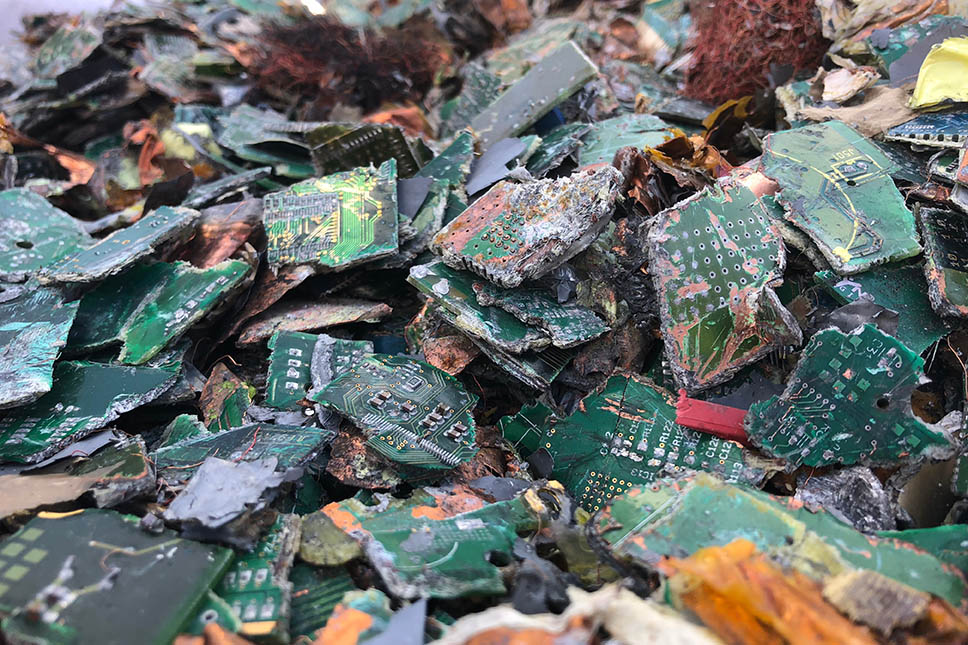
Shredded circuit boards.

Global economic woes affect e-scrap metal markets

More Posts

New version of California EPR regulations released

CalRecycle approves SB 54 regulations

May 2, 2026

What Netflix’s ‘Plastic Detox’ gets wrong – and right

April 23, 2026
Plastic Ingenuity to use PureCycle PP for coffee lids

Plastic Ingenuity to use PureCycle PP for coffee lids

April 30, 2026
Intel sign on company building with blue sky and trees.

Intel boosts margins by selling what it used to scrap

April 29, 2026
EPR fees are a market signal. Here’s what they’re telling you.

Oregon DEQ flags 250 producers for RMA noncompliance

April 21, 2026
Unlocking the power of source reduction in US EPR

Unlocking the power of source reduction in US EPR

May 1, 2026
Float-sink technology at the Quantum Lifecycle Partners facility in Toronto, Canada enables the processing of e-plastics.

E-plastics recovery line opens in Canada

April 28, 2026
Our top stories from April 2022

Peters-Michaud named CEO, Houghton chair of Sage Sustainable Electronics

April 28, 2026
Fiber producers push for June price increases

Fiber producers push for June price increases

May 5, 2026
Study quantifies lithium battery threat to infrastructure

Battery fires remain elevated in early 2026: report

May 1, 2026
Load More

About & Publications

About Us

Staff

Archive

Magazine

Work With Us

Advertise
Jobs
Contact
Terms and Privacy

Newsletter

Get the latest recycling news and analysis delivered to your inbox every week. Stay ahead on industry trends, policy updates, and insights from programs, processors, and innovators.

Subscribe

Welcome Back!

Login to your account below

Forgotten Password?

Retrieve your password

Please enter your username or email address to reset your password.

Log In

Add New Playlist

No Result
View All Result
  • The Latest
  • Analysis
  • Recycling
  • E-Scrap
  • Plastics
  • Policy Now
  • Conferences
    • E-Scrap Conference
    • Plastics Recycling Conference
    • Resource Recycling Conference
    • Textiles Recovery Summit
  • Magazine
  • About Us
  • Advertise
  • Archive
  • Jobs
  • Staff
Subscribe
This website uses cookies. By continuing to use this website you are giving consent to cookies being used. Visit our Privacy and Cookie Policy.