




Resource Recycling
  • The Latest
  • Analysis
    • All
    • Certification Scorecard
    • Industry Announcements
    • Opinion
    Data shows e-scrap disposal increase in one state

    Europe’s recyclers miss most of the critical materials

    Chemical recycling roundup: New plant, partnerships

    Polystyrene’s circular future is already taking shape

    IBM logo on building

    What IBM’s quantum foundry means for ITAD

    Certification Scorecard — Week of May 25, 2026

    CommanderAI launches searchable hauler database

    Underwater data centers drive shift in ITAD models

    EU recyclers make case for solvent-based methods

    The electronics recycling industry has a plastics problem

  • Conferences
    • Resource Recycling Conference
    • Plastics Recycling Conference
    • E-Scrap: The Longevity Conference
    • Textiles Recovery Summit
  • Publications
    • E-Scrap News
    • Plastics Recycling Update
    • Policy Now
    • Resource Recycling
    • Other Topics
      • All Topics
      • Brand Owners
      • Critical Minerals
      • Glass
      • Grant Watch / RFPs
      • Markets
      • Organics
      • Packaging
      • Research
      • Technology
      • Textiles
Subscribe
No Result
View All Result
Resource Recycling
  • The Latest
  • Analysis
    • All
    • Certification Scorecard
    • Industry Announcements
    • Opinion
    Data shows e-scrap disposal increase in one state

    Europe’s recyclers miss most of the critical materials

    Chemical recycling roundup: New plant, partnerships

    Polystyrene’s circular future is already taking shape

    IBM logo on building

    What IBM’s quantum foundry means for ITAD

    Certification Scorecard — Week of May 25, 2026

    CommanderAI launches searchable hauler database

    Underwater data centers drive shift in ITAD models

    EU recyclers make case for solvent-based methods

    The electronics recycling industry has a plastics problem

  • Conferences
    • Resource Recycling Conference
    • Plastics Recycling Conference
    • E-Scrap: The Longevity Conference
    • Textiles Recovery Summit
  • Publications
    • E-Scrap News
    • Plastics Recycling Update
    • Policy Now
    • Resource Recycling
    • Other Topics
      • All Topics
      • Brand Owners
      • Critical Minerals
      • Glass
      • Grant Watch / RFPs
      • Markets
      • Organics
      • Packaging
      • Research
      • Technology
      • Textiles
Subscribe
No Result
View All Result
Resource Recycling
No Result
View All Result
Home E-Scrap

Europe’s recyclers miss most of the critical materials

byDavid Daoud
May 29, 2026
in Analysis, E-Scrap
Data shows e-scrap disposal increase in one state

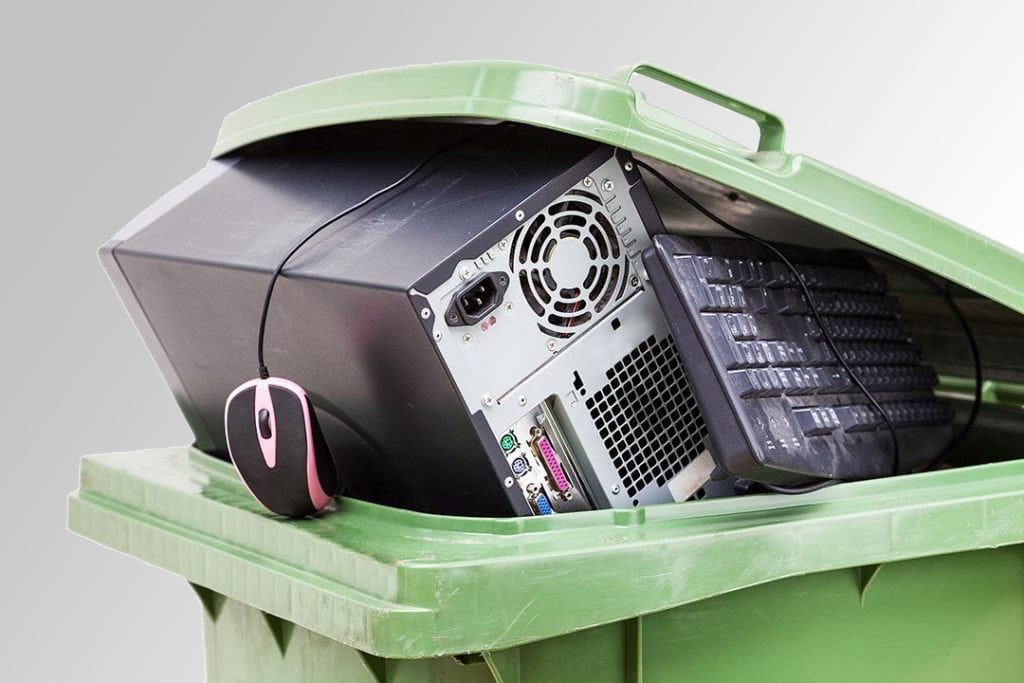
Photographee.eu / Shutterstock

Europe is sitting on a growing stockpile of cobalt, lithium, rare earths, and other critical materials. Most of it is being lost.

A major Horizon Europe-funded research project has just put numbers to that problem. The Future Availability of Secondary Raw Materials project, which spent four years modeling how much critical raw material value is embedded in Europe’s waste streams and how much could realistically be recovered by 2050, has published its final report. The conclusions are uncomfortable reading for an industry that has long known collection and processing rates are poor, but has lacked the data to show just how poor.

The scale of the miss

FutuRaM examined six waste streams: batteries, electronics, vehicles, mining residues, slags and ashes, and construction materials. Waste electrical and electronic equipment came out as one of the most material-rich and most poorly recovered of the group.

Printed circuit boards, lithium-ion batteries, and rare-earth-bearing magnets concentrate more critical materials per kilogram than most primary ores. Yet a significant share of that equipment never reaches a formal recycler. Devices get stockpiled in drawers, sold into grey markets, or exported before European refineries ever see them. Even when WEEE does enter the formal system, it is not always processed by facilities equipped to recover the full range of metals present.

The report presents scenarios rather than a single recovery figure, showing how outcomes shift depending on collection rates, processing technology, and regulatory enforcement—but the gap between current practice and the high-recovery scenarios is wide enough to constitute a strategic problem, not just an operational one.

What it means for the business case

One of FutuRaM’s more useful contributions is borrowing a classification framework from the mining industry and applying it to secondary materials. Under the United Nations Framework Classification for Resources, a primary ore deposit gets rated on economic feasibility, technical maturity, and environmental and social factors before anyone sinks capital into developing it. FutuRaM applies the same logic to urban deposits, including stockpiles of WEEE.

The practical effect is that a pile of circuit-board-rich shred or magnet-containing components now has a rating that reflects why it is or isn’t being recovered. Low rating? That means insufficient processing scale, missing refining steps, uncertain buyers, or regulatory friction. The classification doesn’t solve those problems, but it names them in language that works in a boardroom or a policy meeting.

For recyclers and ITAD operators, that framing has a direct commercial application. Investors and project financiers don’t fund vague ambitions to recover more material. They fund projects with identified bottlenecks, costed solutions, and a credible path to returns. A classification system that names the specific barriers to recovery gives industry something to build a capital case around.

The policy pressure building behind it

FutuRaM lands at a moment when European supply-chain policy is moving fast. The Critical Raw Materials Act sets domestic sourcing and recycling targets for materials the EU considers strategically important. FutuRaM’s data gives regulators a cleaner line of sight into where the gaps are, and that is likely to translate into pressure on collection rules, export enforcement, and refining investment.

For industry stakeholders this means recovering critical materials from e-scrap is not framed primarily as an environmental obligation. It is increasingly treated as a supply-security issue, which brings different budgets, different political will, and different consequences for non-compliance.

What to watch

The report’s underlying logic is that material that leaves the formal system cannot be counted, and material that cannot be counted cannot contribute to Europe’s secondary supply targets. Business models that keep assets traceable, through data wiping records, chain-of-custody documentation, and verified downstream processing, are better positioned as that scrutiny increases.

As enforcement tightens around illegal exports and uncontrolled material flows, the audit trail becomes less of a differentiator and more of a baseline requirement.

FutuRaM’s full report is available at futuram.eu.
Tags: Critical MineralsElectronicsEurope
TweetShare
David Daoud

David Daoud

David Daoud is a contributor to Resource Recycling and E-Scrap News, covering IT asset disposition, electronics recycling, and circular IT governance. He is the founder of and current Principal Analyst at Compliance Standards LLC, where he conducts independent research and advisory work on ITAD markets, sustainability and ESG compliance, data security, and lifecycle risk management. Daoud has analyzed enterprise IT trends since the late 1990s and was among the first analysts to examine ITAD as a distinct market segment during his time at IDC. He advises operators, OEMs, and investment teams on regulatory, technology, and market developments affecting the electronics lifecycle.

Related Posts

IBM logo on building

What IBM’s quantum foundry means for ITAD

byDavid Daoud
May 28, 2026

The company’s announcement reflects the continued diversification of computing infrastructure beyond conventional IT hardware categories.

Illinois expands battery recycling as lithium-ion fire concerns mount

Illinois expands battery recycling as lithium-ion fire concerns mount

byKeith Loria
May 27, 2026

The state is rolling out an expanded battery stewardship program, while fires continue to be a threat to recyclers nationwide.

CommanderAI launches searchable hauler database

Underwater data centers drive shift in ITAD models

byDavid Daoud
May 26, 2026

The new technology is grabbing headlines for saving energy, but are people looking at the complete lifecycle?

EU recyclers make case for solvent-based methods

The electronics recycling industry has a plastics problem

byKen Thomas
May 26, 2026

Pretending otherwise is no longer a viable option, argues the president of Universal Recycling Technologies.

Our top stories from June 2022

e-Stewards adds RGX as enterprise partner

byDavid Daoud
May 22, 2026

The announcement reflects increasing interaction among certification bodies, disposition platforms and enterprise procurement functions across the electronics recovery chain.

MP Materials breaks ground on rare earth magnet campus in North Texas

How critical mineral alliances aim to shape the future of e-scrap metals

byDavid Daoud
May 21, 2026

The Minerals Integrity & Resilience Alliance (MIRA) is part of a broader effort to strengthen transparency and resilience across critical...

Load More

More Posts

Recycling industry addresses Beyond Plastics report

Recycling industry addresses Beyond Plastics report

May 26, 2026
What a report on Starbucks cups reveals about recycling

What a report on Starbucks cups reveals about recycling

May 26, 2026
EU recyclers make case for solvent-based methods

The electronics recycling industry has a plastics problem

May 26, 2026
New York bill would strengthen device repair rules

New York packaging EPR bill faces June 10 deadline

May 26, 2026
Federal PACK Act aims to preempt ‘patchwork’ of state laws

House advances Recycling Infrastructure and Accessibility Act

May 21, 2026
Illinois expands battery recycling as lithium-ion fire concerns mount

Illinois expands battery recycling as lithium-ion fire concerns mount

May 27, 2026
Bottle bill backers see opportunity for action

PET collapse exposes gaps in US recycling infrastructure

May 15, 2026
Plastic packaging

Why SB 54 source reduction planning is becoming the industry’s most challenging EPR test

May 19, 2026
EPR rules take shape in Oregon, as first test

Oregon OKs end-market verification from CAA

May 20, 2026
CommanderAI launches searchable hauler database

Underwater data centers drive shift in ITAD models

May 26, 2026
Load More

About & Publications

About Us

Staff

Archive

Magazine

Work With Us

Advertise
Jobs
Contact
Terms and Privacy

Newsletter

Get the latest recycling news and analysis delivered to your inbox every week. Stay ahead on industry trends, policy updates, and insights from programs, processors, and innovators.

Subscribe

Welcome Back!

Login to your account below

Forgotten Password?

Retrieve your password

Please enter your username or email address to reset your password.

Log In

Add New Playlist

No Result
View All Result
  • The Latest
  • Analysis
  • Recycling
  • E-Scrap
  • Plastics
  • Policy Now
  • Conferences
    • E-Scrap Conference
    • Plastics Recycling Conference
    • Resource Recycling Conference
    • Textiles Recovery Summit
  • Magazine
  • About Us
  • Advertise
  • Archive
  • Jobs
  • Staff
Subscribe
This website uses cookies. By continuing to use this website you are giving consent to cookies being used. Visit our Privacy and Cookie Policy.