





Resource Recycling
  • The Latest
  • Analysis
    • All
    • Certification Scorecard
    • Industry Announcements
    • Opinion
    The electronics recycling industry is undergoing a transformation from labor-intensive manual operations to highly automated, AI-driven facilities that use advanced robotics, cleaner chemistry and digital tracking systems to extract critical materials.

    The cyber-physical MRF: AI and robotics reshape e-waste recovery

    Certification scorecard for the week of Feb. 9, 2026

    Meta-Corning deal signals IT hardware retirement wave

    Meta-Corning deal signals IT hardware retirement wave

    Malaysia clamps down on illegal e-waste imports amid probes

    Malaysia clamps down on illegal e-waste imports amid probes

    URT builds alliance to remake electronics plastics at scale

    ICYMI: Top 5 e-scrap stories from January 2026

    The electronics recycling industry is undergoing a transformation from labor-intensive manual operations to highly automated, AI-driven facilities that use advanced robotics, cleaner chemistry and digital tracking systems to extract critical materials.

    Certification scorecard for the week of Feb. 2, 2026

    Auditors warn EU may fall short on critical metals

    Auditors warn EU may fall short on critical metals

    Industry announcements for January 2026

    Industry announcements for February 2026

    ICYMI: Top 5 recycling stories from January 2026

  • Conferences
  • Publications

    Other Topics

    Textiles
    Organics
    Packaging
    Glass
    Brand Owners

    Metals
    Technology
    Research
    Markets
    Grant Watch

    All Topics

Subscribe
No Result
View All Result
Resource Recycling
  • The Latest
  • Analysis
    • All
    • Certification Scorecard
    • Industry Announcements
    • Opinion
    The electronics recycling industry is undergoing a transformation from labor-intensive manual operations to highly automated, AI-driven facilities that use advanced robotics, cleaner chemistry and digital tracking systems to extract critical materials.

    The cyber-physical MRF: AI and robotics reshape e-waste recovery

    Certification scorecard for the week of Feb. 9, 2026

    Meta-Corning deal signals IT hardware retirement wave

    Meta-Corning deal signals IT hardware retirement wave

    Malaysia clamps down on illegal e-waste imports amid probes

    Malaysia clamps down on illegal e-waste imports amid probes

    URT builds alliance to remake electronics plastics at scale

    ICYMI: Top 5 e-scrap stories from January 2026

    The electronics recycling industry is undergoing a transformation from labor-intensive manual operations to highly automated, AI-driven facilities that use advanced robotics, cleaner chemistry and digital tracking systems to extract critical materials.

    Certification scorecard for the week of Feb. 2, 2026

    Auditors warn EU may fall short on critical metals

    Auditors warn EU may fall short on critical metals

    Industry announcements for January 2026

    Industry announcements for February 2026

    ICYMI: Top 5 recycling stories from January 2026

  • Conferences
  • Publications

    Other Topics

    Textiles
    Organics
    Packaging
    Glass
    Brand Owners

    Metals
    Technology
    Research
    Markets
    Grant Watch

    All Topics

Subscribe
No Result
View All Result
Resource Recycling
No Result
View All Result
Home Plastics

PETG excluded from No. 1 resin code in California

Colin StaubbyColin Staub
October 18, 2017
in Plastics

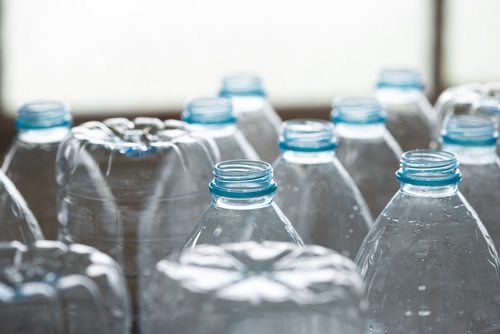
California lawmakers have revised the state’s definition of PET to exclude PETG, meaning products made from the glycol-modified plastic are barred from using resin code No. 1.

Assembly Bill 906 moved through both houses of California’s legislature last month and was signed by Gov. Jerry Brown on Oct. 15. The bill takes effect Oct. 1, 2018, giving manufacturers about a year to comply with its requirements.

Products made with PETG have different material properties than regular PET. According to legislative analysis of the bill, PETG’s additional glycol makes the resulting product less brittle and removes “hazing” that sometimes occurs when manufacturing with PET.

According to bill advocates, the legislation will increase bale quality and yields by increasing sorting of the materials.

“(PETG) will be more easily identified on a visual sort,” Bruce Magnani, a lobbyist for the Association of Plastic Recyclers (APR), said during a June hearing before the Senate Standing Committee on Environmental Quality. He added PETG did not exist when the resin codes were written.

But opponents said current technology exists to separate the materials. During the June hearing, opponents said the bill’s primary impact would be a “substantial revenue transfer from the product manufacturers that use PETG to the recycling program in California,” due to the higher processing fee that would be placed on the products if they’re labeled No. 7. In California, containers are subject to fees paid to the state by beverage manufacturers, money that’s then used to subsidize the recycling industry. Reclassifying PETG from No. 1 to No. 7 means its “processing fee” increases from $0.00035 per container up to $0.07058 per container, according to data from the California Department of Resources Recycling and Recovery (CalRecycle).

The bill could also have impacts beyond California’s borders, because PETG manufacturers sell their products into numerous states and may have to choose between making separate products labeled according to California’s resin codes or streamlining all products to meet California’s regulations.

“It will create a dual standard for the first time,” said Joe Lang, a representative of  Tennessee-headquartered Eastman Chemical Co., which makes PETG. He spoke during the June hearing as well.

Material differences

Some consumers reportedly find the material creates a product that’s more comfortable to hold, according to the legislative analysis. PETG is also used in some medical equipment because it can handle heavy doses of radiation, according to APR.

But as PETG has gained prominence, the recycling industry has begun to widely realize that the material acts as a contaminant during the recycling process, Magnani said.

PETG has a much lower melting point than PET, according to the analysis, which creates problems during the recycling process. AB 906 redefines PET by its melting point and material composition.

“When processed together, PETG melts and becomes sticky while PETE remains solid,” according to the analysis. “This results in PETG sticking to PETE chips, forming large clumps that cannot be processed.”

The legislation was also supported by the American Beverage Association, Californians Against Waste, Dart Container Corporation, the National Association for PET Container Resources, the Plastic Recycling Corporation of California, Talco Plastics, the Sustainable Packaging Coalition and Verdeco Recycling.

Sorting solutions exist

Opponents of the bill agreed PETG is an issue when it gets mixed in with the PET stream, but they pointed to current equipment that they said can effectively separate the materials. The problem, they said, is recycling companies that have chosen not to invest in that equipment. The Eastman Chemical Co. and the Plastics Industry Association opposed the bill.

“There already is existing technology to deal with the sorting issue that the supporters of the bill just talked about,” Lang said. He said companies can make the fix by adjusting the sensitivity of the near-infrared sorter at the beginning of the process. Doing so allows the equipment to differentiate between PET and PETG, Lang said.

“It’s a simple change to make. Recyclers in California have made that change,” he said. “Some recyclers, however, have chosen not to invest in the new technology. As a result, if you, in fact, mix PET with PETG in the stream, the author is correct in pointing out that that can cause a gooey mess, even though it’s less than 2 percent of the stream.”

Lang said there have been efforts to petition the standards organization ASTM International, which writes standards for resin codes, to redefine the No. 1 code to exclude PETG, efforts ASTM have rejected.

“Now, what they are doing is asking the legislatures to step in and substitute their judgment for the science-based review that occurred at ASTM,” Lang said.

Joe Ackler, testifying on behalf of the Plastics Industry Association, said the bill also increases costs for manufacturers because they will have to change their machinery and molds to produce a different resin code.

Magnani said PETG would likely be labeled as No. 7 initially, but that bill advocates are open to working with Eastman and the Plastics Industry Association to create a new resin code for PETG, so it can be more easily recycled in its own stream.


To receive the latest news and analysis about plastics recycling technologies, sign up now for our free monthly Plastics Recycling Update: Technology Edition e-newsletter.
  

Tags: Hard-to-Recycle MaterialsPETTechnology

TweetShare
Colin Staub

Colin Staub

Colin Staub was a reporter and associate editor at Resource Recycling until August 2025.

Related Posts

Origin Materials to reduce staff in reorg

byAntoinette Smith
February 13, 2026

The materials technology company will lay off 32% of its staff and shift more resources toward commercializing PET closures, a...

The electronics recycling industry is undergoing a transformation from labor-intensive manual operations to highly automated, AI-driven facilities that use advanced robotics, cleaner chemistry and digital tracking systems to extract critical materials.

The cyber-physical MRF: AI and robotics reshape e-waste recovery

byDavid Daoud
February 12, 2026

The electronics recycling industry is entering a new phase of technological acceleration. Advances in artificial intelligence, robotics, advanced chemistry, and...

APR, industry create proactive guidance for PET caps

byAntoinette Smith
February 12, 2026

The Association of Plastic Recyclers recognized that developing guidelines before PET caps were completely developed and commercialized was crucial, and...

NERC: Blended average prices fell 40% in third quarter

HDPE, PP bales rise as paper fiber and cans stabilize

byRecyclingMarkets.net Staff
February 12, 2026

National average prices of post-consumer material bales were flat to higher on the month.

Alpek talks PET overcapacity, soft demand

byAntoinette Smith
February 11, 2026

Executives from the Mexico-headquartered polyester giant said the Chinese government has acknowledged issues and convened PET producers, but Alpek is...

Texas sues over dumped wind turbine blades

Texas sues over dumped wind turbine blades

byScott Snowden
February 10, 2026

The state attorney general sued Global Fiberglass Solutions over alleged illegal storage and disposal of all turbine blades at two...

Load More
Next Post
KW predicts 10 percent demand boost for one resin

KW predicts 10 percent demand boost for one resin

More Posts

Oregon’s Recycling Modernization Act faces injunction

Court partially blocks Oregon EPR law, dismisses bulk of lawsuit

February 10, 2026
Chinese processing group details goals for US visit

AMP lays out vision of next-generation, AI-driven MRFs

July 24, 2024
Malaysia clamps down on illegal e-waste imports amid probes

Malaysia clamps down on illegal e-waste imports amid probes

February 6, 2026

REUSE Act heads to US House for consideration

February 9, 2026
Meta-Corning deal signals IT hardware retirement wave

Meta-Corning deal signals IT hardware retirement wave

February 9, 2026

ecoATM recycled 7.5M phones in 2025 as payouts hit $1.5B

February 10, 2026
Texas sues over dumped wind turbine blades

Texas sues over dumped wind turbine blades

February 10, 2026

Alpek talks PET overcapacity, soft demand

February 11, 2026

APR, industry create proactive guidance for PET caps

February 12, 2026
The electronics recycling industry is undergoing a transformation from labor-intensive manual operations to highly automated, AI-driven facilities that use advanced robotics, cleaner chemistry and digital tracking systems to extract critical materials.

The cyber-physical MRF: AI and robotics reshape e-waste recovery

February 12, 2026
Load More

About & Publications

About Us

Staff

Archive

Magazine

Work With Us

Advertise
Jobs
Contact
Terms and Privacy

Newsletter

Get the latest recycling news and analysis delivered to your inbox every week. Stay ahead on industry trends, policy updates, and insights from programs, processors, and innovators.

Subscribe

Welcome Back!

Login to your account below

Forgotten Password?

Retrieve your password

Please enter your username or email address to reset your password.

Log In

Add New Playlist

No Result
View All Result
  • The Latest
  • Analysis
  • Recycling
  • E-Scrap
  • Plastics
  • Policy Now
  • Conferences
    • E-Scrap Conference
    • Plastics Recycling Conference
    • Resource Recycling Conference
    • Textiles Recovery Summit
  • Magazine
  • About Us
  • Advertise
  • Archive
  • Jobs
  • Staff
Subscribe
This website uses cookies. By continuing to use this website you are giving consent to cookies being used. Visit our Privacy and Cookie Policy.