




California’s fee on products with non-removable batteries brought in more revenue than regulators projected in its first year. CalRecycle now plans to drop the per-item cap from $15 to $1 on Jan. 1, 2027.
The state has also logged about 64,000 product line items from manufacturers selling covered devices in California. The list includes ordinary wristwatches, desktop computers and printers.
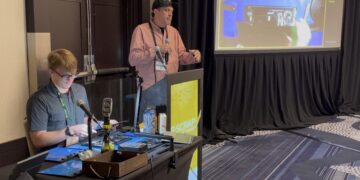
Alan Ilusorio, CalRecycle’s branch chief over the covered electronic waste program, laid out the numbers Oct. 27 during an E-Scrap Conference session on embedded batteries. He was joined by Danielle Spalding of Cirba Solutions. Scott Cassel, CEO and founder of the Product Stewardship Institute, moderated.
A fee program, not EPR
Under SB 1215, signed by Gov. Gavin Newsom in September 2022, consumers pay a recycling fee at checkout on covered battery-embedded products. The fee is 1.5% of the retail price, capped at $15 per product in 2026.
CalRecycle’s proposal keeps the 1.5% rate and lowers the cap to $1. Ilusorio said the rule is with the agency’s legal staff, with approval expected in November.
The program is a consumer-funded, state-run fee system, not EPR. It resides as part of the program created by SB 20, the Electronic Waste Recycling Act of 2003, which already charges $4 to $6 on TVs and monitors. Embedded battery fees go to a separate subaccount. CalRecycle pays approved recyclers by the pound for devices they dismantle.
The claims chain mirrors the video display side. Collectors log California-sourced material, recyclers file claims and state reviewers validate them before payment.
Ilusorio said 2026 was “a very revenue-heavy year.”
Recycling claims came in below projections, while far more products turned up in manufacturer notices than expected. The agency bought additional market data on device types before setting the new cap. He said the state aims to break even, so the 2026 surplus will carry into 2027.
Watches, computers and printers
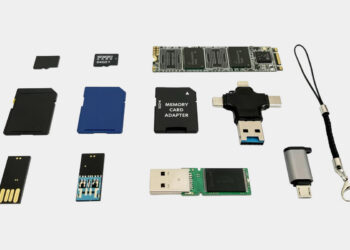
California defines a covered product as one whose battery can’t be easily removed with common household tools. That pulls in standard watches, which need a special kit to open, Ilusorio said.
Desktop computers are covered because of the coin cell on the circuit board that keeps the clock running. Printers are in, too.
Manufacturer notices are still tracked by hand in an Excel sheet posted to CalRecycle’s website. Ilusorio said the agency is pursuing IT contracts for a manufacturer portal.
“It’s good that it’s covered because it fulfills the need that we have control over all the devices,” he said.
Small devices
The combined payment for battery-embedded waste is $1.15 per pound, according to CalRecycle’s fee methodology. A pair of earbuds weighs next to nothing.
Ilusorio said most of the program’s roughly 21 recyclers and 279 collectors have told the agency they don’t want small devices. “It doesn’t make sense for them,” he said.
The statute lets CalRecycle set separate payment categories. Ilusorio said early talks point to two or three at most, since each added category complicates the math. Under the law, the agency gains authority to adjust the embedded battery payment rate annually starting July 1, 2028, and to set category-based fees starting Aug. 1, 2028.
Motor vehicles, Class II and III medical devices and vapes meeting the federal definition are excluded.
Recyclers also face handling limits. Department of Toxic Substances Control rules mean most covered devices are dismantled by hand, Ilusorio said. Staff are learning to open products from online repair videos.
An audience member asked whether recyclers could shred devices straight to black mass. Ilusorio said CalRecycle is working with DTSC on “creative” interpretations of the rules. Neighboring states lack the same restrictions, he said, which is one reason some devices are shipped out of state.
A manufacturer in the audience asked to stretch the 30-day fee remittance window to 45 days. Ilusorio said the program runs on emergency regulations that must be re-adopted every two years, and he encouraged comments at workshops expected next year.
Loose batteries
Spalding, vice president of communications and public affairs at Cirba Solutions, said her company wants the small devices electronics recyclers turn away.
Cirba processes all battery chemistries, formats and sizes, with operating sites in Ohio, Michigan, Arizona and North Carolina. Spalding said the company removes batteries from devices before processing. Shredding whole devices mixes plastics and other materials into the black mass and lowers the purity of recovered critical minerals.
“Our goal, ultimately is circularity,” she said.
Spalding said Cirba has not received any reimbursement from California’s program. It processes small devices anyway because recovered lithium and cobalt make them economically viable at volume.
Jason Linnell of the National Center for Electronics Recycling asked whether Cirba would really take whole products, from pool parts to janitorial equipment. Spalding said the company removes batteries no matter what and sends other components to electronics recyclers. Cirba would take small devices that electronics recyclers don’t want by weight, she said.
She also described the differentiation in the two sectors. Electronics recyclers are paid by weight, while battery recyclers target the cell inside.
Alex Naidoo of the New York State Department of Environmental Conservation asked how vapes are handled. Spalding said Cirba needs to know whether a device held nicotine or cannabis, and she called for labeling to say so. Nicotine residue carries hazardous waste obligations. Cannabis devices often can’t cross state lines.
California excludes vapes under the federal definition, which covers substance-delivery devices. Ilusorio said a Costa Rica company selling “non-substance” vapes that heat dry material without burning has argued its products fall inside the program. CalRecycle is working with DTSC and the California Department of Tax and Fee Administration on the question.
Recyclers are wary, as handling the wrong vape can bring heavy DTSC fines, Ilusorio said.
Other states watching
Cassel said more than 20 battery EPR laws are on the books in 16 states, and 17 bills were introduced in eight states in 2026. California is the only state with a current embedded battery requirement.
Three state battery laws require The Battery Network, formerly Call2Recycle, to study embedded batteries. Illinois’ law, SB 3686, requires that assessment by July 1, 2027, and the Illinois EPA must submit it to the General Assembly by Oct. 1, 2027. Cassel said PSI board president Christina Seibert reported the study is expected in spring 2027.
Maine’s battery law phases in embedded batteries by 2030, Cassel said, and Quebec began covering them in July.
California’s loose batteries fall under a separate EPR law, AB 2440, which Newsom amended Sept. 20 by signing SB 501. Ilusorio said why the two programs were split is “above me.”
Asked what other states should do, both panelists pointed to definitions. Spalding added harmonization with existing battery and electronics programs, and payment that covers safety and training costs, not only weight. She pointed to Canada’s phased approach to embedded batteries as a model.