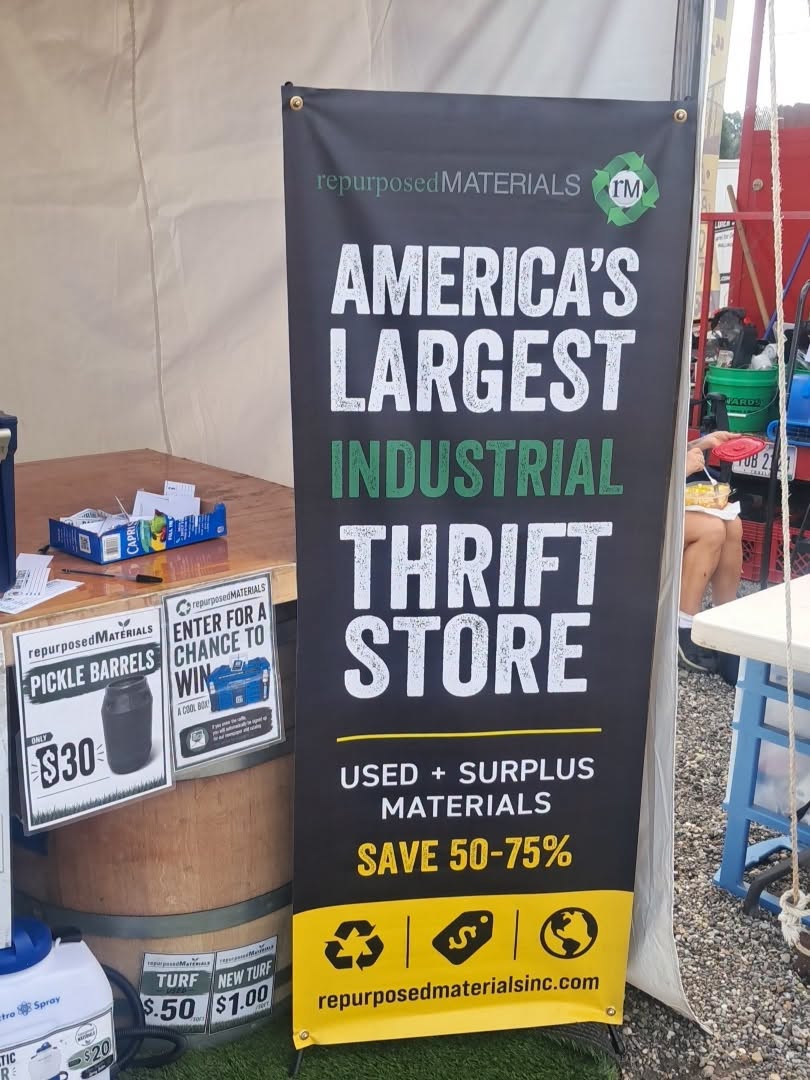
Although he’s run Repurposed Materials for 16 years, Damon Carson can still vividly recall the “Reese’s moment” that led to him opening what he called the country’s first “industrial thrift store.”
While operating a garbage business in the Colorado Rockies in the 2000s, Carson saw what his business was sending to landfills. As he arranged to sell some of those materials for other companies to reuse, he also had a painting subcontractor for an unrelated business who commented on the versatility of advertisements printed on waterproof vinyl, which could be reused as drop cloths.
“That’s when the chocolate met the peanut butter,” he said. “I thought there has to be a way to reuse things.”
Thus, in 2010, Repurposed Materials was born. Carson launched the company in Lafayette, Colorado, and began working to both find excess materials that still have life and companies that could reuse those materials.
By combing through overordered materials, inventory from canceled projects and warehouse cleanouts, Carson accumulated a wealth of materials. The business deals with a lot of lumber, steel, cable and other construction-related materials, but he’s not afraid to take on unorthodox items — glass vials, for example, or expired natural gas pipes.
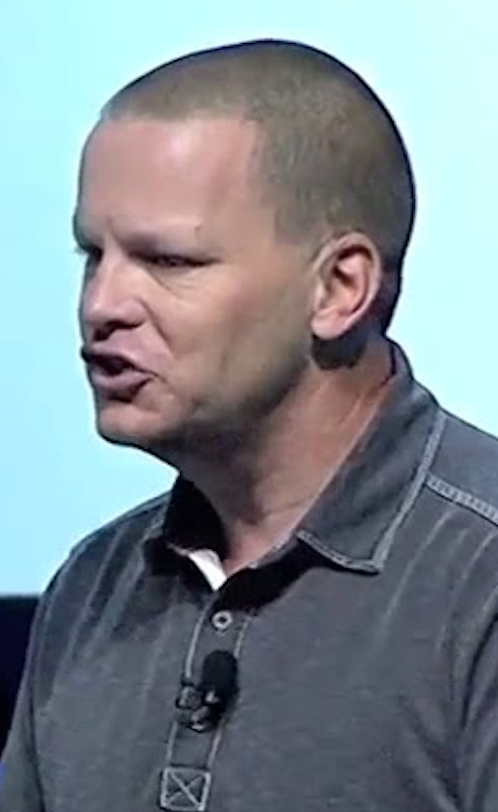
“We look for materials that are generic, versatile and adaptable,” he said. “We don’t want version 1.0. If it’s something we think we can rehome, we take it in. We never know who will raise their hands and say they can use something.”
Carson said his company had to raise its hand a lot initially to let people know such a service is available. But demand has grown a lot on the supply side, as he said he’s found a lot of companies are willing to keep materials out of landfills if they can. That’s due in part, he said, to those companies’ customers looking to work with businesses that are mindful of sustainable practices.
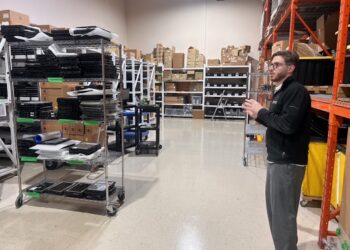
Finding equilibrium between supply and demand is the biggest challenge, he said. That’s part of the reason the company is set to open its seventh warehouse, this one in western Tennessee. It joins facilities in Colorado, Arizona, Ohio, Iowa, Texas and South Carolina. Carson’s also looking at land in California for an eighth.
Those facilities help store the roughly 16 million pounds of material the company deals with each year. The company saves anything that can be saved. Carson said his company helps its customers save 50%-75% as compared to new materials, although doing so requires creativity.
That creativity doesn’t just come from the company’s side. Carson recalled some 4-inch-thick concrete pads he came across with holes drilled into them, meant to feed cable through. A trucking company caught wind of the items and said they’d be usable as weights in its semis on windy days.
“I would have stayed up 24 hours a day for three weeks and never thought of it,” he said.
The more creative the idea, the better. Excess ballistic glass from a statehouse project? Use it in a zoo’s new lion enclosure. Unused polyethylene pipe? Let a farmer convert it into a fertilizer irrigation system. Nearly 3 ½ miles’ worth of electrical fiberglass conduit? Send it to a boat-building company to convert into masts and spars.
“I am the curator. I am the buyer for the company,” Carson said. “The first step is, if you think there’s holes, say no upfront. We say no to way more than we say yes to. We have to have fair confidence that we can rehome something. If we take in a truckload that sits for two years and then landfill it, have we done the landfill or the environment any good? The answer is no.”
The company will take damaged items if they can be reused, he said; condition is noted prior to sale, and the price reflects the condition. He will buy in whatever volumes are available, but selling generally takes longer because lots need to be parceled out, as customers rarely need as much product as is available.
Anything that’s available is listed on the company website and featured in a thrice-weekly newsletter the company sends. The company’s roughly three dozen employees help with that, storage and logistics; the company can help with transportation through its third-party providers, he said.
The company has been profitable since day one and generates annual revenue in the millions, Carson said. That’s important financially, but it also helps the company fulfill its mission. As a person who does his shopping at thrift stores, he wants anything that can find a new life to do so.
“The transformation, the before and after — our company is in the messy middle,” he said. “The real heroes of the story are our customers who are resourceful, outside-the-box thinkers, creative. They’re willing to modify, adapt and transform. The thought of buying used is risky.
“We occupy a niche in the marketplace. Sustainabilitywise, the wind’s at our back.”