
Editor’s note: Sign up for our free webinar on used textiles in the global circular economy, hosted at 11 a.m. ET Sept. 29.
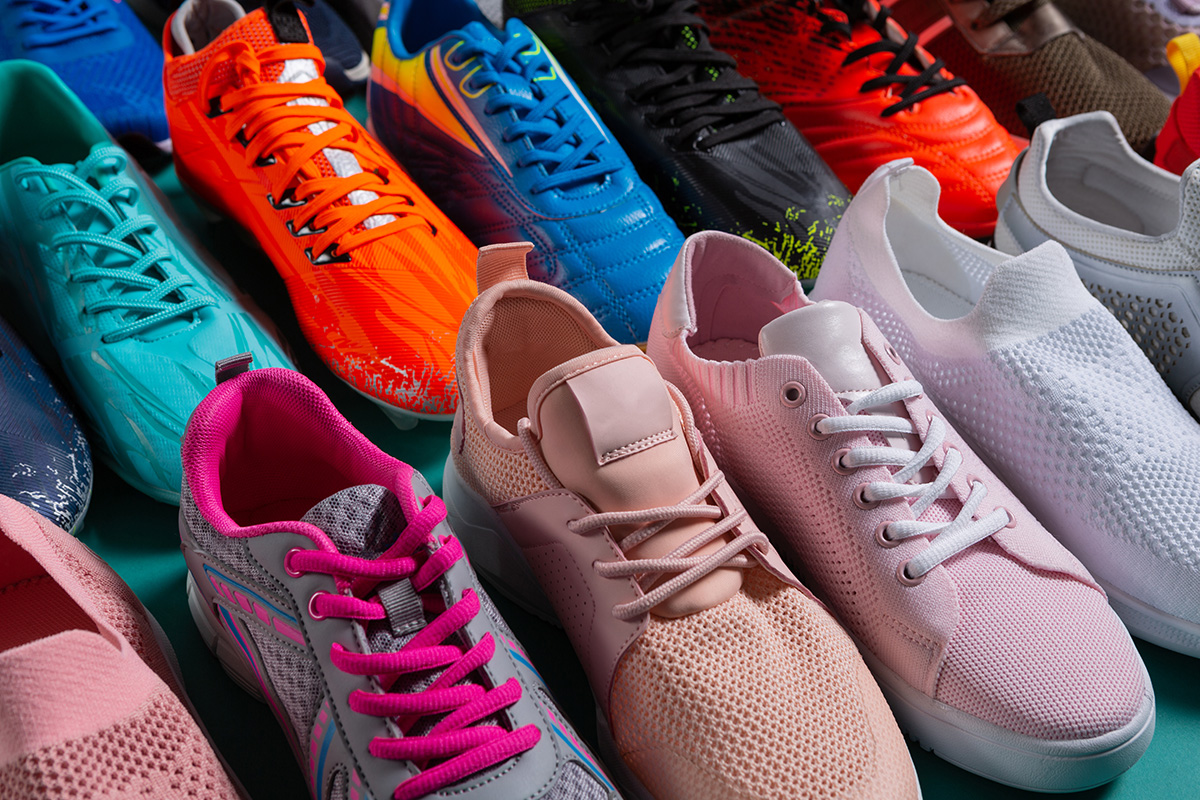
The traditionally fragmented sector of footwear recycling stands poised to sprint forward into the modern era, according to a new report — if its players are ready and willing to accept the help that’s available to them.
The report from BCC Research, “AI Impact on Footwear Recycling Market: Industry Outlook 2031,” found that AI adoption in footwear recycling is picking up speed, but the industry still relies heavily on conventional, energy-intensive processes.
Emerging technologies can help recyclers with the process, researchers found. Optical and hyperspectral sorting systems, along with near-infrared sensor-based separation and automated dismantling, can remove some of the workload on people. That would, in turn, speed the process up and allow for faster turnaround.
Given the business and legislative pressures put on companies to improve recycling, researchers said it’s to their benefit to use more AI as much as they can.
“Structural forces are converging to make AI adoption in footwear recycling increasingly non-optional,” researchers wrote in the report. “Governments across North America and Europe are imposing strict environmental and waste management regulations, compelling industry participants to adopt AI-enabled technologies to achieve compliance. Simultaneously, growing landfill pressure from escalating post-consumer waste volumes is generating regulatory and reputational urgency that incumbent mechanical processes cannot address at scale.”
At least some brands seem to see the value in improving circularity. Researchers note major manufacturers like Nike and Adidas have invested in take-back programs. Recyclers are also making investments to bolster their AI offerings, among them AMP Robotics and Recycle Track Systems. Researchers noted that initial investment concerns and potential capacity problems can be offset for businesses by the ability for AI to help address material separation bottlenecks, as well as the maintained throughput the technology provides in the long run.
Some recyclers have also seen the benefits of using AI. Miami-based Sneaker Impact has employed its proprietary AI as part of its sortation process, allowing the company to recycle nearly 16 million pairs of footwear since program inception with a 95% purity rate.
“Our AI-driven program holds the promise to reshape the way we think about product lifecycles,” founder Moe Hachem said when the AI launched in 2023.
French company CETIA, meanwhile, has adopted AI such as its SensorHUB system and an AI-enhanced automated dismantling system that allows it to process up to 120 shoes per hour, far exceeding manual rates.
“The textile industry has begun its transformation but is still struggling with the first link in the circular chain: high-precision industrial sorting,” CETIA Director Chloé Salmon Legagneur said. “The challenge is no longer collection, but classification. Without the industrial capacity to precisely identify materials, types and components, we cannot effectively supply the recycling sectors.”
Incorporating AI could help give new life to modern footwear, which researchers find is harder to recycle due to how it’s made. Some shoes can contain more than five dozen bonded materials, making separation difficult and grinding ineffective due to the impurity of the granules that result from the process.
Improved processes could, in turn, boost overall recycling rates. An MIT study found that only 5% of post-consumer footwear gets recycled. Better use of technology can only improve that and every other metric around footwear recycling, researchers said.
“AI integration reduces energy consumption, lowers downtime through predictive maintenance, and drives long-term operational savings that improve the investability of recycling at scale,” they wrote.