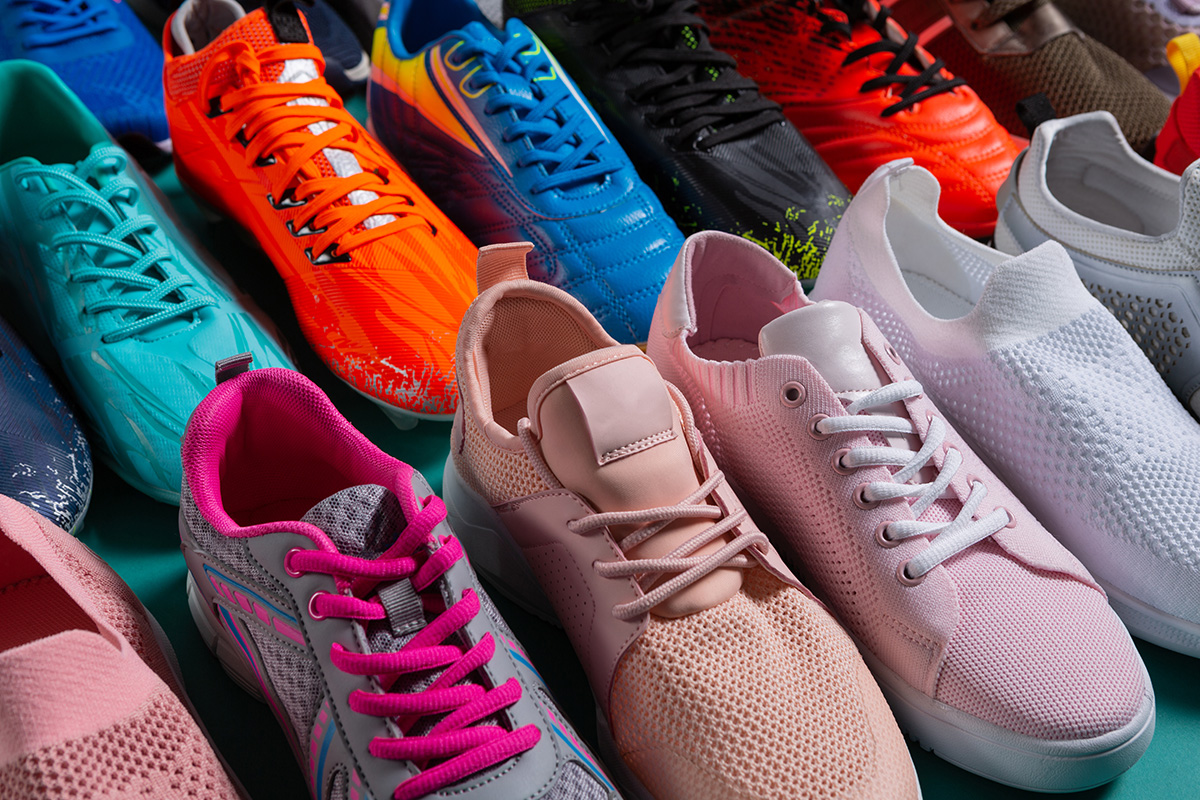
There are approximately 1.2 billion pairs of sneakers sold globally each year, accounting for $91.7 billion in sales, according to Statista, and it’s a number that has nearly doubled over the last decade. Yet with all that running around, very few take steps to recycle.
A study by researchers at MIT revealed that nearly 30 million pairs of sneakers are thrown out each year, and less than 5 percent of those are recycled. Considering that athletic footwear is responsible for 1.4 percent of global greenhouse gas emissions, it’s vital that something is done to reduce the number of sneakers finding their way into landfills.
That’s where Sneaker Impact comes in. The Miami-based company is building a full circular ecosystem around sneakers. Consumers and partner organizations order free take-back bags (typically holding about 7 pairs of sneakers) or boxes (35 pairs) to collect used sneakers.
“We have these boxes in retail locations, specialty running stores, municipalities, schools and colleges nationwide,” said Moe Hachem, founder and CEO of Sneaker Impact. “We send the box with a prepaid shipping label, so the only work the partner has to do is tape the box closed when they’re full, and FedEx will pick it up.”
When the sneakers arrive at the Miami warehouse, each shipment is logged into an internal Airtable database, using proprietary AI. The integrated system tracks the brand, model, condition and source of each pair. “It allows us to generate data reports for transparency and impact measurement,” explained Hachem.
The sneakers are graded via a four-tier system – from “almost new” all the way to “end-of-life.” Still wearable items are cleaned up and resold affordably by local merchants in developing countries while those beyond repair are broken down and the components recycled or upcycled.
“The main components of a sneaker are the textile upper, the midsole, which is made of foam, and the outsole, which is rubber,” said Hachem. “We were successful in separating the textile, foam and rubber using air-density techniques.” Currently, about 85 percent of incoming sneakers are upcycled while 15 percent go to the recycling facility.
With a network of more than 3,000 collection locations and over 5,000 micro-entrepreneurs in its global resale chain, the organization has already upcycled more than 15 million pairs of footwear that have been repaired and cleaned.

Making a difference
Hachem is a second-generation footwear industry veteran. Before founding Sneaker Impact, he worked in the reuse distribution of secondhand clothing, shoes and textiles, where he gained decades of experience in sourcing, production, and international logistics. That background inspired him to focus on sustainability and responsible end-of-life solutions for footwear, where there was a lack of recycling initiatives when it came to sneakers.
“We knew that 87 percent was going to landfills and we just wanted to find a better solution for the footwear industry and how to put it back into the circular economy,” he said. “After the pandemic, I dove into the problem. We started with the dust collector and a small grinder and began grinding sneakers and trying to separate foam from rubber and textile.”
Just five years later, Sneaker Impact has evolved into a data-driven sneaker sustainability movement that’s integrating AI and near-infrared to drive circularity within the industry.
“There aren’t a whole lot of companies that are recycling footwear, but we are one of the only ones that are integrating near-infrared (NIR) to identify and separate materials like foam into different categories,” said Hachem. “When footwear is processed for recycling, NIR sensors detect material types into high purity levels. This assists us in separating TPU, PU and EVA foams.”
Sneaker Impact makes floor mats. A four by four foam piece is on top, and the bottom piece is a rubber mat made from 100 percent recycled sneakers The materials can also be utilized to make new shoes, such as sandals that are created with 85 percent recycled foam.
The company is also testing ways to make pallets. “We’re seeing if we can take the EVA extrusion and turn it into pallets,” he added. That’s a project we’re focused on at the moment.”
Consumer participation
Sneaker Impact offers a consumer take-back program in all 50 states, allowing individuals to mail their used athletic shoes for upcycling or recycling with no worry about paying anything because of the company’s free, prepaid shipping bags for people to use.
“We believe consumers want to be involved, but they were never given that option,” Hachem said. “A lot of people toss their sneakers into the trash because there isn’t any other option, but we’re changing that now.”
Sneaker Impact also raises awareness about its efforts by meeting runners at marathons throughout the country. It has been able to collect thousands of pairs of sneakers from those taking part in events such as the marathons in Chicago, Los Angeles and Miami.
Let’s hear it for the brands
The MIT study revealed a normal pair of sneakers comprises 65 discrete parts requiring more than 360 processing steps to assemble, from sewing and cutting to injection molding, foaming and heating. That makes the process largely carbon intensive.
In response to the problem, sneaker companies have begun assessing the greenhouse gas impact of their products, partly by tracking the carbon dioxide generated at each stage of a product’s lifecycle. They also have been more focused on creating products that are easier to recycle.
Adidas has been one of the pioneers in circular sneaker design, gaining early attention for its partnership with Parley for the Oceans, which transforms intercepted ocean plastic waste into high-performance yarns used in millions of pairs of running shoes. The company also developed the Futurecraft Loop, a fully recyclable performance running shoe made entirely from a single material so it can be ground down and remade into a new pair once its recycled.
Adidas has also set ambitious sustainability goals, aiming to make 90 percent of its products sustainable by next year.
Nike has also been a big force in the push toward sustainable footwear, creating the Nike Grind program, which collects worn-out sneakers and manufacturing scrap to repurpose them into new products, such as running tracks, basketball courts to new shoe soles. According to the recent Nike impact report, the company has built footwear recycling machines in North America and Europe. It also contracts with others with similar technologies to process more product, notes the report.
Through its product innovation, Nike has also developed sneakers made with recycled polyester, rubber and foam, which are available on popular models such as the Space Hippie line, which features uppers crafted from “space waste yarn” made of recycled plastic bottles, T-shirts and yarn scraps.

Then there’s Allbirds, which has built its entire brand around sustainable materials, with everything from eucalyptus tree fibers to sugarcane-based foam and merino wool. In 2021, Allbirds partnered with Adidas on the record-setting FUTURECRAFT.FOOTPRINT, a running shoe made with the lowest carbon emissions ever recorded for a performance sneaker.
Earlier in 2025, Allbirds introduced sneakers incorporating recycled polyester and natural rubber blends, designed to reduce the carbon footprint of each pair.
Sneaker Impact also has some exciting things in the works with some major sneaker brands that it hopes to announce in the next year.
“We’re looking forward to a brighter future and a better one for Mother Earth,” Hachem said. “Runners go through a pair of shoes every 300 miles and for many, a pair of sneakers is a fashion statement. We’re only a drop right now in the ocean and we’re expecting this to be just the beginning.”
Keith Loria is a D.C.-based award-winning journalist who has been writing for major publications for close to 20 years on topics as diverse as healthcare, travel and sustainability. He started his career with the Associated Press and has held high editorial positions at publications aimed at entertainment, sports and healthcare.