
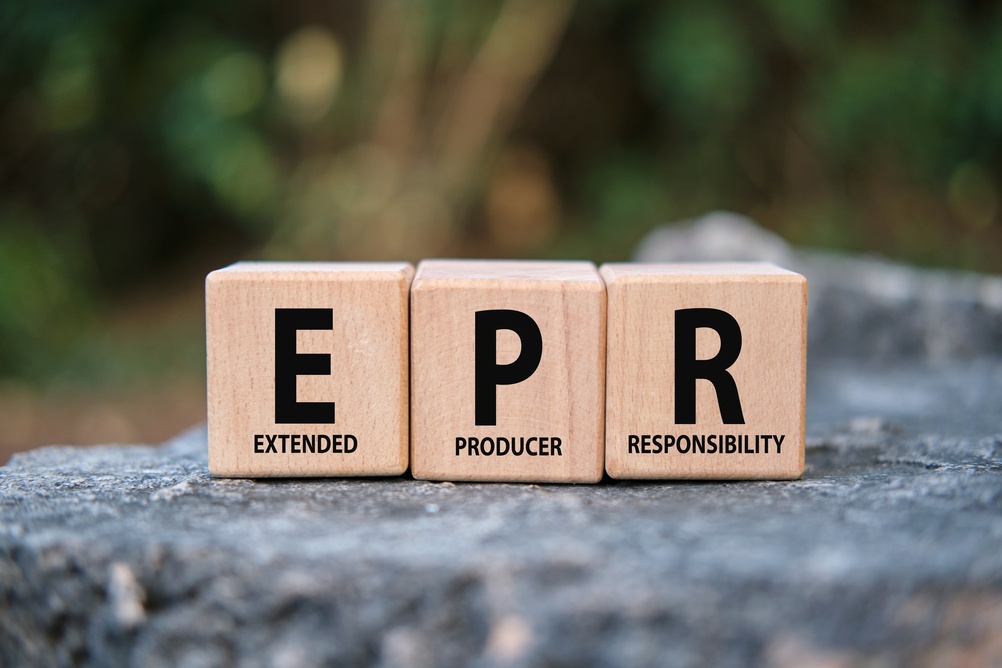
In order for it to be successful, extended producer responsibility (EPR) for packaging must soon answer several key questions across the states where it is being implemented, panelists said on Wednesday at a conference in Lancaster, Pennsylvania.
Seven US states currently have passed EPR laws for packaging (California, Colorado, Maine, Maryland, Minnesota, Oregon and Washington) and a few more including New York are considering similar laws.
“The financial burden of subsidizing recycling has been on the jurisdiction, but with this shift [to EPR] now the industry is going to provide funding to partly subsidize recycling and also outreach that’s involved,” said Etienne Ozorak, integrated waste superintendent for the City of Glendale, California, during a panel at the Annual Recycling & Organics Conference of the Professional Recyclers of Pennsylvania (PROP).
In order for EPR for packaging to meet the goal of less plastic and other pollution in the environment, several questions need answering, said Maureen O’Dea Brill, a partner in K&L Gates in Harrisburg, Pennsylvania, who specializes in environmental law and who advises clients navigating EPR.
These questions include what types of materials will actually be collected and who decides what is recyclable? Another is where does the money collected as fees on producers go?
“Producers are getting fees of millions of dollars,” said O’Dea Brill. “Big bills are being sent out, they are being paid, and CAA [Circular Action Alliance, the leading producer responsibility organization or PRO in several states] has to determine what are the best ways to spend that money.” Possible uses include spending on boosting recycling infrastructure and on recycling education, she said.
“The PRO is extremely powerful under these programs,” O’Dea Brill added.
One key question is how much packaging will actually change as a result of EPR laws. “It is already changing,” said O’Dea Brill, though it remains to be seen how far producers will go. O’Dea Brill said companies she has talked to are looking into lightweighting and PCR. “You’ll see package by package change,” she said.
Still, many companies have told O’Dea Brill that redesigning their packaging to be more readily recyclable has been a “real struggle.” She said, “I was on a call with producers that said they are going to eliminate some products in California as a result” of the state’s landmark EPR for packaging law, SB 54.
Producers have also told O’Dea Brill that they are frustrated by differences in programs across the seven packaging EPR states, from fees to rules, making compliance more complicated.
Yet, “it’s hard to be against a recycling law publicly,” she said.
Other unanswered questions include how courts are going to rule in the various lawsuits brought against EPR in California, Oregon and elsewhere, challenging the laws on commerce and free speech grounds, to name a few.
Despite the unanswered questions, O’Dea Brill said she expects some other states to soon sign new EPR laws. New York, in particular, is a state to watch, she said.