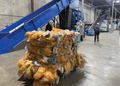







New York City Transit failed to consistently separate recyclables from trash at its bus depots and maintenance shops for years, according to a new report from the MTA Office of the Inspector General (OIG).
The hauler, identified in Metropolitan Transportation Authority (MTA) contract records as Action Carting Environmental Services, reportedly compounded the problem by dumping source-separated cardboard and paper back in with the garbage.
The oversight failure cost the agency an estimated $800,000 over five years. The audit is the first of two the Office of the Inspector General (OIG) plans to release on NYC Transit’s waste contract.
Investigators found noncompliance at both ends of the chain. They found that of the 40 of the 107 facilities assigned recycling containers, personnel weren’t source-separating recyclables at 21 of them. Some didn’t know they were supposed to, some lacked labeled containers and seven sites were missing recycling containers altogether, the report found.
Rules of the City of New York state that “a licensee collecting materials that have been source-separated by the customer may not commingle in the same vehicle compartment” recyclables and waste.
Where employees did separate materials correctly, the contractor undid the work. At 19 of the 40 sites where source separation was happening, the inspector general found the company loading recyclables into the same single-compartment rear-load trucks used for trash, a violation of both the contract and New York City Business Integrity Commission rules barring commingling of source-separated material.
Auditors caught it on video twice, including at NYC Transit’s print shop, where surveillance footage showed workers loading hampers of recyclable paper and then general waste into the same truck.
Action Carting reported recycling nearly 800 tons of cardboard and paper in 2018. By 2024, that had fallen to 165 tons, an 80% drop that persisted for six years without triggering any review from Asset Recovery, the MTA Procurement unit that oversees the contract.
The inspector general found Asset Recovery wasn’t cross-checking dump frequency against pickup schedules, wasn’t riding along on collection routes to verify compliance and had inspected just 13 of 107 facilities between 2019 and 2024, despite a stated goal of hitting each site every three to five years.
The inspector general estimated the annual financial hit from mishandled recyclables at $107,000 to $158,000, factoring in lost recycling credits and avoidable trash-hauling and dumping fees. When extrapolated over five years using 2018 recycling volumes as a benchmark, the agency estimates NYC Transit left close to $800,000 on the table.
The MTA’s response was mixed.
Of nine recommendations, the agency fully or partially accepted six and rejected three, including proposals to assign one person at each facility to own recycling compliance and to require staff to report contractor commingling.
The agency pointed instead to a redesigned contract, now out for bid, that would require electronic weight-ticket data, GPS logs and time-stamped photos documenting each pickup.
After the inspector general confronted Action Carting at a Special Responsibility Hearing in May, the company admitted it never used a dedicated recycling truck as required. Instead, the hauler relied on drivers to eyeball estimated recycling weights, a practice some drivers reportedly skipped entirely.
The report states that after being confronted at the May hearing, “the Carting Company admitted that it did not provide a dedicated recycling truck to collect recycling as required by the contract.”
The inspector general’s office says it’s referring the commingling findings to regulators and will publish a second audit examining the contractor’s billing and performance separately.
Whether Action Carting faces consequences is an open question. The OIG report doesn’t specify potential penalties.
A separate audit released by the NYC Comptroller’s office this year found that Action Carting already had 25 recycling-related violation citations from BIC, plus 161 total violation charges. This is the highest of any carting company reviewed, covering safety and integrity issues including eight injury-causing crashes.
Despite that record, the Comptroller found, Action Carting faced no audit, monitor or license action beyond fines, part of a broader pattern the audit identified in which BIC’s enforcement lacks any structured process for escalating oversight of chronic violators.