



Adoption of PureCycle’s recycled polypropylene resin has been slower than expected, but the CEO is optimistic about demand coming from consumer pressure, state-level legislation and overseas demand.
In a quarterly earnings call, CEO Dustin Olson noted that PureCycle’s flagship PureFive resin is qualified for use in flexible packaging, wrappers, stand-up pouches, closures, thermoform containers, vehicle bumpers and fiber applications.
However, he pointed out that buyers continue to struggle to integrate large amounts of PCR into consumer products, with a primary obstacle particularly for food-contact use being the challenge of adapting decades-old manufacturing processes.
The adoption process involves numerous steps such as resin trials, regulatory reviews, design and internal approvals, which take time. “Qualification delays are frustrating and noisy, but they only impact the short term,” Olson said. “The real long-term value is created through the application and technical successes.”
Even so, the CEO said demand for recycled content in consumer products is coming. “The regulatory environment is naturally moving in PureCycle’s direction and probably the most important thing of all, consumers continue to value sustainability, and it is driving their buying behaviors. The question is not whether brands will buy recycled PP at scale, but when.”
Olson said the company thinks the worst years of “high headwinds” are mostly behind the industry. “The key public message from senior brand leadership is clear: 2026 is about reinvigorating organic growth and investing in innovative packaging.”
Production rates, feedstock supply, offtake
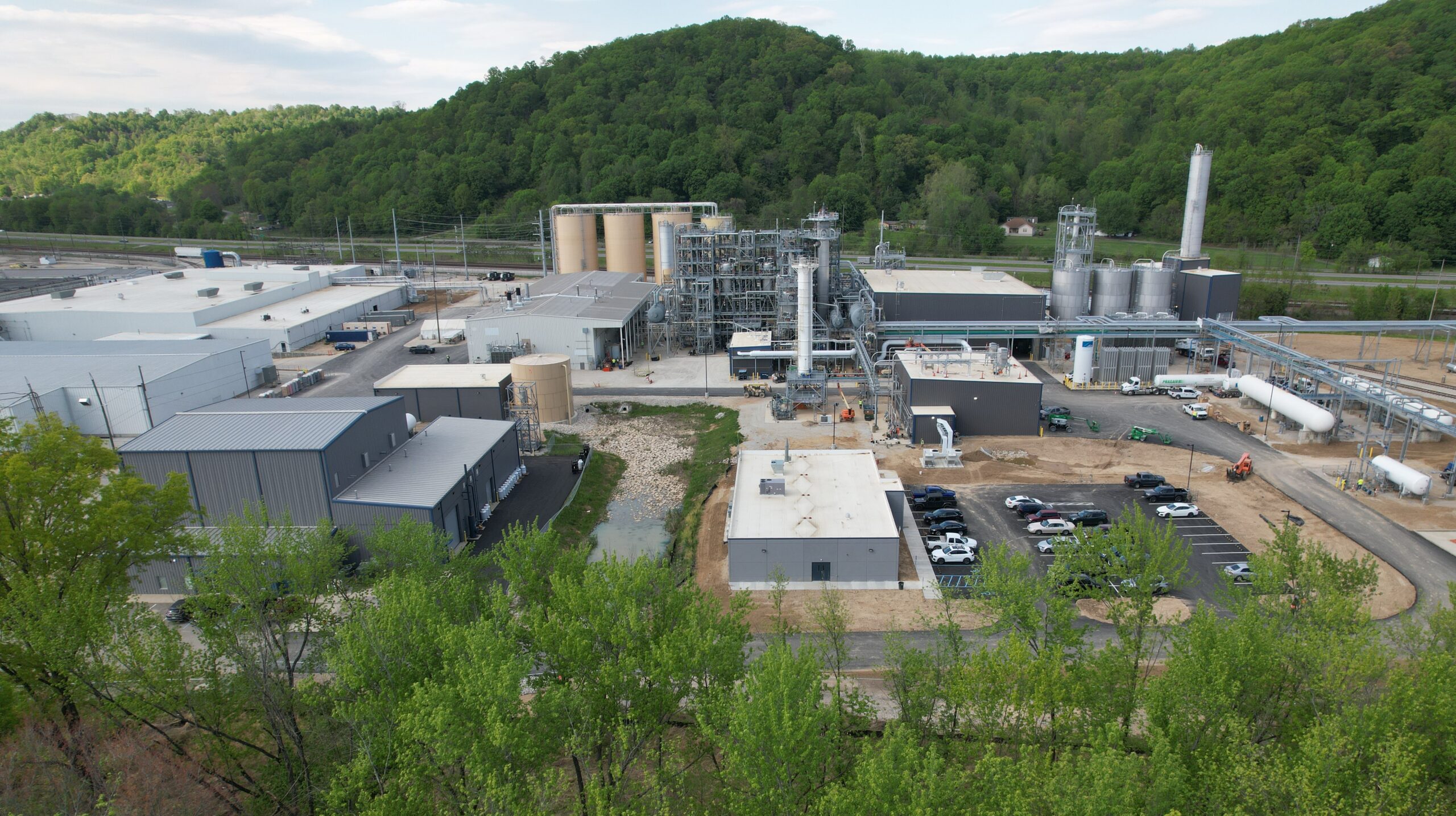
In Q4, the Ironton facility produced 7.5 million pounds, a quarterly record for production, and continues to improve its reliability, Olson said, adding that using insights gained from data on production runs, the company expects to continue progress toward nameplate capacity this year.
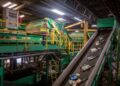
At its secondary sorting plant in Denver, Pennsylvania, PureCycle added a third shift, increasing production to 14 million pounds, higher by 44% on the quarter and by 35% on the year. Olson said the plant has improved the company’s feedstock flexibility and cost structure.
The company originally planned to buy inexpensive bales of mixed plastics, but in the process of understanding the requirements of the developing technology, wound up adding the Denver secondary sorting operation, to create its own feedstock more economically.
PureCycle is buying from more than 15 feedstock suppliers, and Olson said procurement costs have decreased by 6 cents/lb ($132/metric ton) over the past 12 months.
The plant will undergo planned maintenance for a month starting in mid-April, he said, adding that previous turnarounds have resulted in improved reliability, quality and uptime.
As such, Olson said, several of PureCycle’s largest potential buyers are moving toward multiyear supply agreements, “which is a direct reflection of the confidence that they have in our operating performance.”
Even so, PureCycle is leaving itself open with regards to contract flexibility, Olson said. “We don’t want to get baked into a long-term contract that could restrict us in the future. And so we’ll be able to optimize that over time,” he said, adding that traditionally PP contracts are negotiated annually.
The company reported $2.7 million of revenue in the fourth quarter, and is actively shipping to 11 customers, Olson said. Additional customers could be signed as early as this month, and one of those represents about 10 million pounds of demand.
EPR tailwinds
Olson applauded the evolving EPR landscape both domestically and in Europe, though he noted that progress in New Jersey has been slower than in other states.
New Jersey passed a law in 2022 requiring recycled content in plastic bottles and bags sold in the state, and lawmakers are considering EPR legislation for packaging this year. The regulatory uncertainty in one of the country’s most important states for manufacturing has delayed an estimated 15 million to 30 million pounds of demand for PureFive, and overall applications in New Jersey represent about 300 million pounds a year of demand, Olson said.
The company has worked with the state’s Department of Environmental Protection to determine how dissolution technology fits within the recycling framework, and this has delayed approvals, he said.
New Jersey has excluded chemically recycled resin from content mandates, which would not apply to PureCycle’s product, which does not change chemical structure during the recycling process.
In addition, PureCycle noted its resin had received PCR certification from the Association of Plastic Recyclers (APR), “which is the standard that most state regulators reference for recycled content compliance. That certification allows our material to be categorized as recycled content across numerous states, effectively clearing the regulatory path for brands to count on PureCycle material toward their mandated targets,” he said.
APR owns Resource Recycling, Inc., publisher of Plastics Recycling Update.
Competing with virgin resin
As PET recyclers continue to fail in the US and EU, Olson maintains that PureFive demand will continue to grow because the company has differentiated its characteristics from virgin resin as well as mechanically recycled polymers. In addition, he expects that as post-consumer plastic markets mature and collection rates improve, feedstock pricing will ease.
Olson also pointed to large high-value opportunities in stand-up pouches as well as film.
As consumer packaging preferences shift away from boxes, “brands are investing heavily in flexible packaging formats and our ability to produce food-grade recycled polypropylene film for pouches puts us right at the center of this trend.”
For the short term, PureCycle will focus primarily on closures and injection molded products. But as the second phase of compounding starts up, the company can better expand into new applications.
For the company’s BOPP (biaxially oriented polypropylene) resin, film and thermoform applications such as quick-service coffee cup lids are promising. In addition, 12 states have bans on single-use polystyrene, leading brands to look into PP as an alternative.
“Film and thermoforming have been very elusive for recyclers. This is very difficult to do, and it’s difficult to get the quality needed to make those projects,” he said.
Upcoming projects
In Rayong, Thailand, PureCycle expects to break ground for a new plant in the second half of 2026, and to complete the project in 2027. Southeast Asia has plentiful feedstock supply, Olson said, and PureCycle has signed letters of intent with nine regional suppliers, six of which are in Thailand.
The original assumption for an Asian plant was that product would be exported to North America and Europe, Olson said. “And while we still expect to directly export significant quantities, a strong dialogue is evolving with domestic packaging companies, including a major film producer that sees our material as a way to grow their export business as well as Fortune 100 CPGs with manufacturing operations in Thailand,” he added.
The project in Antwerp, Belgium, is expected to receive permits in H2 2026, with construction scheduled to begin by Q1 2027 and be mechanically complete by the end of 2028.
Progress on the company’s other US plant, planned for Augusta, Georgia, still hinges on refinement of the so-called Gen 2 dissolution recycling technology, which offers scaled-up production capacity from the current iteration.
Executives previously said the Georgia site would house the first of the larger capacity plants, but “where the first one goes, that’s open for discussion right now,” Olson said.
He indicated that availability of feedstock as well as options for integrated facilities – which require lower capital expenditures – made Thailand very attractive. The company also is working on a potential project in Japan with Mitsui.