The Association of Plastic Recyclers (APR), the American Forest & Paper Association (AF&PA) and other industry groups testified this week on the damaging effects of foreign overcapacity and argued for a “level playing field” for US industry.
In March, the US Trade Representative (USTR) initiated an investigation under Section 301 of the Trade Act of 1974, to determine whether foreign policies or practices hinder US trade. In particular, the action looks at structural excess capacity and production in manufacturing sectors.
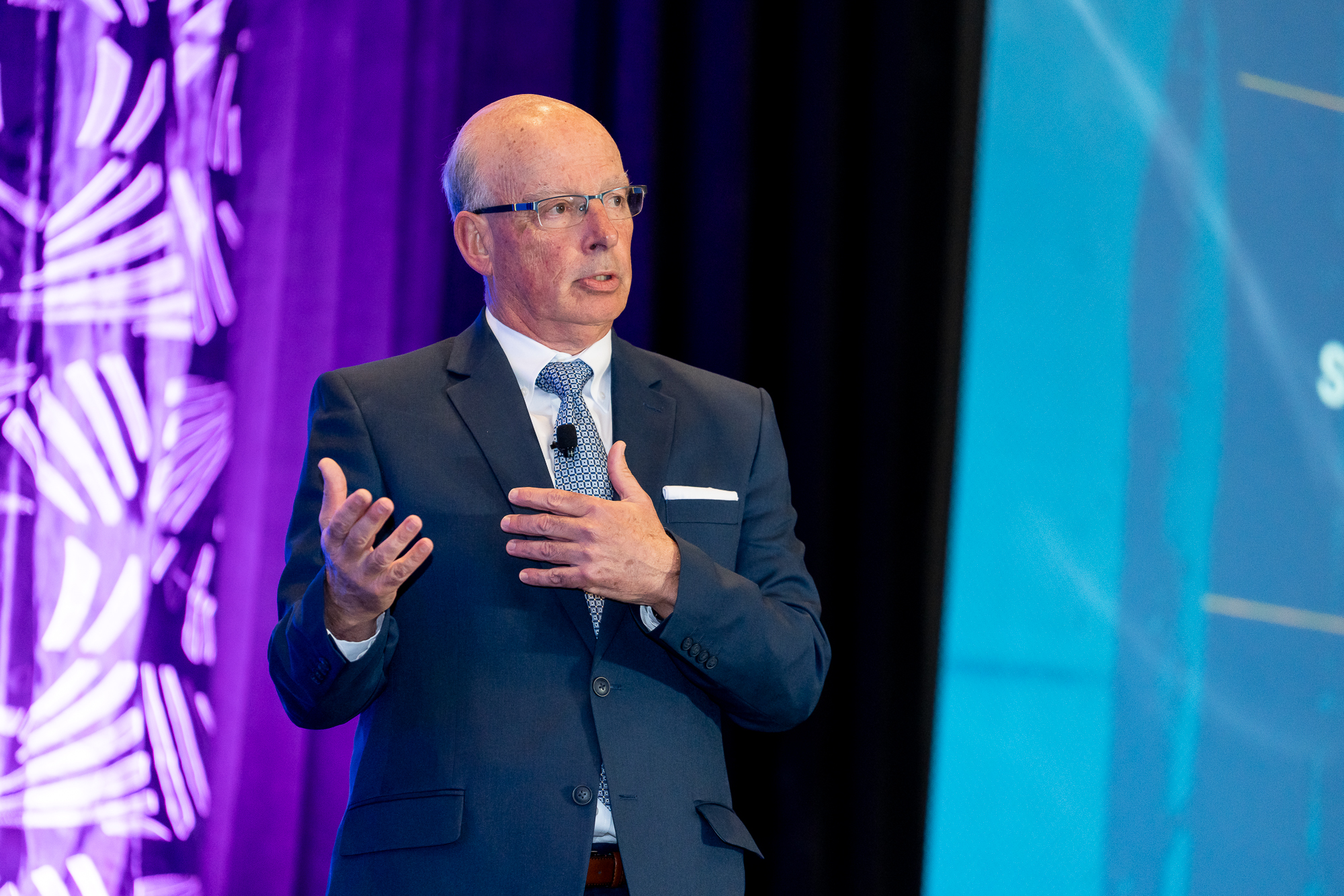
In testimony May 7, APR CEO Steve Alexander urged the USTR to act quickly and decisively to protect the domestic recycling industry. “The US PET recycling industry is at a breaking point,” he said. “Without timely intervention, we will continue to see plant closures, job losses, and the permanent loss of domestic recycling capacity.”
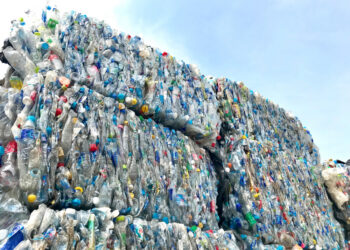
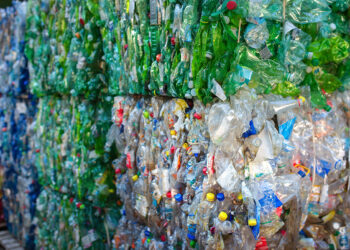
In his testimony, Alexander pointed to the closure of seven US PET recycling facilities in the past 15 months, including Alpek, rPlanet Earth, Evergreen and Phoenix Technologies – for a total loss of 600 million pounds or 25% of domestic PET washing, processing and recycling capacity.
“They closed not because of inefficiency, but because the market was distorted by a wave of low-priced imports that these facilities could not withstand,” he told the USTR.
Alexander called out a surge of imported PET from countries including Indonesia, Malaysia, Thailand, Korea, Vietnam, Taiwan, India and China. “These countries are not simply competing. They are flooding the US market with rapidly increasing volumes at sharply declining prices.”
Although Alexander acknowledged that Chinese PET shipments directly to the US have fluctuated, the country “continues to drive global overcapacity in virgin plastics at a scale that no market actor can absorb.” He added that China’s “role in generating global oversupply is well-documented and exerts downward pressure on prices worldwide.”
Between 2021 and 2025 – while China was starting up vast PET plants in part to increase self-reliance – PET imports from India to the US increased by more than 1,200%, he said, while prices fell by more than 60%. Over the same period, Indonesian imports rose by more than 1,125%, also at falling prices, and imports from Thailand increased by more than 2,278%. Volumes from Malaysia, Korea, Vietnam and Taiwan “all paint a similar picture.”
He continued, “When imports are artificially low-priced, domestic recyclers cannot compete on a level playing field, no matter how efficient they are.”
Additionally, Alexander pointed out that APR has requested to exclude PET imports from Mexico and Canada from any measure adopted to address oversupply. “The PET supply chain is integrated across North America, and trade barriers on these imports would needlessly disrupt established and productive supply chains.”
APR owns Resource Recycling, Inc., publisher of Resource Recycling.
Chemistry, forestry groups occupy middle ground
Representatives from the American Chemistry Council (ACC) and AF&PA took a more nuanced approach in addressing the USTR, recognizing the need for action to combat overcapacity while preserving access to raw materials, machinery and other value-chain essentials US industry relies on.
In May 5 testimony, Jason Bernstein, director of international trade and supply chain at the American Chemistry Council (ACC), urged adoption of a value‑chain approach that addresses the root causes of excess capacity and challenges US chemical and plastics producers face.
“Free and fair trade is fundamental to the competitiveness of the US chemical industry,” the ACC said in a statement. “American chemical manufacturers operate in highly integrated global value chains, exporting a significant share of their production while relying on imported raw materials, intermediates, and specialized equipment not produced domestically. Competitive access to international markets enables US producers to achieve scale, support continued investment, and supply downstream industries ranging from automotive and construction to pharmaceuticals, agriculture, and national defense.”
In May 7 testimony, David Ross, director of government affairs for the AF&PA, noted that stark trade remedies also could result in higher costs for necessary machinery. Such cost increases could delay mill modernization, reduce investment and weaken global competitiveness for US manufacturers.
“Trade policy shapes manufacturing decisions,” Ross said. “We support a fact‑based review of excess capacity, while avoiding measures that could put US jobs, investment or operations at risk.”
Additionally, he encouraged examining the potential for evading trade remedies via transshipment or downstream conversion.
Ross presented data showing large capacity expansions and rising exports that may not match market demand, including in China.
Among the dozens of stakeholders testifying during the first three days was PET producer Nan Ya Plastics USA, owned by the Taiwanese Formosa Corporation. Nan Ya operates PET and polyester fiber assets in Texas, Louisiana and South Carolina.
Other groups represented included the Can Manufacturers Institute and the Aluminum Association.
What’s next
In launching the probe, the USTR said countries or regions subject to investigation are China, the EU, Singapore, Switzerland, Norway, Indonesia, Malaysia, Cambodia, Thailand, Korea, Vietnam, Taiwan, Bangladesh, Mexico, Japan and India.
“The United States will no longer sacrifice its industrial base to other countries that may be exporting their problems with excess capacity and production to us,” said USTR Jamieson Greer in a March 11 announcement.
The office opened public comment March 17-April 15, and is holding public hearings May 5-8.
In the final panel on May 8, representatives from foreign governments will testify in their own defense, including Indonesia, India, Vietnam and Mexico.
Additional groups scheduled to testify May 8 include: International Bottled Water Association, National Waste & Recycling Association, Global Electronics Association and United Auto Workers.
If the USTR finds violations, the US president can authorize retaliatory measures such as tariffs on imports. The USTR intends to conduct the probe on an accelerated schedule, with a goal of being prepared to impose potential tariffs around July 24.