
Resource Recycling
  • The Latest
  • Analysis
    • All
    • Certification Scorecard
    • Industry Announcements
    • Opinion
    Re-Teck opens site in Southeast Asia

    ERI expands global footprint into Vietnam

    Michigan State Launches Center to Tackle Packaging Waste

    Inside the Circle: Put every package where it performs best

    SERI works to restore faith in certifications

    Building a defensible E-scrap evidence file

    EU flags in front of the European Commission's building.

    Europe’s electronics recovery market is moving upstream

    Maximizing the value of post-consumer PP 

    Maximizing the value of post-consumer PP 

    From claims to custody: PCR procurement grows up

    Certification Scorecard — Week of August 3, 2026

  • Conferences
    • Resource Recycling Conference
    • Plastics Recycling Conference
    • E-Scrap: The Longevity Conference
    • Textiles Recovery Summit
  • Publications
    • E-Scrap News
    • Plastics Recycling Update
    • Policy Now
    • Resource Recycling
    • Other Topics
      • All Topics
      • Brand Owners
      • Critical Minerals
      • Glass
      • Grant Watch / RFPs
      • Markets
      • Organics
      • Packaging
      • Research
      • Technology
      • Textiles
Subscribe
No Result
View All Result
Resource Recycling
  • The Latest
  • Analysis
    • All
    • Certification Scorecard
    • Industry Announcements
    • Opinion
    Re-Teck opens site in Southeast Asia

    ERI expands global footprint into Vietnam

    Michigan State Launches Center to Tackle Packaging Waste

    Inside the Circle: Put every package where it performs best

    SERI works to restore faith in certifications

    Building a defensible E-scrap evidence file

    EU flags in front of the European Commission's building.

    Europe’s electronics recovery market is moving upstream

    Maximizing the value of post-consumer PP 

    Maximizing the value of post-consumer PP 

    From claims to custody: PCR procurement grows up

    Certification Scorecard — Week of August 3, 2026

  • Conferences
    • Resource Recycling Conference
    • Plastics Recycling Conference
    • E-Scrap: The Longevity Conference
    • Textiles Recovery Summit
  • Publications
    • E-Scrap News
    • Plastics Recycling Update
    • Policy Now
    • Resource Recycling
    • Other Topics
      • All Topics
      • Brand Owners
      • Critical Minerals
      • Glass
      • Grant Watch / RFPs
      • Markets
      • Organics
      • Packaging
      • Research
      • Technology
      • Textiles
Subscribe
No Result
View All Result
Resource Recycling
No Result
View All Result
Home Plastics

Israeli startup to pilot PVC recycling in Ohio 

byKeith Loria
November 12, 2025
in Plastics
Israeli startup to pilot PVC recycling in Ohio 
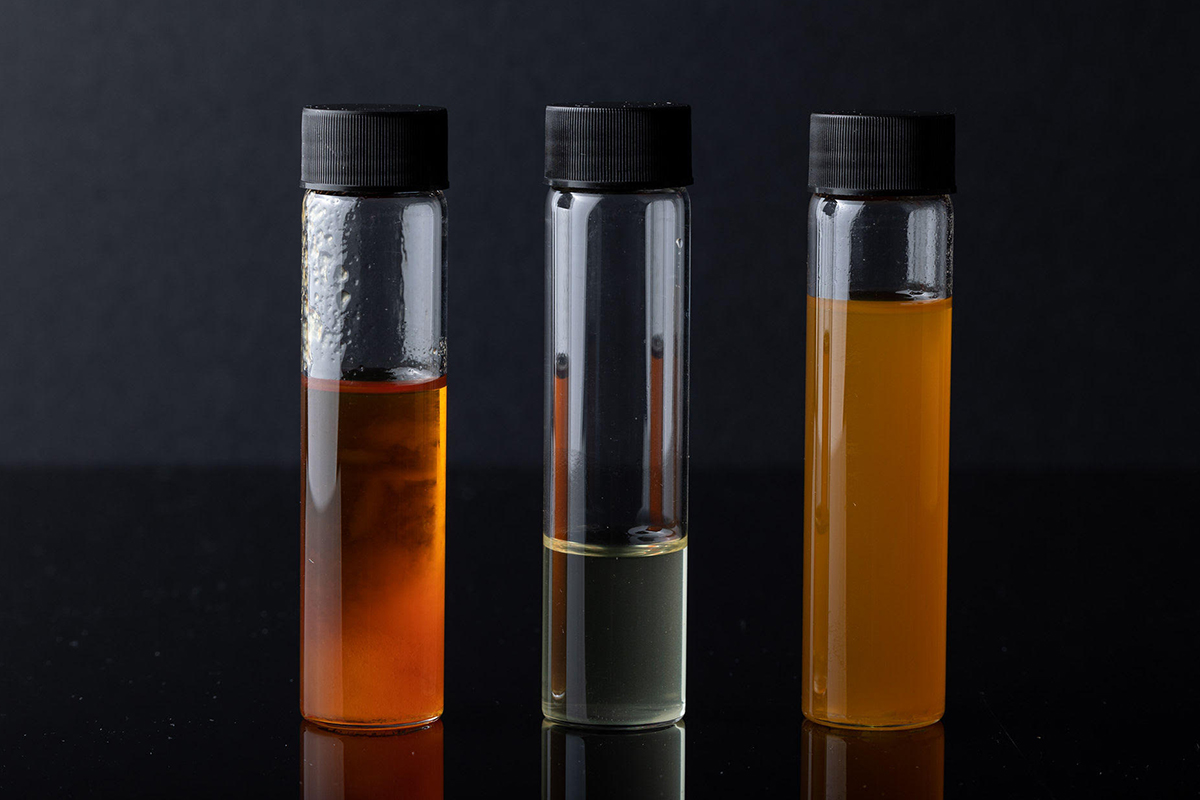
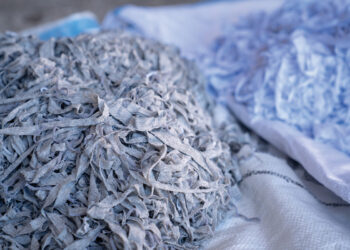
The Plastic Back process separates carbon and chlorine from discarded PVC, and the pilot plant will be sited at Freepoint Eco-Systems’ site in Hebron, Ohio. | Photo courtesy Plastic Back

Plastic Back, an Israeli startup, is taking a major step toward solving one of the toughest challenges in plastics recycling: recovering value from mixed plastic waste that includes PVC. 

The company has developed a low-temperature chemical process that can convert PVC waste into reusable raw materials, separating chlorine and carbon for reintegration into the chemical cycle. 

In partnership with chemical recycler Freepoint Eco-Systems, Plastic Back is launching a pilot project in Hebron, Ohio, to test its technology at scale. The initiative is supported by a $3 million US-Israeli BIRD Foundation grant and a Vinyl Institute VIABILITY grant aimed at advancing innovative recycling solutions.

“Before founding Plastic Back, I worked in venture capital, helping to invest in renewable energy startups such as wind and wave energy,” said Tal Cohen, co-founder and CEO of the company. “In 2021, I scouted Plastic Back’s technology at the Hebrew University of Jerusalem, and we established the company around that intellectual property.”

Plastic Back was founded, he noted, to find an economically viable, non-incineration way to reverse-engineer plastics back into their chemical building blocks. While chemical recycling has attracted huge attention across the industry, most common methods, including pyrolysis and gasification, require extremely high temperatures, sometimes above 1,000°C. 

These energy-intensive systems raise costs and carbon emissions, which may offset the environmental benefits. 

“Unlike traditional pyrolysis or gasification methods, our process uses a chemical de-chlorination and depolymerization solution that works under moderate conditions,” Cohen said. “That makes it both efficient and scalable.”

By operating at a fraction of the energy required by thermal processes, Plastic Back’s system promises lower emissions and smaller footprints, making it easier to deploy in regions where energy prices or carbon intensity are barriers to growth.

The company decided early in the process to focus on PVC.

“We identified PVC as a major opportunity,” Cohen said. “It’s the third most-produced polymer in the world—around 40 million tons annually—but can be challenging to recycle, especially when mixed with other plastics. The chlorine content can make it difficult for most existing recycling systems, both mechanical and chemical, to handle.”

PVC’s widespread use in construction, healthcare and packaging means it represents a huge waste stream and for decades, most post-consumer PVC has ended up in landfills or incinerators. That’s where Plastic Back believes it can make a difference. 

“Our process can handle waste streams containing up to 100 percent PVC,” Cohen said. “We dechlorinate and depolymerize the polymer, converting chlorine into a salt solution that can be reused in petrochemical applications, while the carbon backbone becomes a hydrocarbon similar to naphtha that can feed directly into steam crackers.”

Steam crackers use thermal processes to break down hydrocarbons such as naphtha and ethane into smaller molecules such as ethylene and propylene  – called monomers – which then are used to produce polymers and other chemicals. 

The company’s pilot project at Freepoint Eco-Systems’ facility in Hebron, Ohio, marks Plastic Back’s first US deployment and a significant validation of its model.

“We connected with Freepoint Eco-Systems about a year ago and quickly saw the synergy between our startup and their operational infrastructure,” Cohen said. 

The pilot is designed to treat approximately 50 tons of PVC waste in its first testing phase, serving as a proof of concept before scaling to commercial units. 

“We plan to scale commercial units capable of processing 15 to 30 kilotons per year,” Cohen said.

For feedstock, Plastic Back is casting a wide net, working with manufacturing, construction and medical PVC waste streams and testing each to understand how the process performs under different real-world conditions. By tapping both post-industrial and post-consumer sources, the company hopes to demonstrate flexibility across the full range of PVC waste types.

At the heart of Plastic Back’s system is a chemical oxidation process that both dechlorinates and depolymerizes the PVC. Cohen explained the chlorine is converted into a reusable sodium chloride solution, while the carbon chain is transformed into a hydrocarbon liquid similar to naphtha. Both outputs can be reintegrated into existing chemical infrastructure, closing the loop on circularity.

“The chlorine solution can be used again in petrochemical processes, and the hydrocarbon can be upcycled into steam crackers,” he said. “This makes our process compatible with existing downstream users, reducing the need for entirely new supply chains.”

Freepoint Eco-Systems, already a leader in advanced recycling infrastructure, provides an ideal partner for the pilot. Its Hebron facility, designed to handle up to 90,000 tons per year of waste, gives Plastic Back the industrial setting needed to test performance, yields and economics at meaningful scale.

Plastic Back is approaching the pilot with clear performance goals. 

“The main success metrics for the pilot will be producing outputs that integrate seamlessly into petrochemical infrastructure, treating PVC with minimal pretreatment, and demonstrating strong unit economics,” Cohen said. “Environmental performance is also central. Because our system operates at low temperatures and recycles nearly all of the process chemicals, our internal life-cycle analysis showed a negative CO₂ equivalent—an enormous achievement that underscores the environmental potential of this technology.”

If those metrics hold true under pilot conditions, the company’s technology could unlock a previously untapped market for PVC recovery, one that complements rather than competes with mechanical recycling.

Beyond the Ohio pilot, Plastic Back is already eyeing global opportunities. 

“Looking ahead, we see tremendous potential to expand in the US, Europe and Asia,” Cohen said. “Our goal is to deploy several units within five years in the US, reaching about 150 kilotons of PVC recycling capacity.”

With support from international grants and growing industrial interest, Cohen noted Plastic Back is positioned to help reshape how the world treats one of its most persistent waste streams. 

“Our goal is to turn the plastic waste crisis into an opportunity—transforming what was once waste into a valuable, circular resource.”
Tags: Chemical RecyclingPVC
TweetShare
Keith Loria

Keith Loria

Related Posts

PureCycle sees easing headwinds to R-PP adoption

PureCycle says H2 outlook already playing out 

byAntoinette Smith
August 13, 2026

The company said momentum is accelerating amid regulatory developments and the promise of a consistent, streamlined supply chain.

SCS launches chem recycling standard

SCS launches chem recycling standard

byAntoinette Smith
July 1, 2026

SCS Global Services now provides third-party verification of responsible non-mechanical recycling processes, in line with a new global standard.

Aduro, AstroTurf look at recycling feedstock 

Aduro, AstroTurf look at recycling feedstock 

byAntoinette Smith
June 30, 2026

The companies will explore preparing the polyolefin fraction for use as chemical recycling feedstock, focusing on recovery, disassembly of the...

Mass balance matters: Why different rules can lead to different outcomes 

Mass balance matters: Why different rules can lead to different outcomes 

bySarah Edwards, Eunomia
June 5, 2026

Mass balance is a critical piece of the recycling puzzle—and one that's important to get right.

Circular Materials to supply PlasCred chem recycling plant

Circular Materials to supply PlasCred chem recycling plant

byAntoinette Smith
June 4, 2026

The planned chemical recycling plant in Alberta, Canada, also has a five-year, fixed price offtake contract, ahead of reaching a...

BASF, Encina expand circular feedstock partnership

BASF, Encina expand circular feedstock partnership

byAntoinette Smith
June 3, 2026

In addition to a previous agreement for chemically recycled benzene, BASF will provide procurement strategy advice and planning for project...

Load More
Next Post

Certification Scorecard for November 12, 2025

2026 Buyers’ Guide

Equipment, services and technology suppliers serving the recycling industry.

Browse the Guide

More Posts

Ron Gonen

Bicameral Truth in Labeling Act introduced in Congress

August 10, 2026

Two pilot programs in CA recycle commercial film

August 10, 2026

New federal rule restricts black mass, tungsten scrap exports

August 5, 2026
A Republic Services truck picks up a recycling cart in Fort Collins, Colorado.

Fort Collins, CO builds a roadmap to zero waste

August 6, 2026
Sabic launches engineered plastic with 75% PCR

Sabic launches engineered plastic with 75% PCR

August 11, 2026
Alpek closing Pennsylvania RPET plant

Alpek seizing on war-related opportunity 

July 27, 2026
APR launches recyclability assessment platform

APR launches digital plastic evaluation tool

August 7, 2026
Europe’s recyclers miss most of the critical materials

Market surge expected for plastic from e-scrap

August 10, 2026
Republic Services waiting on fourth Polymer Center

Republic Services raises guidance as commodity prices climb

August 7, 2026
The most important decision in tire recycling happens before the shredder

Oregon wash hub looks to slash single-use plastic

August 4, 2026
Load More

About & Publications

About Us

Staff

Archive

Magazine

Work With Us

Advertise
Jobs
Contact
Terms and Privacy

Newsletter

Get the latest recycling news and analysis delivered to your inbox every week. Stay ahead on industry trends, policy updates, and insights from programs, processors, and innovators.

Subscribe

Welcome Back!

Login to your account below

Forgotten Password?

Retrieve your password

Please enter your username or email address to reset your password.

Log In

Add New Playlist

No Result
View All Result
  • The Latest
  • Analysis
  • Recycling
  • E-Scrap
  • Plastics
  • Policy Now
  • Conferences
    • E-Scrap Conference
    • Plastics Recycling Conference
    • Resource Recycling Conference
    • Textiles Recovery Summit
  • Magazine
  • About Us
  • Advertise
  • Archive
  • Jobs
  • Staff
Subscribe
This website uses cookies. By continuing to use this website you are giving consent to cookies being used. Visit our Privacy and Cookie Policy.