





Resource Recycling
  • The Latest
  • Podcast
  • Analysis
    • All
    • Certification Scorecard
    • Industry Announcements
    • Opinion
    Adam Gendell

    PET producers ride ‘local for local’ wave

    May pricing bullish for most bales

    HDPE resists seasonal, economic forces

    IT asset disposition and electronics recycling: Now and then

    Data center moratoriums cast development shadow

    Recycling tracking data is already on your truck

    Recycling tracking data is already on your truck

    A five star ranking with one under a microscope

    Certification scorecard — week of Nov. 9

    Data centers and AI combine to create ITAD ‘growth engine’

    Component shortages drive demand for data center hardware

  • Conferences
    • Resource Recycling Conference
    • Plastics Recycling Conference
    • E-Scrap: The Longevity Conference
    • Textiles Recovery Summit
  • Publications
    • E-Scrap News
    • Plastics Recycling Update
    • Policy Now
    • Resource Recycling
    • Other Topics
      • All Topics
      • Brand Owners
      • Critical Minerals
      • Glass
      • Grant Watch / RFPs
      • Markets
      • Organics
      • Packaging
      • Research
      • Technology
      • Textiles
Subscribe
No Result
View All Result
Resource Recycling
No Result
View All Result
Home Plastics

Producer program increases PVC recycling in Colombia

Antoinette SmithbyAntoinette Smith
June 4, 2025
in Plastics
Producer program increases PVC recycling in Colombia
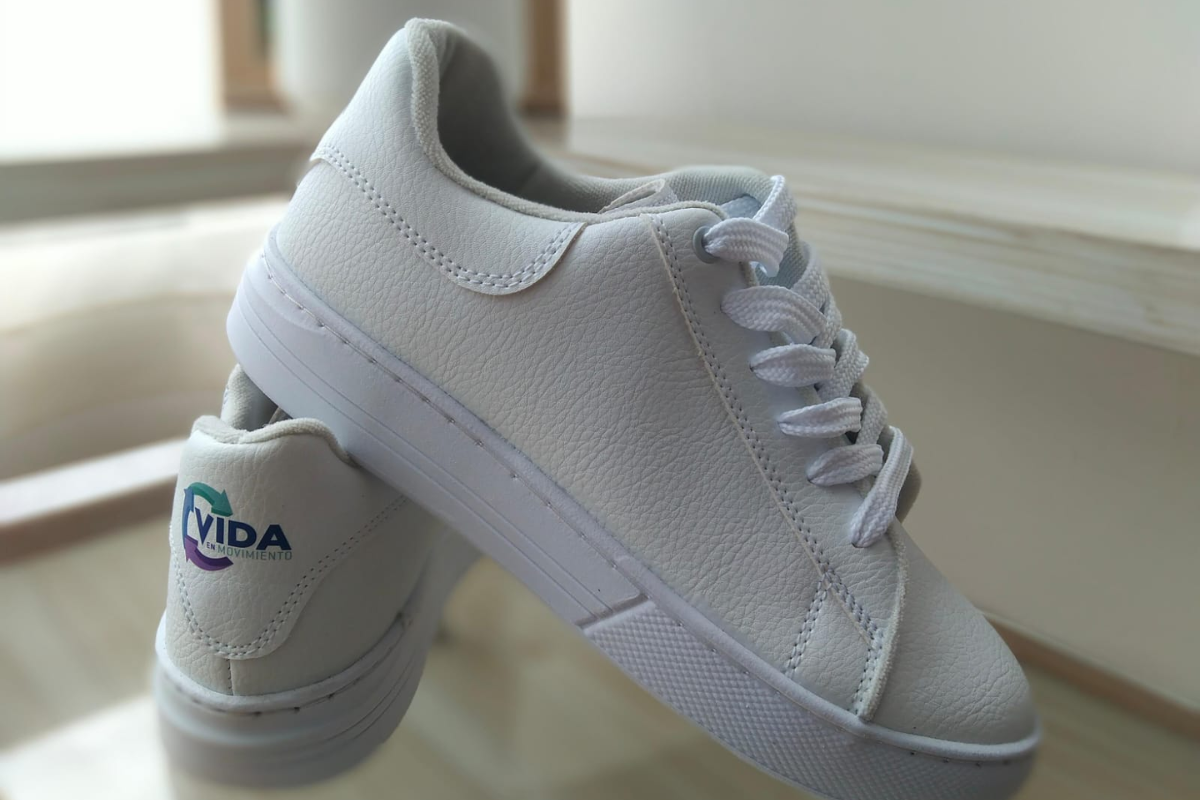
Health care workers can earn rewards for recycling IV bags, and redeem them for a pair of Vida sneakers made using recycled PVC | Photo Courtesy of Orbia

PVC and medical waste are both areas often considered to be non-starters for plastics recyclers. But global vinyl producer Orbia is expanding its program that incorporates both, as well as helping improve the standard of living for some of the most vulnerable people in the recycling system.

The company’s polymer solutions business, Vestolit, is scaling up its Vinyl in Motion program, which collects post-consumer and post-industrial PVC scrap and mechanically recycles it into products including shoes and sanitary pipes. In contrast with PET, PE and PP, which are commonly used in packaging, polyvinyl chloride is most commonly used in construction and other durable-goods applications. 

In addition, the chlorine that lends itself to the polymer’s name is a contaminant to other recycling streams, and the plasticizers used to make PVC flexible for use in tubing, flooring and more may contain phthalates and other contaminants of concern.

In 2024 Vinyl In Motion collected used PVC from 80 medical centers and 650 home dialysis patients in Colombia and two medical centers and 70 patients in Mexico. Orbia expects to double its recycled PVC production capacity this year, with a goal to expand into Mexico and Brazil, and is on track to expand collection and reuse to 90% of Colombia’s 2,500 healthcare facilities in the next five years, according to a company blog post. 

Training the workforce 

In contrast to the formal — if imperfect — collection system in the U.S., Latin American and Asian countries often have an informal recycling infrastructure, where workers called pickers sort through trash to find recyclable materials. Waste pickers are responsible for collecting an estimated 60% of the world’s plastics for recycling, according to a 2022 post from the World Economic Forum, and work in unsafe conditions with few or no worker protections. 

These workers live under the poverty line, Bogota-based Javier Perez, sustainability director at Vestolit, told Plastics Recycling Update. He added that the pickers are called recyclers in Spanish. “Most of them, they barely can make $2 a day picking waste.” In comparison, a living wage in Colombia is $804 per month as of August 2024, according to a report from the nonprofit Anker Research Institute. 

Mexican recycler PetStar runs a similarly focused program for PET, called MAIP, which in English translates as the Inclusive Collection Model.

In 2020, Orbia started working with Colombian pickers to create a program to not only improve PVC recycling rates but also to help improve their quality of life, Perez said. The company started by asking five families to focus solely on recycling PVC, he said, adding that Orbia refers to participants as families because often only one family member is available to work, and so the work benefits the entire household.  

“At the beginning, it was not that easy, because there is a misconception about PVC and recycling,” he said, noting that despite its chlorine content, PVC can be recycled several times without losing its physical integrity. The company started by training the workers on how to produce a high-quality volume of scrap material and provided the necessary equipment. In addition, Orbia provided working-capital grants as the workers transitioned into more formalized roles. 

“At the beginning, you need some money in order to survive, in order to pay the rent, in order to pay everyone,” he said.  

Educating producers 

Orbia also consulted its customers and those companies’ end users to educate them on how recycled resin could contribute to their sustainability goals, Perez said. As a prominent global PVC producer with plants in Colombia, Mexico, Germany and the U.S., Orbia already had a robust customer base to sell on the benefits of recycled PVC. 

These customers also produced post-consumer PVC scrap, so the company taught them how to sort the material at the disposal source. As an added incentive to encourage health care workers to recycle IV bags, Orbia offers a rewards program in which points can be redeemed for a pair of Vida sneakers made almost entirely from recycled PVC, Perez said. 

Of its four business segments, Orbia started with the construction and infrastructure customers for rigid PVC: sanitary pipes, electrical pipes and window frames. 

Next were hospitals and medical settings, which discard vast quantities of IV bags and tubing. About 25% of medical devices containing plastic are made with PVC, due to its durability and resistance to chemicals, according to industry association the Vinyl Institute. These items can be recycled if they haven’t come into contact with hazardous materials, Perez said. 

The automotive sector was next, with a focus on the artificial leather used in seating. Finally, Orbia addressed blister packaging for medications.

Among the first customers was Baxter International, a global maker of IV fluids. “They have a big share of IV bags in the health sector,” Perez said. 

Beyond the environmental benefits, another selling point for customers is that they avoid the cost of incinerating or landfilling the medical waste. 

With sister company Alphagary, Vestolit developed the Infinitude line of compounded resin that incorporated PCR. The two Orbia companies emphasized the quality of the compounds, aiming to change the perception that post-consumer material is cheap and poor-quality. 

Alphagary also has created a non-phthalate plasticizer using post-consumer PET beverage bottles. The primary chemical intermediate for PET is dimethyl terephthalate or, more commonly in North America, purified terephthalic acid, both of which can be used to make DOTP. In addition to vinyl plasticizer applications such as flooring, gloves and cable sleeving, DOTP can be used in paints and coatings. 

In its 2023 sustainability report, Orbia said that over a period of two years it had made more than 50 metric tons of DOTP using 27.6 metric tons of recycled PET at its Altamira site in Mexico. PVC compounds using the plasticizer were certified by medical-device testing company NAMSA for medical applications. 

Tennessee-based Eastman also has a line of plasticizers employing DMT produced using its methanolysis plant for processing PET scrap. 

Orbia also trained the recyclers on the economics and legal framework of managing a business, as well as best practices for safety, health and environment, Perez said. 

As the nation’s capital, Bogota has a population of more than 8 million, and Colombia is the third most populous Latin American country behind only Brazil and Mexico, according to World Bank data. 

“We started with five families around the whole country, and those families right now have turned into proper entrepreneurs,” Perez said. 

Tags: EPRPVC
TweetShare
Antoinette Smith

Antoinette Smith

Antoinette Smith has covered commodity plastics and supply chains for more than a decade, with a special focus on economic impacts and consumer behavior. She brings a balanced, thoughtful view to recycling stories, and isn't afraid to ask "why?" Contact Antoinette at antoinette@resource-recycling.com.

Related Stories

Goodwill eyes EPR revenue, starting with waste audit

byStefanie Valentic
November 12, 2026

Goodwill sustainability leaders say the nonprofit’s donation network could serve packaging and textile EPR programs, but they first need hard...

Produce packers face narrow exits under SB 54

byStefanie Valentic
November 11, 2026

Fiber, compostables, PCR and monomaterial films all come with tradeoffs for fresh produce, and no single swap will work across...

Textile EPR needs end markets, not just collection

Textile EPR needs end markets, not just collection

byStefanie Valentic
November 10, 2026

Reju CEO Patrik Frisk said textile EPR programs will fall short unless they also create demand for recycled material.

Inside the Circle: Will we lose our shirts over CA textile EPR?

Inside the Circle: Will we lose our shirts over CA textile EPR?

byBill Shireman
November 9, 2026

Some advocates have worked to block chemical recycling under the packaging law, but their strategy is going to backfire.

New CAA chief talks markets, industry support

New CAA chief talks markets, industry support

byAntoinette Smith
November 4, 2026

Interim CEO Jeff Meyers outlined the producer responsibility organization's strategy for navigating state EPR rollouts, building recycling markets and supporting...

Electronics recycling legislation evolves with devices

byStefanie Valentic
November 2, 2026

Wisconsin adds wearables, Oregon moves to a PRO model and Illinois and Hawaii broaden scope as states retool electronics EPR...

Load More
Next Post
Quebec implements EPR for agricultural plastics

Canadian ag recycling sees continued success

2026 Buyers’ Guide

Equipment, services and technology suppliers serving the recycling industry.

Browse the Guide

More Posts

PureCycle sees easing headwinds to R-PP adoption

PureCycle shifts focus, secures feedstock

November 5, 2026
NexPoint Materials to shutter Alabama plastics plant

NexPoint Materials to shutter Alabama plastics plant

November 4, 2026
PET bottles for recycling

PET imports reshape US markets as demand grows

November 11, 2026
Textile EPR needs end markets, not just collection

Textile EPR needs end markets, not just collection

November 10, 2026
Artificial intelligence is altering the marketplace for ITAD providers in numerous ways. | Shutterstock

AI alters ITAD economics

November 3, 2026
The missing link in e-plastic recycling

The missing link in e-plastic recycling

October 28, 2026
Inside the Circle: Will we lose our shirts over CA textile EPR?

Inside the Circle: Will we lose our shirts over CA textile EPR?

November 9, 2026
Modern Mining raises $40 million in IPO

Modern Mining raises $40 million in IPO

November 12, 2026
IT asset disposition and electronics recycling: Now and then

Data center moratoriums cast development shadow

November 12, 2026

Produce packers face narrow exits under SB 54

November 11, 2026
Load More

About & Publications

About Us

Staff
Job Listings

Archive

Magazines

Work With Us

Advertise
Contact
Terms and Privacy

Newsletters

Get the latest recycling news and analysis delivered to your inbox every week. Stay ahead on industry trends, policy updates, and insights from programs, processors, and innovators.

Subscribe

Welcome Back!

Login to your account below

Forgotten Password?

Retrieve your password

Please enter your username or email address to reset your password.

Log In

Add New Playlist

No Result
View All Result
  • The Latest
  • Podcast
  • Analysis
  • Recycling
  • E-Scrap
  • Plastics
  • Policy Now
  • Conferences
    • E-Scrap Conference
    • Plastics Recycling Conference
    • Resource Recycling Conference
    • Textiles Recovery Summit
  • Magazines – Old
  • About Us
  • Advertise
  • Archive
  • Job Listings
  • Staff
Subscribe
This website uses cookies. By continuing to use this website you are giving consent to cookies being used. Visit our Privacy and Cookie Policy.