





Update: Most of the new tariffs on imports from both Mexico and Canada were paused until April 2, following executive orders President Donald Trump signed on March 6.
The Recycled Materials Association warned of potential “severe” disruption to the materials recovery sector after tariffs targeting the U.S.’s largest trading partners took effect March 4, bringing higher costs to import nearly all goods, including recycled commodities.
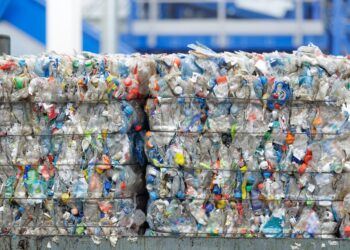
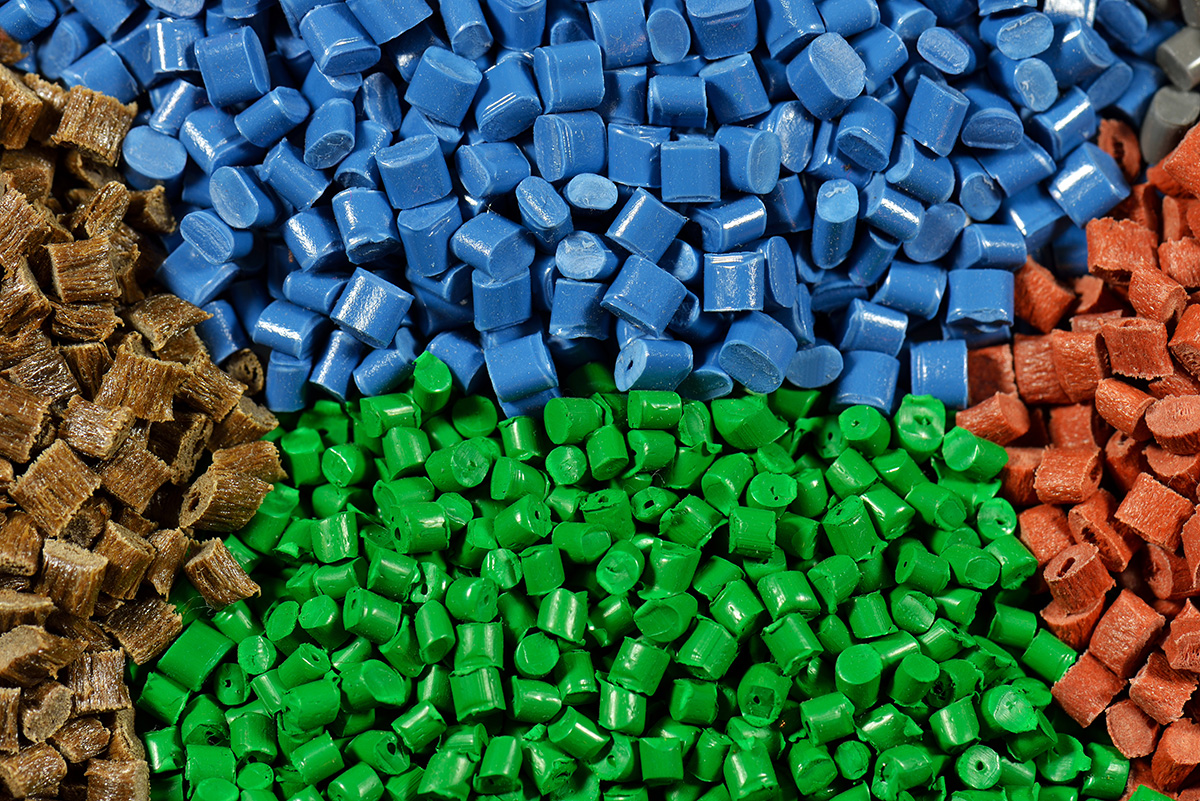
Baled scrap plastic, flake and recycled plastic pellets are all subject to the import duties, as are virtually all other goods brought into the U.S. from both neighboring countries.
President Donald Trump first outlined the 25% tariffs in a pair of Feb. 1 executive orders, framing them as a response to drug trafficking and border security problems. They were quickly paused for one month after deals were reached with the governments of Canada and Mexico. During a press conference March 3, Trump told reporters there was “no room left” for further deals to be made with Canada and Mexico.
After the measures took effect early Tuesday morning, Canada responded immediately with tariffs on 30 billion Canadian dollars ($21 billion) of U.S. exports to Canada beginning March 4, echoing the country’s response before the tariffs were delayed in February. Those responsive tariffs are set to increase later this month if the U.S. action continues.
In a news conference, Canadian Prime Minister Justin Trudeau added that he is talking with provincial governments about “several non-tariff measures, measures which will demonstrate that there are no winners in a trade war.”
Additionally, in a March 3 executive order Trump also doubled the recently enacted 10% tariff on Chinese imports to 20%. Trump has framed the tariff as a response to the flow of fentanyl and other drugs from China into the U.S., and the new executive order says the country has “not taken adequate steps to alleviate the illicit drug crisis through cooperative enforcement actions.”
The move drew immediate retaliatory tariffs from China, whose foreign ministry on March 4Â issued a harsh rebuke during a press conference: “If war is what the U.S. wants, be it a tariff war, a trade war or any other type of war, we’re ready to fight till the end.”
Industry braces for ‘severe’ disruption
In a March 4 interview, Adam Shaffer, assistant vice president for international trade and global affairs at ReMA, said the industry group is concerned there could be “significant, severe disruptions” from the tariffs.
With all commodities taken into account, the U.S. remains a net exporter of recycled materials. But it still imports substantial volumes of specific commodities: In 2024, the U.S. imported 393 million pounds of scrap plastic, primarily PET and mixed plastics, from Canada, and 158 million pounds of scrap plastic from Mexico, according to the U.S. Census Bureau’s trade statistics.
Outside the plastics space, the U.S. imported 112,000 short tons of aluminum beverage cans from Canada and 442,000 tons of scrap aluminum altogether, according to the trade figures, and 66,000 short tons of used beverage cans and 226,000 short tons of scrap aluminum from Mexico.
Additionally, the U.S. imported just over 1 million short tons of recovered paper from Canada, primarily corrugated cardboard and mixed paper, and, according to the trade figures.
“It’s a very integrated market,” Shaffer said. “The business model has long been North America-based.”
ReMA and other recycling trade associations, including the Bureau of International Recycling, have longstanding positions opposing trade barriers. “Generally, there is the expectation that any tariffs will reduce trade, one way or the other,” Shaffer said, adding less trade is likely to lead to less investment by recycling companies.
The Canadian Association of Recycling Industries, which represents companies across the recycling sector, said the tariffs will have “serious economic consequences as we’ve been communicating, including for our recycled materials industry, an industry which does not in any way cause a national security threat.”
“These punitive economic measures will hurt the recycled materials and manufacturing industries, as well as other key sectors, which are deeply integrated with the U.S. market, and weaken economic ties that have benefited both nations for decades,” the organization wrote in a statement.
So far, the blanket import tariffs on Canada, Mexico and China appear to be the only measures directly affecting recycled commodities: The retaliatory actions by Canada and China have targeted specific commodity types, like food and agricultural goods. But the more trade barriers go up, the more likely that U.S. exports of recycled commodities get caught up in the fray, as they did during the U.S.-China trade war of 2018 and 2019.
The new trade acrimony in North America undoes some key provisions of the U.S.-Mexico-Canada Agreement, the free trade agreement negotiated during the first Trump term. The agreement, which was strongly supported by ReMA, established tariff schedules that set duties for almost all goods, including recycled commodities, at 0% for all three countries.
“Broadly speaking, these tariffs will go fully against the USMCA,” Shaffer said.
Companies weigh in
Some companies, including major material haulers, are taking a tempered view of the tariffs, especially given the amount of macroeconomic turmoil that has accompanied the past five years.
“Listen, we’ve lived through a pandemic and high inflation and war at the shore of Europe and other elements,” said Jon Vander Ark, CEO of hauler Republic Services, in a call with investors on Feb. 13. “So a macro slowdown in the economy, what happens with tariffs and impact on inflation, none of those things I would say keep us up at night.”
The fact the tariffs are coming on the heels of major pressures like high inflation and elevated interest rates is leading some businesses to anticipate a muted impact, other than costs being higher. For example, equipment supplier Kadant, which outfits paper mills and other industrial facilities, has seen slower sales activity for the last few years. Company leaders say customers are likely waiting for some stability.
But “you can’t delay investing in your business forever,” CEO Jeff Powell said on Feb. 13. “At some point, we know we’ve been in this down cycle for two years now on the capital side, and history tells us that essentially another buying cycle is going to occur.”
That attitude, and its “wait-and-see” relatives, has come up on numerous company earnings reports of late. In some cases, company representatives voice that things are changing, being announced and canceled, too rapidly to make educated forecasts. Mill operator Cascades, for example, recently declined to provide a detailed financial forecast for the year, citing the high level of uncertainty.
“Nobody can predict what’s going to happen with tariffs,” said Gary Nagle, CEO of Glencore, a Canadian smelter operator and major consumer of circuit boards from e-scrap. “Nobody knows. You wake up tomorrow morning, there is a tariff, there isn’t a tariff. Is it 10%? Is it 60%? Who knows?”
Metal tariffs drive highlight plastic opportunity
The blanket tariffs on Canada and Mexico are separate from 25% aluminum and steel tariffs the White House will implement in mid-March, covering all countries. The combined policies suggest aluminum that moves from Canada into the U.S. will be uniquely disadvantaged compared with aluminum sent to the U.S. from other countries.
The metal tariffs are being closely monitored by material producers in other sectors, particularly in the plastics space. Resin giant Indorama, for example, highlighted the tariffs during a Feb. 28 earnings call, calling attention to the fact they apply to all nations, including countries that have free trade agreements with the U.S.
“Based on some of the comments made by large brand owners, we expect some type of pivoting, shifting of demand, if it continues, to PET from aluminum,” said Muthukumar Paramasivam, president and co-leader of the company’s PET segment. “So we will continue to monitor that and see what we need to do to take benefit from that.”
DK Agarwal, deputy group CEO at Indorama, added that aluminum cans currently hold about 50% of the carbonated soft drink market, highlighting the amount of business to be captured if brands shift towards plastic.
“Let’s keep our fingers crossed,” Agarwal said.