




Even as the U.S. Southeast continues to clean up after Hurricane Helene, the western coast of Florida is bracing for Milton, which is expected to be the second category 5 storm in less than two weeks to hit the area.
In addition to the storms, a short-lived dockworker strike caused backlogs for container ships at ports in the Southeast and Gulf coast.
Much of the PET industry is concentrated in Alabama, Georgia and the Carolinas. Companies throughout the value chain have plants in the region, including Mohawk Industries, Unifi and Shaw in carpet fiber and textiles; Coca-Cola for beverage bottling; and Alpek/DAK Americas, AlphaPet/Indorama Ventures, PolyQuest and Verdeco in both recycled and virgin resin production.
In addition, major recycled HDPE and PP player KW Plastics is in southeastern Alabama, and LDPE film bales are frequently exported from the region to Asia.
Florida readies for second massive storm in 11 days
Hurricane Milton was expected to make landfall on the western coast of Florida on the evening of Oct. 9, only days after Hurricane Helene hit the same area Sept. 26-27. Helene knocked out power and left a path of destruction from northwestern Florida throughout the Appalachian Mountain region.
And although Florida does not have much recycled PET production, the state is a significant generator of post-consumer bottles, due to the large population, warm weather and robust tourism industry.
During a natural disaster, restoring basic services such as power and water treatment understandably takes priority over trash and recycling collection. And when collection resumes, haulers may prioritize debris removal over curbside recycling.
Hauler Republic Services said in an emailed statement, “Our teams in North Carolina have been working tirelessly to resume service to our customers. Since Sept. 30, we have been running recycling and waste routes in the impacted areas. We continually assess our ability to safely run our operations and are resuming collection where safely able to do so.”
“The work being done by our solid waste and resource management professionals continues to demonstrate the indispensable contributions to our society,” said Amy Lestition Burke, executive director and CEO of the Solid Waste Association of North America, in an emailed statement. “These individuals are spending time away from their families to ensure their local communities are cleaner and healthier as they prepare for the next incoming storm. I am extremely proud of the contributions being made and know that our society echoes that appreciation.”
SWANA also maintains a database of natural disaster resources for waste industry professionals.
Impact to RPET market
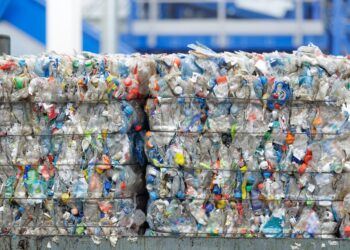
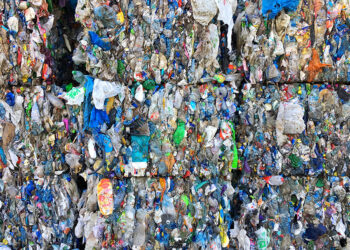
In addition to interruptions in waste hauling services, the lack of clean drinking water results in a significant increase in post-consumer PET bottles, which may or may not find their way into the recycling stream.
“I think recycling would be the lowest priority of people who are receiving that emergency water,” said Emily Friedman, senior editor of recycled plastics at commodity price reporting agency ICIS.
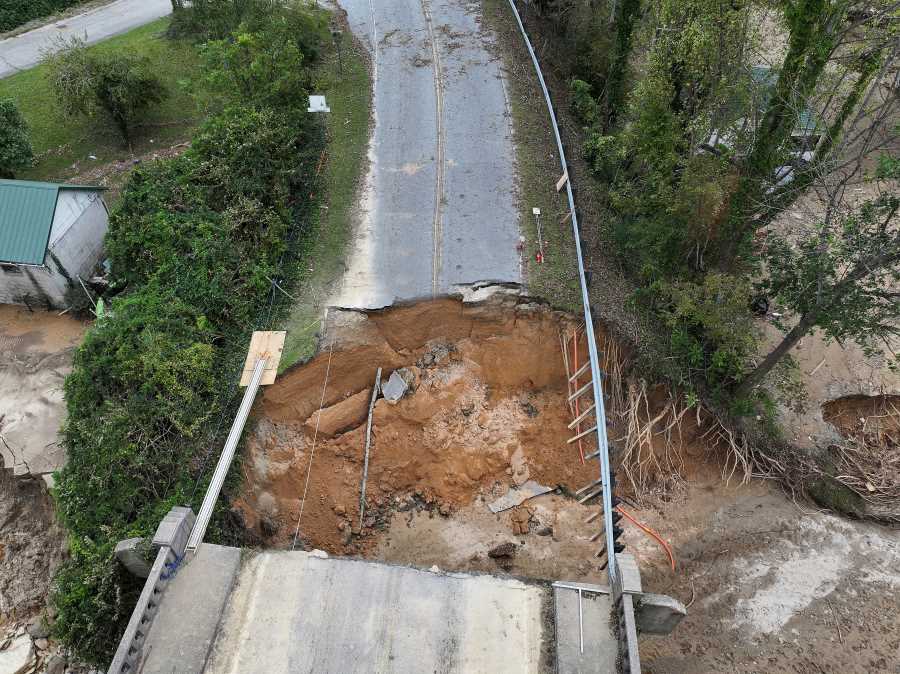
Logistics continue to be complex due to damage from Helene, said Chris Goger, senior director of recycling at New Jersey-based brokerage BlackBridge Investments, with washed-out roads and flooding making regional transport difficult.
Storm damage occurred throughout eastern Tennessee, and most severely in western North Carolina.
“Long-term closures will be in place across the region as many routes will require significant repairs and for others, a total rebuild,” the Tennessee Department of Transportation said on its hurricane recovery page as of Oct. 8.
In Tennessee’s hard-hit neighbor state, “all roads in Western North Carolina should be considered closed,” according to the North Carolina DOT, adding that the area is experiencing shortages of water, food and gasoline and unreliable power and communication infrastructure.
“Recovery efforts will likely take many months as damage to many roads and bridges is catastrophic,” the agency said in an Oct. 4 recap.
And although most plants in the region were only mildly affected by brief power outages, with fall being a slower season for the RPET market, some could use this as an opportunity to idle their plants, Friedman said.
Among storm relief efforts are a clothing drive held by Tennessee-based Eastman and Goodwill, and a $100,000 donation from the ILA.
For more information on how to help hurricane relief efforts, visit the Federal Emergency Management Agency website.
Port strike highlights supply chain weaknesses
On top of the two hurricanes, the weeks leading up to a three-day dockworker strike highlighted the potential impact of a prolonged work stoppage, Goger said.
“Everyone was confident it was going to happen,” he said. “It was just a matter of how long it was going to last.”
The three-day strike prevented unloading of container ships along the eastern seaboard and the Gulf coast, before the International Longshoremen’s Association workers’ union and port operators reached a tentative deal that suspended the strike. In a joint statement the two groups said they would extend their master contract until Jan. 15, 2025, to return to the bargaining table to negotiate all outstanding issues.
The strike caused apprehension among PET recyclers on the East Coast, Friedman said. Some converters import competitively priced RPET flake and as such could be limited to domestic supply, which she said would increase demand pressure and potentially increase prices.
Conversely, lower-quality recovered LDPE film is often exported to India and Southeast Asia, where workers sort through the bales to create higher quality PCR that then is processed and distributed throughout Asia – often to China’s massive plastics industry.
“I think there is a little bit of fear from those players who do trade internationally, what are they going to do with this material,” she said, adding that among sellers of lower-quality post-use LDPE film, there was concern they couldn’t get the bales to buyers.
Another knock-on effect is that with domestic virgin PE largely exported, a dockworker strike would force more resin to remain stateside, pushing prices down and making recycled HDPE less attractive, Friedman said.
Nevertheless, significant disruptions can present opportunities for both suppliers and buyers to explore the benefits of long-term contract stability, Goger said.
Contractual arrangements help ensure supply security and limit exposure to pricing risk, whereas spot volumes may go to the highest bidder to maximize profit.
The strike was not the first major event to emphasize the risk involved in overreliance on distant trading partners. Supply chain disruptions during the COVID-19 pandemic and trade wars with China both caused corporate America to focus on nearshoring, or creating supply chain networks closer to domestic demand – for example, locating plants in Latin America rather than in Asia.
A version of this story appeared in Resource Recycling News on Oct. 8.