
Resource Recycling
  • The Latest
  • Analysis
    • All
    • Certification Scorecard
    • Industry Announcements
    • Opinion
    Alpek closing Pennsylvania RPET plant

    Alpek seizing on war-related opportunity 

    Our top stories from March 2023

    Iron Mountain’s data center report: Strong on power, quiet on hardware

    Dow touts US PE advantage amid Iran war

    Dow bullish on August PE pricing

    Certification Scorecard — Week of July 20, 2026

    Amazon plastic use flat despite shift to paper

    Amazon plastic use flat despite shift to paper

    Rare earth processor lands $5.1M in Defense funds

    ERI, Cyclic Materials team up on e-scrap

  • Conferences
    • Resource Recycling Conference
    • Plastics Recycling Conference
    • E-Scrap: The Longevity Conference
    • Textiles Recovery Summit
  • Publications
    • E-Scrap News
    • Plastics Recycling Update
    • Policy Now
    • Resource Recycling
    • Other Topics
      • All Topics
      • Brand Owners
      • Critical Minerals
      • Glass
      • Grant Watch / RFPs
      • Markets
      • Organics
      • Packaging
      • Research
      • Technology
      • Textiles
Subscribe
No Result
View All Result
Resource Recycling
  • The Latest
  • Analysis
    • All
    • Certification Scorecard
    • Industry Announcements
    • Opinion
    Alpek closing Pennsylvania RPET plant

    Alpek seizing on war-related opportunity 

    Our top stories from March 2023

    Iron Mountain’s data center report: Strong on power, quiet on hardware

    Dow touts US PE advantage amid Iran war

    Dow bullish on August PE pricing

    Certification Scorecard — Week of July 20, 2026

    Amazon plastic use flat despite shift to paper

    Amazon plastic use flat despite shift to paper

    Rare earth processor lands $5.1M in Defense funds

    ERI, Cyclic Materials team up on e-scrap

  • Conferences
    • Resource Recycling Conference
    • Plastics Recycling Conference
    • E-Scrap: The Longevity Conference
    • Textiles Recovery Summit
  • Publications
    • E-Scrap News
    • Plastics Recycling Update
    • Policy Now
    • Resource Recycling
    • Other Topics
      • All Topics
      • Brand Owners
      • Critical Minerals
      • Glass
      • Grant Watch / RFPs
      • Markets
      • Organics
      • Packaging
      • Research
      • Technology
      • Textiles
Subscribe
No Result
View All Result
Resource Recycling
No Result
View All Result
Home Policy Now

Building the infrastructure behind EPR

Stefanie ValenticbyStefanie Valentic
July 6, 2026
in Policy Now, Recycling
EPR fees are a market signal. Here’s what they’re telling you.

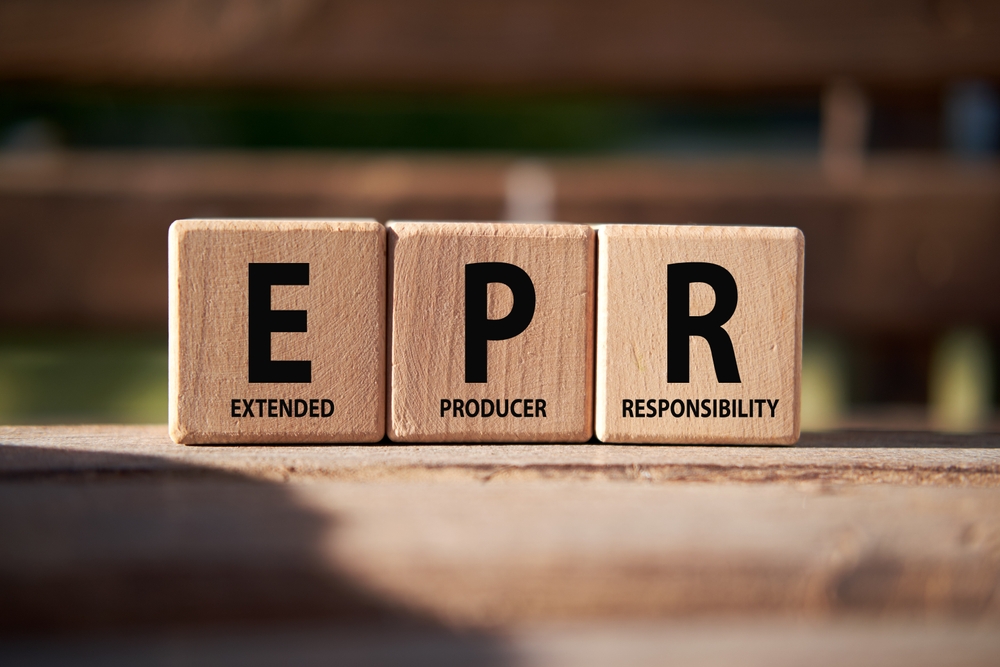
Cagkan Sayin / Shutterstock

Editor’s note: For a deeper look at how CAA grew from a startup with zero employees to the backbone of US packaging EPR policy, read our full feature in the upcoming print edition of Resource Recycling. 

The Circular Action Alliance (CAA) didn’t have a blueprint.

When the producer responsibility organization (PRO) formally incorporated as a 501(c)3 nonprofit in December 2022, no comparable entity existed in the United States. Paper and packaging EPR was new territory, and the infrastructure to implement it was being built from scratch by people who, in many cases, had to be found in Canada and Europe because the domestic expertise didn’t exist yet.

CAA relied on consultants in the beginning, making its first full hire in April of 2024. Since then, the organization has ballooned to 170 employees, with active programs in Oregon, Colorado and California and reporting deadlines that rolled through Minnesota, Washington and Maryland on May 31, 2026. More states are on the lineup.

As the organization scales, so does the persistent question of what CAA actually is, and its role in the ecosystem of extended producer responsibility (EPR) legislation.

Can we build it?

The confusion is understandable. CAA sits at the intersection of being a nonprofit, compliance vehicle and the only multi-state producer responsibility organization in the United States.

Jeff Fielkow, CAA’s CEO, offers the clearest definition: “We take the law, and we build a plan that will help producers to achieve compliance under that law.”

Role distinction matters. CAA does not set EPR targets. It does not lobby for new legislation. It does not issue penalties. The states enforce while CAA implements. When a producer violates compliance requirements, enforcement falls to state agencies, not CAA.

“People say, ‘Well, are you part of the government, or can you enforce a penalty on me?’ ” he said. “That’s not our role. We’re building. We support the producers.”

Fielkow describes it as putting on a construction hat, alluding to “Bob the Builder,” a popular US children’s series. Legislators write the statute, regulators write the rules and CAA builds the program plan that translates both into operational reality.

Authority song

Critics including environmental groups have been challenging California’s SB 54 framework and argue that CAA holds too much authority over fee-setting with insufficient public accountability. The organization disputes that characterization directly.

“We’ve been transparent. We continue to be transparent. We will always be transparent,” Fielkow said. “Everything we’ve ever done — when we build a program plan or an idea — we take it to public consultation. We’ve had thousands of people on our webinars. We post our documents publicly. We take feedback from interested parties all the time, and we make those changes. There’s never been anything done in a secretive manner.”

On fee-setting specifically, Fielkow said the biggest driver of cost for producers isn’t CAA’s methodology, it’s noncompliance.

Producers who don’t register push up costs for those who do, he said. “If the three of us went out and bought a pizza and one of us didn’t pay the bill, my bill’s high. But if we split the bill equally, it’s reasonable for everybody,” he said.

CAA’s program plans are public documents that require state approval before taking effect. The organization is also required by law to publicly report which producers have registered with CAA. Enforcement authority stops there.

No slowing down

The compliance picture is constantly moving. May 31 reporting deadlines passed for Minnesota, Washington and Maryland, designed to establish baselines for eventual fee calculations. Oregon is operating in its second year of full implementation. Colorado launched recently. California’s 2027 implementation is already driving rapid internal scaling at CAA.

Washington and Maryland remain in the emerging-state category, still finalizing regulatory frameworks. Maine is in the process of selecting a PRO. CAA is already drafting an early version of Maryland’s program plan, even though the state doesn’t go live until July 2028.

“There’s no slowing down here,” Fielkow said. “There’s always something we’re building, and there’s always something we’re implementing, and there’s always something we’re operating.”

Fielkow acknowledged that producer compliance across multiple states is one of the steeper learning curves CAA is managing. The organization’s approach is a unified portal that allows producers registered in one state to add coverage in additional states by clicking through a state-specific agreement without starting over.

Producers who need help locating their own data, such as tracing packaging materials through supply chains, are directed to third-party consultants rather than CAA. The organization’s role is limited to making it easy to upload and report data once producers have it, Fielkow said.

The road ahead

CAA’s position on future policy is cemented in implementation. The organization does not advocate for EPR in states that haven’t passed laws. It won’t form a position on what “good” EPR looks like in a legislative context.

“We are not a lobbying firm that goes to states that don’t have law,” Fielkow said. “We’ll provide purely facts if somebody asks what good EPR looks like, but that’s it.”

For now, the organization is focused on deepening implementation in existing states, building toward California’s complex 2027 launch and developing the internal competency to stand up new state programs without starting from zero each time.

“Starting the first state was probably still easier than starting the third state, which is California,” Fielkow said. “But starting states four, five and six will be relatively easy, because we already know how to build program plans.”


Tags: EPRLegislation & EnforcementPolicy Now
TweetShare
Stefanie Valentic

Stefanie Valentic

Stefanie Valentic is an award-winning journalist who has covered the waste and recycling industry for more than five years. Throughout her career, she has led editorial teams and served as a keynote speaker, moderator and panelist at numerous trade shows and conferences.

Related Posts

U.S. Capitol building in Washington, D.C.

House committees advance critical mineral bills

byPaul Lane
July 27, 2026

Congressional votes earlier this month advanced three bills that would expand the nation’s critical mineral recycling capabilities. A subcommittee within...

A call to action: End markets and EPR

EPR faces several key questions

byBrian Clark Howard
July 23, 2026

Panelists discuss the promise and perils of EPR nationwide at the PROP conference in Pennsylvania.

RecyClass hits 500 EU recyclability evals

RecyClass hits 500 EU recyclability evals

byAntoinette Smith
July 21, 2026

The most recent evaluations include Avery Dennison's RFID tag for PET bottles, ahead of the first PPWR enforcement in mid-August.

Former president of CRT processor sentenced to prison

Groups say injunction doesn’t settle labeling issues

byStefanie Valentic
July 17, 2026

Californians Against Waste and the National Stewardship Action Council say a federal injunction blocking SB 343 pauses enforcement but still...

US recycling rates rise despite drop in bottles

byAntoinette Smith
July 16, 2026

Although rates saw slight gains over two years, the data highlight the need for policy solutions to unlock growth in...

CarbonLite to open $60 million Pennsylvania plant

Federal judge blocks CA ‘Truth in Recycling’ (SB 343) law

byStefanie Valentic
July 15, 2026

A federal judge has blocked California from enforcing SB 343's recyclability labeling restrictions, ruling the "Truth in Recycling" law is...

Load More
Next Post
In Our Opinion: Coalitions: The EPR Differentiator

Inside NAW's constitutional case against packaging EPR

More Posts

CarbonLite to open $60 million Pennsylvania plant

Federal judge blocks CA ‘Truth in Recycling’ (SB 343) law

July 15, 2026
Industry announcements for January 2026

Industry announcements for July 2026

July 1, 2026
Greg Saxon to lead The Recycling Partnership

Greg Saxon to lead The Recycling Partnership

July 15, 2026
Amazon plastic use flat despite shift to paper

Amazon plastic use flat despite shift to paper

July 22, 2026
Former president of CRT processor sentenced to prison

Groups say injunction doesn’t settle labeling issues

July 17, 2026
Shredded rubber from Pacific Palisades running track by Ecore

Wildfire-damaged track finds second life ahead of 2028 LA Olympics

July 20, 2026

US recycling rates rise despite drop in bottles

July 16, 2026

MTA loses track of recycling, costing NYC Transit $800,000

July 23, 2026
May pricing bullish for most bales

Nth Cycle joins SPAC to IPO in US critical minerals push

July 22, 2026
Cascade Asset Management sees higher sales volumes

Sorted: Restoring mineral supplies, one junk drawer at a time

July 20, 2026
Load More

About & Publications

About Us

Staff

Archive

Magazine

Work With Us

Advertise
Jobs
Contact
Terms and Privacy

Newsletter

Get the latest recycling news and analysis delivered to your inbox every week. Stay ahead on industry trends, policy updates, and insights from programs, processors, and innovators.

Subscribe

Welcome Back!

Login to your account below

Forgotten Password?

Retrieve your password

Please enter your username or email address to reset your password.

Log In

Add New Playlist

No Result
View All Result
  • The Latest
  • Analysis
  • Recycling
  • E-Scrap
  • Plastics
  • Policy Now
  • Conferences
    • E-Scrap Conference
    • Plastics Recycling Conference
    • Resource Recycling Conference
    • Textiles Recovery Summit
  • Magazine
  • About Us
  • Advertise
  • Archive
  • Jobs
  • Staff
Subscribe
This website uses cookies. By continuing to use this website you are giving consent to cookies being used. Visit our Privacy and Cookie Policy.