






Telamon Corporation has acquired Retire-IT, the Columbus, Ohio-based IT asset disposition consulting firm that Kyle Marks built over 21 years, Marks said in an interview this week confirming the deal. Terms were not disclosed. Marks will stay on as vice president of ITAD services within Telamon’s enterprise services division, answering one of the first questions any acquisition like this raises: whether the person who built the client relationships is still the person running them. Marks frames the deal as more than one company absorbing another. He sees it as an early marker of a larger shift in how enterprise ITAD gets governed, an argument this piece takes up below.
The deal follows a hire Telamon made last year. In 2025, Telamon brought on Mark Vander Kooy as VP of ITAD and Enterprise Solutions. Vander Kooy previously founded Asset Forwarding, an ITAD company later acquired by Randy Altshuler and folded into what became CloudBlue. Marks described Vander Kooy as someone who left the ITAD industry more than a decade ago and returned to it through Telamon, calling him highly knowledgeable.
Read together, the sequence reads as a company using an experienced ITAD operator to identify and evaluate a target before acquiring one, though neither company has stated that explicitly as the strategy.
What Telamon is and is not buying
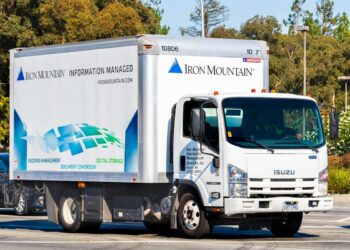
The distinction between a consultancy and a processor matters here, and Marks was direct about it. Retire-IT does not recycle, remarket, or otherwise physically handle retired equipment. It is a managed service and tracking layer that sits between corporate and institutional clients and the roughly three dozen certified processing vendors Retire-IT works with, mostly in the U.S.
“We don’t compete with anybody,” Marks said. “We manage the process, and Retire-IT has always been a fiduciary, sitting on the same side of the table, representing our clients.”
Put simply, Retire-IT doesn’t process equipment itself. It manages ITAD programs on behalf of clients while independently overseeing the certified downstream processors that do. Marks said Retire-IT has never taken on outside acquisition offers and had specifically avoided becoming a processor itself, despite recurring interest from private equity firms building ITAD roll-ups.
Marks calls the underlying philosophy “defensible IT disposition”: the idea that an organization should be able to demonstrate, through documentation and independent verification, what happened to a retired asset, rather than relying on a vendor’s own assurances. It’s a framing Marks has promoted publicly for several years across ITAD trade circles, and one he says shaped Telamon’s specific interest in Retire-IT over a traditional processor.
Telamon is not becoming an electronics recycler. Founded in 1985 by Albert Chen, who remains Executive Chair, the family-owned Carmel, Indiana company is built around telecommunications network deployment, industrial kitting and wire harness assembly, and a broader enterprise services division, alongside newer ventures in energy and robotics. Marks put Telamon’s customer base at roughly 18,000. Revenue estimates vary by source: Telamon CEO Stan Chen told employees at a 2024 town hall the company closed that year above $1.1 billion, per a post on Chen’s own LinkedIn account; Marks cited roughly $1.5 billion in the interview; and third-party business data providers, using estimates rather than audited filings, have put Telamon’s revenue in the high $600 millions to high $700 millions as of early 2026. Telamon is privately held and does not publish audited financials.
Marks characterized Telamon’s interest in ITAD as an extension of existing work in data center decommissioning, installation and connectivity services, not an entry into recycling or remarketing. Public Telamon materials do not identify a physical recycling or remarketing facility, consistent with Marks’ account that the company is acquiring the consulting and verification layer of ITAD rather than downstream processing capacity.
What the deal signals
Marks frames the acquisition as continuity plus scale: the team, office, software and processing partner relationships stay as they are, with a larger company’s resources behind them.
The more significant claim, in Marks’ account, is the strategic logic behind the deal. He argues enterprise ITAD is moving away from a processor-centered model, where the vendor handling disposal also vouches for its own compliance, and toward a governance model where independent oversight and verification are separate functions from execution. It’s a framing shaped by someone who has built a 21-year business, and his professional identity, around the argument that this separation matters, which is worth keeping in mind as this piece and others test how broadly that shift is actually taking hold across the industry.
Two things will matter more to clients of both firms than the announcement itself. The first is how Retire-IT’s tracking and reconciliation software evolves inside Telamon: largely as-is, folded into a broader technology stack, or gradually replaced. The second, tied to Marks’ broader argument, is whether other ITAD providers and enterprise buyers actually begin separating execution from oversight the way accounting separated from auditing decades ago, or whether this acquisition turns out to be one company’s bet rather than the start of an industry pattern. Both are worth revisiting in a year.