





Google’s 2026 Environmental Report, released in June and covering the 2025 reporting year, offers one of the more detailed looks yet at how a hyperscaler manages hardware at the end of its working life. For an industry that spends most of its time proving its value to clients who see IT assets as a liability rather than a resource, the numbers are worth paying attention to.
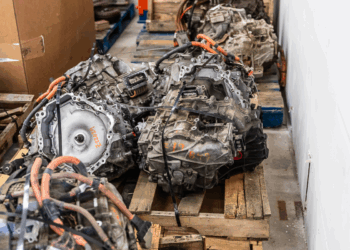
The centerpiece is Google’s Reverse Supply Chain program, which the company says harvested more than 7.5 million components from decommissioned data center hardware in 2025 alone, feeding its own build, upgrade, and spares operations before anything is considered for resale. When components aren’t needed internally, Google sends them into the secondary market: more than 54 million components resold since 2015, including 2.6 million last year. That is a real, countable volume that helps understand the size and scope of Google’s platforms.
The sequencing matters as much as the scale. Google states plainly that internal redeployment comes first, external resale second. That is the same hierarchy the ITAD industry has spent two decades trying to instill in enterprise clients who default to disposal because it’s simpler than asking whether an asset still has value. Seeing that logic embedded at hyperscaler scale is a useful data point for anyone making the case to a mid-market client that reuse-first thinking isn’t just an ITAD sales pitch, it’s how the most sophisticated buyers of IT equipment on the planet already operate.
Google’s data center Zero Waste to Landfill rate is another number worth tracking. It climbed from 23% of campuses in 2022 to 50% in 2025, verified through UL 2799 third-party certification rather than self-reported estimates. Three facilities — sites in South Carolina and Finland, plus a warehouse in Ireland — reached full validation this year, with Finland hitting 100% diversion. Doubling that rate in three years, under outside audit, is a legitimate operational achievement, and a useful benchmark for any data center operator trying to demonstrate real diversion progress rather than aspirational targets.
On the consumer hardware side, Google’s Pixel line offers a genuine circularity showcase. Pixel 10 Pro contains at least 30% recycled materials by weight, including recycled rare-earth elements in its magnets and recycled tin in circuit board solder, categories that are notoriously difficult to source responsibly at scale. Both the Pixel 10 Pro and Pixel 10a were independently tested against the EN45555:2019 European recyclability standard, with recoverability rates above 79%. Google also disclosed that its company-wide recycled-plastic target (50% by 2025) landed at 48%, reporting the shortfall plainly rather than redefining the goal after the fact. That kind of transparency, admitting a miss instead of moving the goalposts, is rarer in corporate sustainability reporting than it should be.
None of this means the report is a finished picture. There are still metrics the industry would benefit from seeing in future editions, particularly around how resold components are tracked once they leave Google’s direct custody. But as a signal of where large technology buyers are heading, this report is good news for the ITAD and recycling sector. It validates, at enormous scale, the core premise this industry has been selling for years: that end-of-life IT equipment is a resource worth managing carefully, not a cost to be minimized. The more hyperscalers report numbers like these, the stronger the case becomes for every ITAD company making that same argument to clients still on the fence.