Resource Recycling
  • The Latest
  • Analysis
    • All
    • Certification Scorecard
    • Industry Announcements
    • Opinion

    AI and the changing economics of retired hardware

    Certification Scorecard — Week of June 8, 2026

    ITAD is moving past its adolescent phase: beyond end-of-life

    Rainforest

    Inside the Circle: What the rainforest can teach us about EPR

    Closeup of a printed circuitboard

    Hardware demand puts new focus on parts harvesting

    Rare look inside the world’s largest plastics recycler

    Mass balance matters: Why different rules can lead to different outcomes 

  • Conferences
    • Resource Recycling Conference
    • Plastics Recycling Conference
    • E-Scrap: The Longevity Conference
    • Textiles Recovery Summit
  • Publications
    • E-Scrap News
    • Plastics Recycling Update
    • Policy Now
    • Resource Recycling
    • Other Topics
      • All Topics
      • Brand Owners
      • Critical Minerals
      • Glass
      • Grant Watch / RFPs
      • Markets
      • Organics
      • Packaging
      • Research
      • Technology
      • Textiles
Subscribe
No Result
View All Result
Resource Recycling
  • The Latest
  • Analysis
    • All
    • Certification Scorecard
    • Industry Announcements
    • Opinion

    AI and the changing economics of retired hardware

    Certification Scorecard — Week of June 8, 2026

    ITAD is moving past its adolescent phase: beyond end-of-life

    Rainforest

    Inside the Circle: What the rainforest can teach us about EPR

    Closeup of a printed circuitboard

    Hardware demand puts new focus on parts harvesting

    Rare look inside the world’s largest plastics recycler

    Mass balance matters: Why different rules can lead to different outcomes 

  • Conferences
    • Resource Recycling Conference
    • Plastics Recycling Conference
    • E-Scrap: The Longevity Conference
    • Textiles Recovery Summit
  • Publications
    • E-Scrap News
    • Plastics Recycling Update
    • Policy Now
    • Resource Recycling
    • Other Topics
      • All Topics
      • Brand Owners
      • Critical Minerals
      • Glass
      • Grant Watch / RFPs
      • Markets
      • Organics
      • Packaging
      • Research
      • Technology
      • Textiles
Subscribe
No Result
View All Result
Resource Recycling
No Result
View All Result
Home Plastics

Study: Recycling accounts for tiny share of plastic’s total GHGs

byJared Paben
December 6, 2022
in Plastics
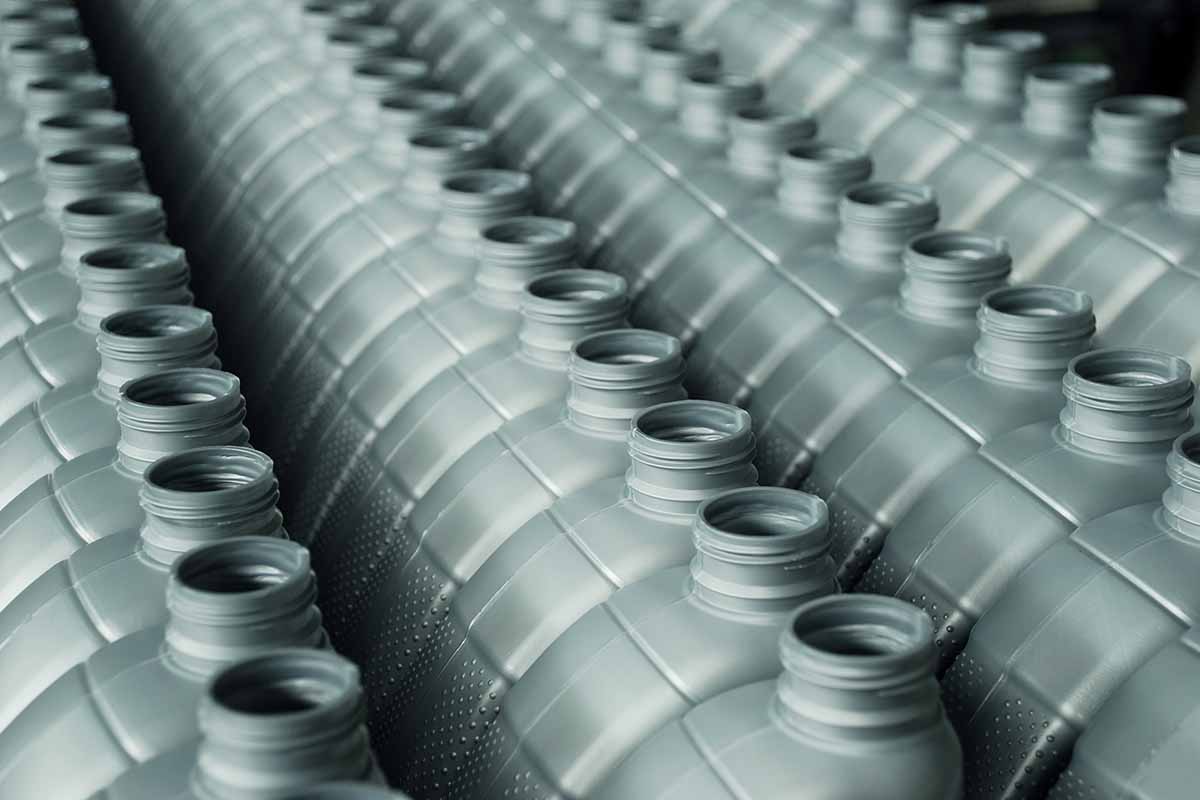
The REMADE Institute-funded research found that, over the course of their full life cycles, several common polymers account for about 1.5% of all U.S. greenhouse gas emissions. | rochariberio/Shuttestock

By the time plastic products reach their end of life, the bulk of their climate damage has already been done, according to a study that reaffirms greenhouse gasses tied to plastics are mostly generated in prime resin production, shipping and molding. 

The study, funded by the REMADE Institute, was recently published in the journal ACS Sustainable Chemistry & Engineering.

As the wider societal conversation about plastics continues to evolve, the material’s climate impact has been much-discussed, both in terms of harmful environmental impacts from production but also in regards to the energy and emissions benefits that can come from plastic use.

Stakeholders have also sought to compare the environmental impacts tied to different forms of end-of-life management. 

The REMADE-funded study focused on PET, HDPE, LDPE/LLDPE and PP in the U.S. It found that the full life cycles of those polymers accounted for about 100.6 million metric tons of carbon dioxide-equivalent emissions per year (the study used 2019 as a baseline year). That’s about 1.5% of total U.S. greenhouse gas (GHG) emissions. 

Of that 100.6 million metric tons of CO2-equivalent emissions, 58.0% came from virgin resin production, 29.3% came from semi-manufacturing processes (essentially extruding and molding the resin), 7.7% came from end-of-life management and 5.0% came from transportation within the U.S. 

Under the transportation category and compared to the whole, shipping resin generated 2.6% of total emissions, shipping semi-finished goods (such as extruded or molded products) generated 2.3%, and moving recycled resins around the country generated 0.1% of total plastic life cycle emissions. 

It should also be noted the study mentioned the impacts of marine and terrestrial plastic litter, but it focused on energy usage and GHG impacts.

The end-of-life details

According to the research, of the PET and polyolefin material generated in the end-of-life stream, 77% was landfilled, 16% was incinerated and 7% was recycled.

However, when assessing how much each of those end-of-life pathways contributed to plastics’ total emissions impact, incineration proved to have the heaviest hand.

In terms of the 100.6 million metric tons of plastics’ cumulative CO2 emissions, incineration with energy recovery accounted for 6.1%, mechanical recycling accounted for 1.0%, landfilling for 0.4% and collecting/sorting/baling accounted for 0.1%.

Waste-to-energy plants produce electricity, theoretically offsetting the need for more carbon-intensive power plants. 

But the study found that waste-to-energy contributed the most to GHG emissions even taking into account the electricity generated, likely because waste-to-energy plants have a low electrical conversion efficiency rate. 

On the landfill side, the study noted that though plastic is wasted as a potential recycled feedstock when it goes to the dump, it doesn’t contain biodegradable carbon. 

As a result, the landfill-related emissions tabulated in the research are associated with collecting and moving the waste to the landfill, as well as the operation of landfill equipment, not the result of the plastic breaking down over time.

All that being said, landfilled plastic can indirectly generate more GHG-equivalent emissions because it likely means greater virgin plastic production, which is where the bulk of climate-changing gasses originate, the study noted. 

“In our previous systems analysis model for PET bottles, we showed that landfilling plastics leads to sourcing of more fossil-derived virgin plastics, which results in higher GHG emissions,” according to the report. 

Circular economy doesn’t guarantee sustainability

The study touches on a topic of major debate in the U.S. right now: whether boosting recycling is the sole solution to reducing environmental impacts of plastics, or whether restricting virgin plastic production should be part of the equation. 

Democrats in Congress recently introduced a bill that would put a halt to plastic manufacturing plant construction, pointing to a variety of health and environmental impacts in plastic production. But the legislation drew an outcry from plastics industry stakeholders, who don’t want to see any limits on the production and sale of plastics and argue that the plastics bring GHG benefits that substitute materials don’t. 

For its part, the REMADE report argues that ensuring a more sustainable supply chain and beneficial economic and social outcomes means relying on a number of factors, including but not exclusive to recycling. 

“Many claims are made that the circular economy is a concept that holds great potential to decouple economic growth from environmental harm,” the document concludes. “However, a circular economy for plastics may not guarantee a more sustainable supply chain with lower impacts on the environment and beneficial economic and societal outcomes. The sustainability of a future circular economy for plastics in the United States will depend on the nature of the plastic material flows, the sources of raw materials for plastics production (whether fossil in origin or from biomass), and the processes that recover and recycle plastic resins at sufficient scale and quality.”

Contributing to the report were researchers from Michigan Technological University, Resource Recycling Systems (RRS), Yale University, Idaho National Laboratory, and Chemstations, Inc. 

The effort was funded by the REMADE Institute, a public-private partnership started by the U.S. Department of Energy and housed at the Rochester Institute of Technology in New York state.

 

ADG Solutions

Tags: Research
TweetShare
Jared Paben

Jared Paben

Related Posts

Chemical recycling roundup: New plant, partnerships

Polystyrene’s circular future is already taking shape

byJustin Riney, Polystyrene Recycling Alliance
May 29, 2026

Justin Riney of the Polystyrene Recycling Alliance explores a study conducted with the Resource Recycling Systems consultancy.

What Netflix’s ‘Plastic Detox’ gets wrong – and right

byKeith Loria
April 23, 2026

Advocates are excited about the attention brought on plastics by the documentary, but scientists say more nuance is needed.

Hawaii trials asphalt made with plastic debris and nets

Hawaii trials asphalt made with plastic debris and nets

byScott Snowden
April 20, 2026

Researchers at Hawaii Pacific University test asphalt made with fishing nets and plastic debris, with early results showing no increase...

Amazon, DOE partner on critical materials recovery

byScott Snowden
April 13, 2026

DOE and Amazon will study recovery of graphite from textiles and gallium from IT hardware, aiming to strengthen US supply...

Rice researchers use lemon juice to boost battery recycling

byScott Snowden
April 9, 2026

Rice researchers reported a battery recycling process that uses plasma and mild solvents to recover most metals from black mass...

Packaging sector sees shift from AI pilots to wider use

byScott Snowden
April 1, 2026

AI adoption is expanding across packaging operations as costs fall and use cases widen, though concerns around accountability, ROI and...

Load More
Next Post
Amcor signs PCR offtake deal with ExxonMobil

Amcor signs PCR offtake deal with ExxonMobil

More Posts

House resolution aims to make recyclability central to product design

NY EPR bill fails to advance after third try

June 8, 2026
Various PET thermoform containers.

Thermoform recovery soars, PCR content falls

June 10, 2026
CalRecycle withdraws proposed regs for SB 54

Oceana, NRDC, CAW sue CalRecycle over SB 54 regs

June 5, 2026

Three-bill package aims to revamp Michigan’s bottle return system

June 9, 2026
Recycling industry addresses Beyond Plastics report

Recycling industry addresses Beyond Plastics report

May 26, 2026
Rare look inside the world’s largest plastics recycler

Mass balance matters: Why different rules can lead to different outcomes 

June 5, 2026
Circular Materials to supply PlasCred chem recycling plant

Circular Materials to supply PlasCred chem recycling plant

June 4, 2026

Battery fires still a major risk to recyclers: report

June 9, 2026
Rainforest

Inside the Circle: What the rainforest can teach us about EPR

June 8, 2026
How electronics legislation fared this legislative season

NY sends repairability labeling bill to governor

June 8, 2026
Load More

About & Publications

About Us

Staff

Archive

Magazine

Work With Us

Advertise
Jobs
Contact
Terms and Privacy

Newsletter

Get the latest recycling news and analysis delivered to your inbox every week. Stay ahead on industry trends, policy updates, and insights from programs, processors, and innovators.

Subscribe

Welcome Back!

Login to your account below

Forgotten Password?

Retrieve your password

Please enter your username or email address to reset your password.

Log In

Add New Playlist

No Result
View All Result
  • The Latest
  • Analysis
  • Recycling
  • E-Scrap
  • Plastics
  • Policy Now
  • Conferences
    • E-Scrap Conference
    • Plastics Recycling Conference
    • Resource Recycling Conference
    • Textiles Recovery Summit
  • Magazine
  • About Us
  • Advertise
  • Archive
  • Jobs
  • Staff
Subscribe
This website uses cookies. By continuing to use this website you are giving consent to cookies being used. Visit our Privacy and Cookie Policy.