The plastics industry has made remarkable progress over the past decade. Governments have introduced ambitious recycled content targets, brands have committed to increasing recycled content across their portfolios, and recycling technologies have advanced at an unprecedented pace.
But every success can bring new challenges.
Across Europe, North America and increasingly the rest of the world, demand for high-quality recycled polypropylene (rPP) is now outstripping supply. This is creating growing competition for premium recycled material derived from post-consumer packaging, particularly food-use polypropylene.
Food packaging manufacturers need food-grade recycled polypropylene to meet regulatory requirements and corporate sustainability commitments. Cosmetics brands are searching for high-performance recycled polymers. Automotive suppliers are increasing recycled content to reduce vehicle emissions and improve lifecycle performance. Materials-handling companies are redesigning reusable crates, pallets and containers around circular economy principles.
On the surface, this growing demand appears to be a positive sign.
However, beneath it lies an important question that the plastics industry has yet to fully address: Should every industry be competing for the same limited supply of food-grade recycled polypropylene?
If our objective is to create a truly circular plastics economy, then we need to exploit every appropriate feedstock and stop viewing recycled polypropylene as one universal commodity. Instead, we should tailor recycled grades and recycling pathways to different applications.
Matching the right recycled polymer to the right application is arguably one of the most important decisions our industry can make over the coming decade.
Food-grade polypropylene is uniquely valuable
Food-contact polypropylene occupies a unique position within the circular economy. Unlike plastics collected from automotive components, appliances, industrial products or many non-food consumer products, post-consumer food packaging has the potential – when collected, sorted and decontaminated correctly – to become food packaging once again.
That capability is extremely valuable and critical to the circular economy.
It creates a genuine closed loop where packaging remains packaging through multiple life cycles, significantly reducing demand for virgin polymer while preserving material quality.
Achieving this level of circularity has required years of investment in collection systems, advanced sorting technologies, contamination control and sophisticated decontamination processes. Regulatory approvals for food-contact recycled plastics are among the most demanding anywhere in the plastics industry because consumer safety cannot be compromised.
The result is a limited supply of premium recycled polypropylene capable of meeting these stringent requirements – and that supply should be protected for applications that genuinely require it.
This does not mean, however, that every other polypropylene application needs access to the same feedstock.
High-quality resins can be made from non-food-grade material
One of the biggest misconceptions in today’s market is that every high-quality application requires food-grade recycled polymer. It doesn’t.
Automotive interior components, reusable transport packaging, storage systems, household products and many cosmetic packaging formats all require excellent appearance, mechanical properties, consistency and processability.
But they do not necessarily require food-contact approval.
As demand for premium recycled polypropylene increases, there is a risk that sectors which do not require food-contact compliance will increasingly compete for the same limited supply. That is precisely where better feedstock allocation becomes important.
This does not mean that there is a vast reservoir of non-food post-consumer polypropylene waiting to be tapped. In reality, the non-food packaging stream is relatively small. But its size is not the only consideration.
A proportion of this stream comes from household and consumer products, including detergent and cleaning-product packaging. While these volumes are not enormous, they represent a distinct feedstock that can, where appropriately collected and sorted, provide valuable material for applications that do not require food-contact compliance.
The important point is that this material should not simply be regarded as a lower-value version of food-grade polypropylene.
It should be viewed as a separate resource with its own potential applications.
Where practical, separating suitable non-food packaging feedstocks and directing them towards appropriate high-value applications can help reduce unnecessary competition for food-grade rPP. It also creates an opportunity to develop recycling processes and grades around the characteristics of those particular feedstocks.
This is a more intelligent approach than treating all post-consumer polypropylene as one undifferentiated commodity.
The objective is not to suggest that non-food packaging can replace food-grade feedstock. It cannot. Nor is the non-food stream large enough to solve the industry’s overall rPP supply challenge.
Its value lies elsewhere: it gives us another route to supply high-quality recycled polypropylene for applications that do not require food-contact status.
That distinction will become increasingly important as recycled content demand continues to grow.
We should think in circular systems for categories of products
The real objective of the circular economy is to keep materials circulating at their highest possible value.
Increased recycled content is an important way of demonstrating recovery and re-use, but the percentage alone does not tell us whether we are making the most intelligent use of our resources.
We need to design recycling systems where recovered materials continue serving applications that maximise both environmental benefit and resource efficiency.
Food packaging represents one such system. Automotive represents another. Cosmetics, household products and materials handling represent others.
Rather than forcing every application to compete for identical feedstocks, we should optimise each system independently while maintaining high environmental performance across them all.
That means recognising the differences between feedstocks as well as the differences between end markets.
Food-contact PP, where suitable, should be directed towards recycling pathways capable of producing food-grade rPP. Smaller, appropriately separated non-food packaging streams should be developed for applications that require high-quality recycled material but do not require food-contact compliance.
The result is not a hierarchy in which one stream is considered valuable and another inferior. It is a system in which each feedstock is matched to the application where it can create the greatest value.
This systems-based approach delivers greater resilience and ultimately allows more recycled material to remain in productive use.
Purpose-designed recycled polypropylene offers the solution
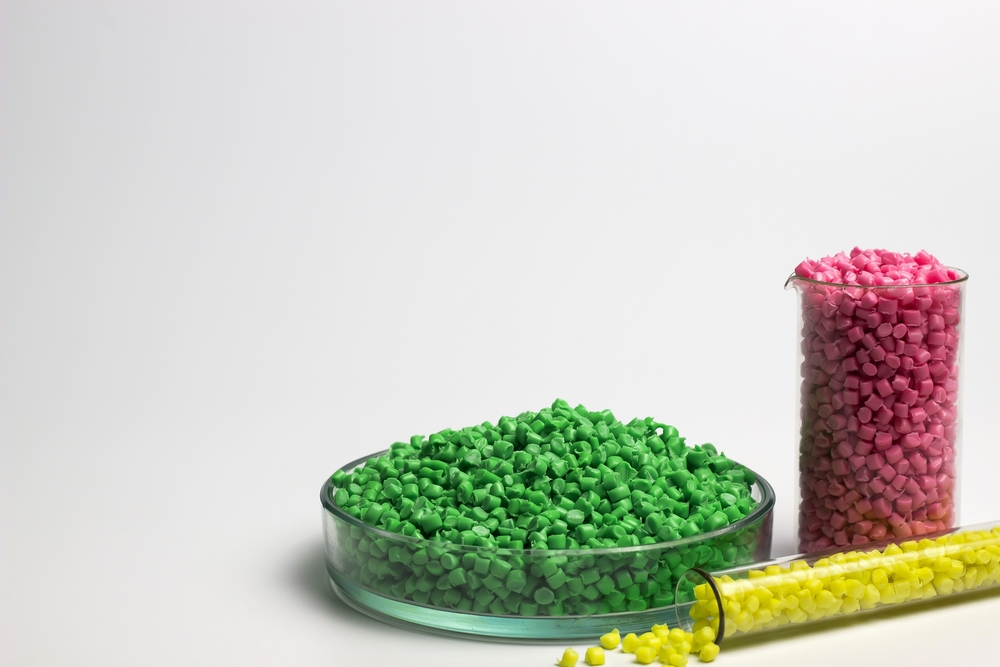
Fortunately, the industry no longer has to choose between quality and circularity. Purpose-designed recycled polypropylene grades are now emerging that have been specifically engineered for applications requiring exceptional performance without consuming scarce food-grade resources.
One example is NEXTLOOPP’s INRT recycled polypropylene. INRT has been developed specifically for contact-sensitive applications including cosmetics, household products, reusable materials-handling systems and selected consumer goods where high levels of purity, consistency, appearance and performance are essential.
Rather than competing directly with food-grade recycled polypropylene, INRT complements it.
By directing food-grade recycled polypropylene towards food packaging while supplying appropriate non-food sectors with a purpose-designed alternative, manufacturers can meet ambitious recycled content objectives without unnecessarily increasing competition for food-grade material.
This is not about lowering standards.
It is about applying the appropriate standards to the appropriate applications.
Contact-sensitive applications still require rigorous safety evaluation, and consumers rightly expect cosmetic packaging and household products to be manufactured using recycled materials that have been thoroughly assessed.
This is where industry guidance becomes increasingly important.
Frameworks such as the CosPaTox methodology provide robust scientific approaches for evaluating recycled plastics intended for cosmetic packaging, helping ensure that materials meet demanding safety expectations without requiring full food-contact compliance.
These frameworks recognise an important distinction: not every product has identical exposure scenarios, nor does every application carry identical risk.
Science allows us to develop appropriate safety standards for different uses while maintaining high levels of consumer protection.
This approach enables innovation without compromising confidence.
True circularity depends on smarter allocation of resources
Demand for recycled polypropylene will continue to increase. Legislation will tighten, corporate commitments will become more ambitious and consumers will expect higher recycled content across almost every product category.
The question is not whether demand will grow, but how intelligently we manage the available supply.
If every sector competes for the same premium food-grade recycled polypropylene, shortages will intensify and the progress we have made towards closing the loop for food packaging could be undermined.
If, however, we allocate recycled materials according to their intended application, we can maximize environmental benefit across every sector simultaneously.
Food-grade recycled polypropylene should remain focused on closing the loop for food packaging, whilst appropriately separated non-food PP – including pots, tubs, trays and packaging components from detergents, shampoos, conditioners, shower gels, creams, lotions and other household products – can provide a quality feedstock for applications that do not require food-contact compliance, helping create a more differentiated and efficient rPP market.
Ultimately, this is about creating the right material for the right purpose.
The success of the circular economy will not be measured simply by the percentage of recycled content we achieve. It will be measured by how effectively we preserve material value, minimise unnecessary competition for scarce resources and design recycling systems capable of sustaining themselves for decades to come.
We have spent years developing the technology to recover and recycle polypropylene. The next step is to become much smarter about what we recover, how we separate it and where we use it.
That is the next stage in plastics circularity – and it is one that our industry is now ready to embrace.